Personalized Attention +44 151 947 0713
 SHIPPING TO ALL

 9/10 Rating
 SALE TO MINORS PROHIBITED

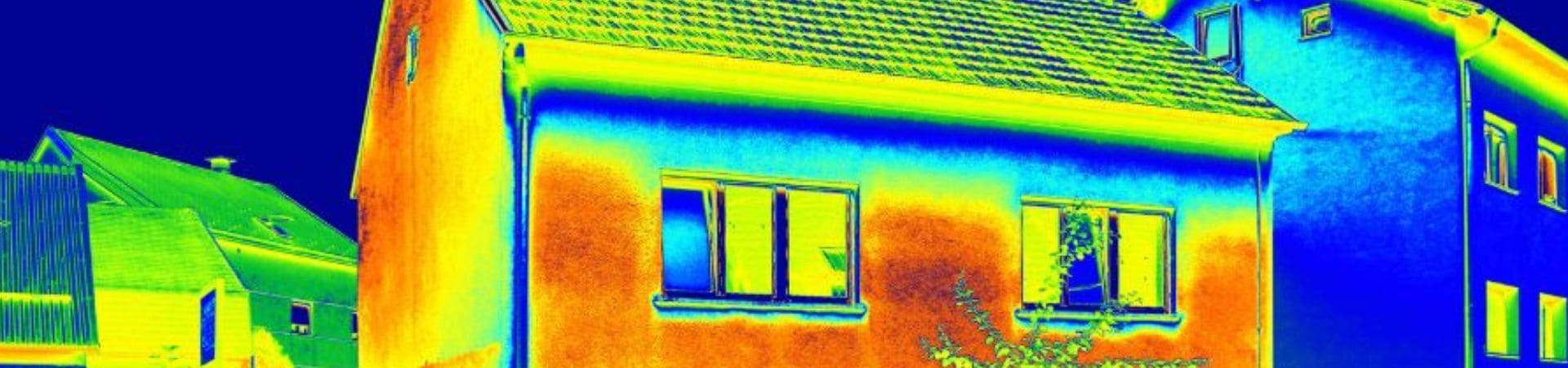
Some fears spread quickly. One of the most persistent is the idea that thermal cameras on helicopters can “see” a grow operation from the air, as if it were a light bulb glowing in the middle of the night. The image is powerful, almost cinematic… and that’s exactly why it has been exaggerated for years.
But what really lies behind concepts like thermal cameras on helicopters, aerial detection, or undetectable grow operations? Is this technology truly foolproof, or is it a myth fueled by misinformation?
The reality is far less dramatic, and understanding it helps separate facts from fear.
What thermal cameras on helicopters are and how they work
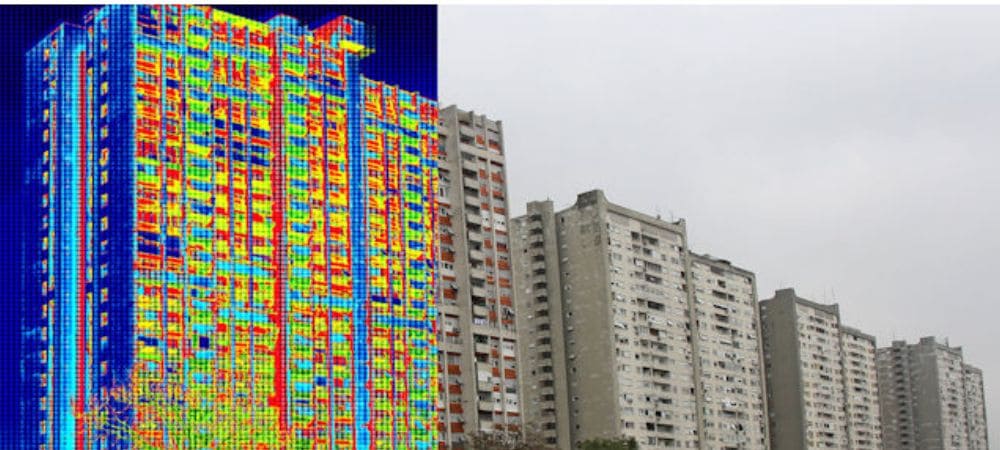
Thermal cameras on helicopters do not “see” plants, lights, or people. They cannot identify what is inside a space or distinguish specific activities. What they actually detect are temperature differences on surfaces. They translate heat into colors and contrasts—nothing more.
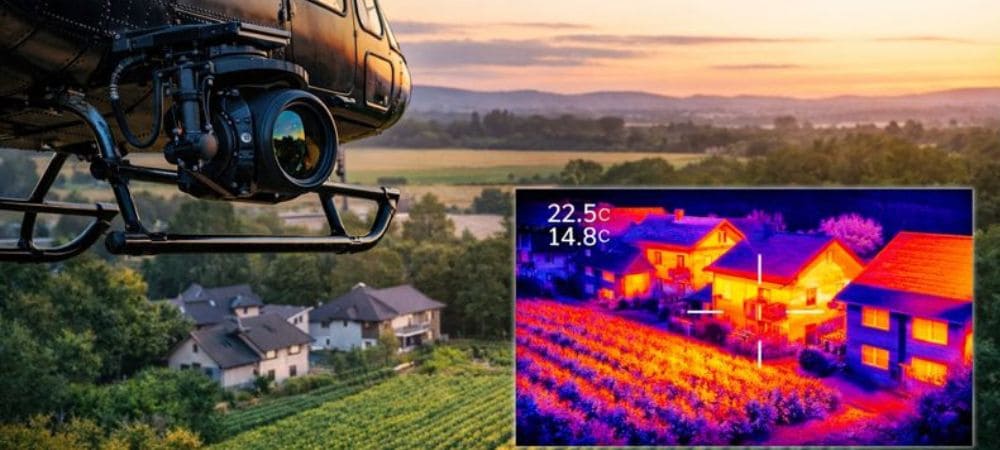
This functionality is well documented in technical literature on infrared thermography applied to buildings and thermal sensors. These studies explain that cameras record surface radiation, not what is happening inside structures.
This means something crucial: thermal cameras on helicopters do not detect what is inside a home, but rather how the exterior of that structure behaves in terms of temperature.
If a wall, roof, or window emits more heat than its immediate surroundings, it appears as a thermal anomaly. But that anomaly does not reveal what’s inside—only that there is a temperature difference.
This is where confusion usually begins. Seeing a warmer area does not mean knowing what is causing it, let alone identifying a grow operation.
The origin of the “Red Spot” myth
Much of the fear comes from imagining heat as something concentrated and obvious, like a spotlight passing through walls. In reality, heat disperses, diffuses, and blends with its surroundings. Homes with poor insulation, heating systems in use, running appliances, or even sunlight stored during the day all create constant thermal differences.
In urban or residential environments, thermal variations are completely normal, and identifying their source is far from simple.
| Myth vs Reality: Thermal Cameras on Helicopters | Common Belief | What Actually Happens |
|---|---|---|
| “The camera sees the grow” | The camera detects the grow operation | It only detects temperature differences on surfaces |
| “It detects lights or plants” | It identifies lights or plants | It does not identify objects, only heat |
| “A hot spot proves something illegal” | A hot spot is evidence of illegal activity | It can be caused by many normal household factors |
| “Everything is clear from the air” | Everything can be clearly seen from above | Resolution depends on distance, weather, and context |
| “It’s a foolproof technology” | It never fails | It has many practical limitations |
So why is there so much fear?
Because for years the topic has been discussed without technical context, mixing isolated cases with incomplete information, forum speculation, and exaggerated narratives.
The concept of an undetectable grow operation comes more from fear of the unknown than from a real understanding of how thermal imaging technology works.
There is no universal thermal reading. The same home can display different thermal behaviors depending on the time of day, weather, or season. Wind, humidity, and rain all affect how heat is retained or dissipated.
Construction materials also play a major role. A metal roof, poorly insulated wall, or old window may emit more heat than nearby structures without anything unusual happening inside. That’s why interpreting thermal images without context is unreliable.
The “Undetectable grow” concept and common misconceptions
Let’s be clear: nothing is completely undetectable. What does exist is better or worse thermal management, just like in any occupied space.
When people talk about undetectable grows, they are usually referring to something much simpler: avoiding extreme thermal contrasts and managing indoor temperatures efficiently. That’s efficiency—not invisibility.
A well-designed space behaves more consistently from the outside. It doesn’t stand out, doesn’t create spikes, and doesn’t draw attention. This is exactly what energy-efficient homes aim to achieve.
Thermal cameras on helicopters do not work the same way in every scenario. Many factors come into play, including outdoor temperature, climate, time of day, building materials, and surroundings.
For example, a poorly insulated home in winter may emit more heat than a well-insulated one, even if nothing unusual is happening inside.
Insulation and efficiency: commonly confused concepts
Insulation is not a way to hide anything. It’s a basic measure to retain temperature, reduce energy consumption, and improve comfort. When a structure is properly insulated, heat stays inside and is not unevenly transferred outside. This is important because temperature plays a key role in plant growth.
This reduces sharp temperature differences and creates a more uniform thermal behavior. In practical terms, an energy-efficient home looks much more like its surroundings than a poorly insulated one, regardless of what happens inside.
When people talk about “avoiding detection,” they are actually referring to something much more common and legal: thermal and energy efficiency. There’s nothing clandestine about it—it’s exactly what any efficient home aims for.
| Aspect | Poor Insulation | Proper Insulation |
|---|---|---|
| Heat Loss | High | Low |
| Energy Consumption | High | More efficient |
| Thermal Variations | Abrupt | Stable |
| External Emission | Irregular | More uniform |
| Overall Comfort | Low | High |
Ventilation: Another common misunderstanding
Another often misunderstood factor is ventilation. Ventilating is not about releasing heat uncontrollably, but about renewing air in a balanced way.
A well-ventilated space tends to stabilize thermally, preventing excessive heat buildup that could transfer outside. Again, these are basic HVAC principles—not extraordinary strategies.
Improving thermal performance without overcomplicating things
When aiming to reduce the thermal footprint of an indoor grow, the first step isn’t complexity—it’s choosing the right materials and planning the space properly.
A well-conditioned environment behaves more consistently and predictably, both inside and externally. The foundation of this process is indoor insulation, especially on walls and ceilings, which are the surfaces that accumulate the most heat when using artificial lighting.
Reflective insulation: Why it makes a difference
Reflective materials designed for indoor growing serve a dual purpose. On one hand, they reflect light back toward the plants, improving lighting efficiency. On the other, they reduce heat absorption by surfaces, preventing walls and ceilings from becoming thermal accumulators.
There are different types of reflective insulation commonly used in indoor grow setups. Some rely on material thickness, creating a physical barrier that slows down heat transfer. Others use highly reflective surfaces that minimize thermal transfer by reflecting a large portion of radiation back into the space.
Both approaches share the same goal: preventing generated heat from being directly transferred to the building structure.
Reflective grow materials, such as the GB Diamond Mylar reflective film, help bounce light back to plants while preventing walls and ceilings from overheating.
Which surfaces to cover for better thermal control
For insulation to be effective, it must be continuous and consistent. Covering just one wall is not enough if the rest remains exposed. Typically, you should insulate:
- All walls within the grow space
- The ceiling, which is often where heat accumulates the most
- The floor, especially if it’s in contact with colder areas
The fewer uncovered areas, the more uniform the overall thermal behavior will be. To achieve full coverage, it’s best to use materials specifically designed for indoor growing, available in the reflective and insulation materials section.
How to calculate the amount of material needed
Before purchasing any insulation, take time to measure your space carefully. The process is simple: measure the width and height of each wall, as well as the surface area of the floor and ceiling. Multiply width by height to calculate square footage for each surface.
It’s recommended to add all surfaces together and include a small extra margin. Materials often overlap to avoid gaps, and some loss occurs during cutting.
For example, in a room with two large walls and two smaller ones, plus the floor and ceiling, calculating the total area gives you a realistic estimate of how many square feet of material you’ll need to cover the entire space efficiently.
Installation: consistency over perfection
Installing the material doesn’t require complex techniques, but it does require patience. The key is to ensure it is properly stretched and free of visible gaps, so heat does not transfer unevenly.
On soft surfaces, standard fastening systems work well. On hard walls, it’s common to create a light support structure to hold the material without damaging the original surface. The goal is not aesthetics, but functionality: preventing thermal leaks.
Ventilation and airflow: planning the path
Once the space is insulated, the next key factor is air management. Every indoor grow requires air exchange, but airflow direction matters just as much as the extraction system itself.
Channeling air through intermediate areas of the building before releasing it outside allows heat to dissipate more gradually. This reduces sharp contrasts and improves the overall thermal balance of the space—something that also affects how thermal cameras on helicopters perceive exterior temperature differences.
Windows and sensitive points
Windows are often one of the most sensitive areas in terms of thermal performance. Glass transfers heat easily, so any internal difference is more noticeable there than on solid walls.
Improving their internal insulation helps stabilize overall temperature and prevents them from becoming constant points of heat loss.
| Material | Main Function |
|---|---|
| Thick reflective insulation | Reduce heat transfer through a physical barrier |
| Mylar-type reflective sheets | Reflect light and limit heat absorption |
| Light support structures | Enable continuous installation |
| Durable fastening systems | Keep insulation stable over time |
Thermal cameras on helicopters do not accuse, do not identify crimes, and do not make decisions. They are simply observational tools used within specific and regulated contexts.
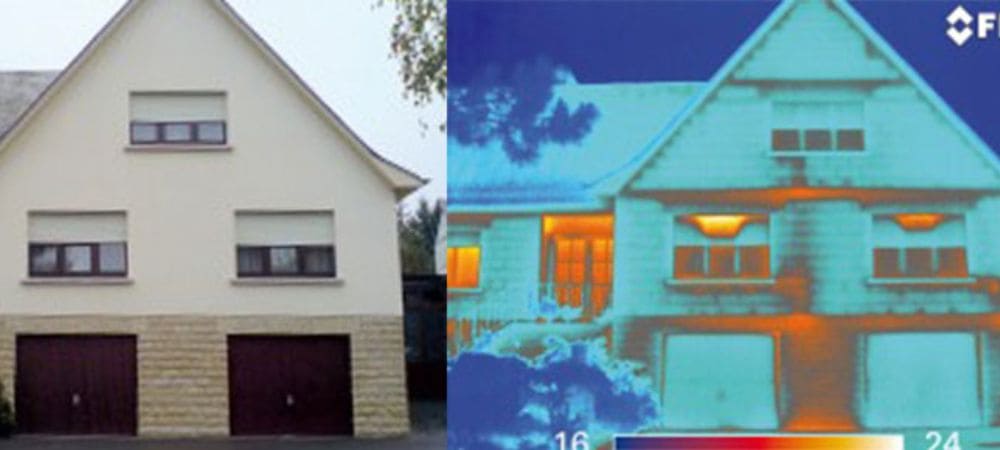
Believing that a helicopter can automatically detect a grow operation is giving it capabilities it simply doesn’t have.
This is not about becoming invisible, but about understanding how heat works, how spaces behave, and why many common beliefs don’t hold up technically. When fear is replaced with knowledge, the entire perspective changes.