Personalized Attention +44 151 947 0713
 SHIPPING TO ALL

 9/10 Rating
 SALE TO MINORS PROHIBITED

Nitrogen fertilizers for marijuana can make a big difference during the plant’s growth, especially when you are looking for strong development, healthy leaves, and a structure prepared to support good flowering. However, a marijuana fertilizer enriched with nitrogen should not be applied without control: knowing when to use it is just as important as recognizing when a plant has already had enough.
In this guide, we explain what nitrogen fertilizers are, what they are used for, how to detect a nitrogen deficiency or excess, and what you should keep in mind before incorporating them into your grow.
What are nitrogen fertilizers?
Nitrogen fertilizers are fertilizers or supplements whose main function is to provide nitrogen to the plant. This nutrient is one of the essential macronutrients along with phosphorus and potassium, which is why it usually appears on labels as the first number in the NPK value.
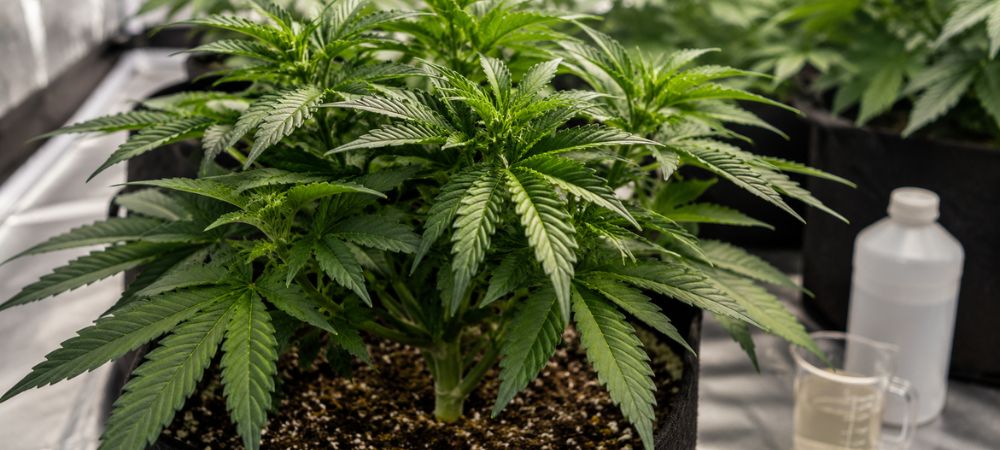
For example, in a fertilizer with an NPK formula of 4-2-3, the first number indicates the proportion of nitrogen. The higher that number, the more nitrogen the product will have compared to the other nutrients.
In marijuana cultivation, nitrogen is especially related to vegetative growth. That is, the phase in which the plant develops leaves, branches, stems, and structure before focusing its energy on flower formation. For this reason, it is especially necessary to use nitrogen fertilizers.
Nitrogen fertilizers: how do they help your plants grow?
Nitrogen participates in basic processes for plant development. A plant with an adequate supply of nitrogen fertilizer usually shows more vigorous growth, healthy green leaves, and a greater capacity to form a strong structure.
In cannabis, nitrogen fertilizers mainly help to:
- Promote the growth of leaves and branches.
- Maintain good photosynthetic activity.
- Improve stem development and structure.
- Support the recovery of plants weakened by deficiency.
- Maintain mother plants or crops with long vegetative phases.
This does not mean that the more nitrogen fertilizer you use, the better the plant will grow. An excess can be just as problematic as a deficiency, especially if the use of nitrogen fertilizers continues into the flowering stage.
When to use nitrogen fertilizers for cannabis?
Nitrogen fertilizers are used primarily during the growth phase. At this time, the plant needs to form a good vegetative base before moving on to flowering, so nitrogen plays a more important role than in later stages.
Nitrogen fertilizers can also be useful in other specific cases:
- After rooting clones, when they start to grow vigorously.
- In young plants that show slow development.
- In mother plants that are kept in the growth phase for a long time.
- In crops where clear symptoms of nitrogen deficiency are detected.
- In long vegetative phases, where the plant consumes more nutrients.
On the other hand, during advanced flowering, it is advisable to be more careful with nitrogen fertilizers. In that stage, the plant usually needs nutrition more oriented toward flower development, so an excess of nitrogen can affect the balance of the crop.
Using a nitrogen fertilizer at the right time helps achieve strong plants; abusing it can cause problems.
How do you know if a plant needs nitrogen fertilizers?
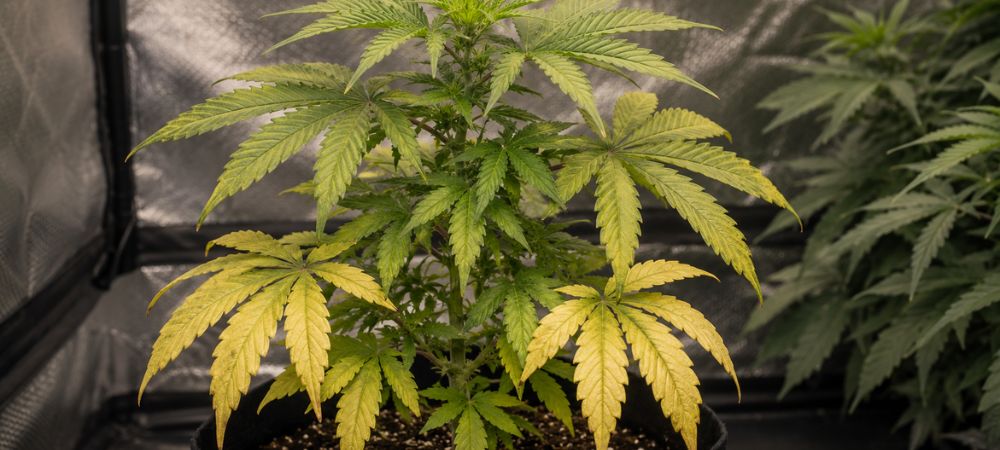
A nitrogen deficiency usually starts in the older or lower leaves of the plant. This happens because nitrogen is a mobile nutrient: when it is lacking, the plant can move it toward the new growth areas.
Some common symptoms of nitrogen deficiency due to not using nitrogen fertilizers are:
- Yellow leaves on the lower part of the plant.
- Pale green color on the plant.
- Slower growth than normal.
- Weak stems or poor vegetative development.
- General loss of vigor.
It is important not to confuse a real nitrogen deficiency with the natural yellowing of some leaves at the end of flowering. In the final weeks, it is normal for the plant to consume part of its reserves and for some old leaves to lose color. In that case, adding more nitrogen is not always the best solution.
Nitrogen excess: signs and common mistakes
Excess usually appears when doses that are too high of nitrogen fertilizer are applied. This can be due to mixing several nitrogen fertilizers or maintaining growth nutrition for too long.
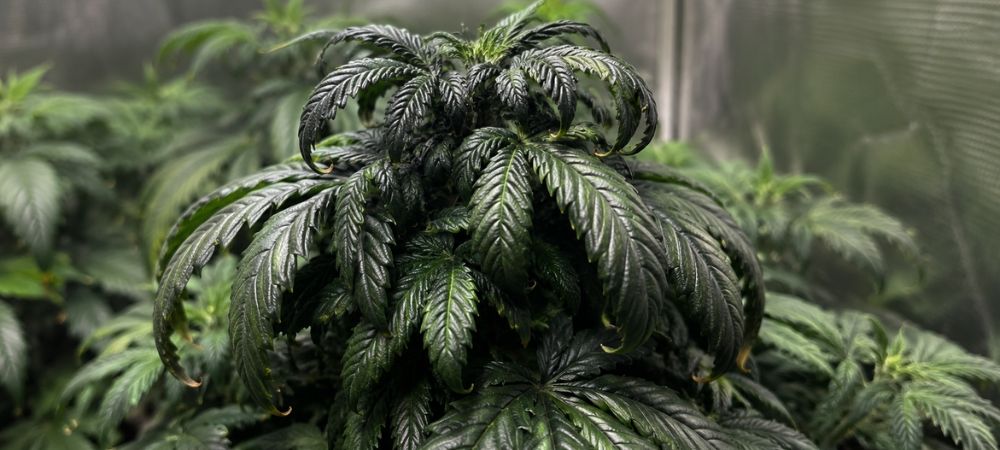
The most common signs of an excess caused by using too much nitrogen fertilizer are:
- Very dark green leaves.
- Burnt tips.
- Curled leaves pointing downward, with a “claw” appearance.
- Excessively soft or leafy growth.
- Increased sensitivity to nutritional imbalances.
- Problems if the excess continues during flowering.
One of the most frequent mistakes when using a nitrogen fertilizer is thinking that a very green plant is always healthier. In reality, a color that is too dark green can indicate that it is receiving more nitrogen than it needs.
| Situation | Possible sign | What to do |
|---|---|---|
| Nitrogen deficiency | Yellow lower leaves, slow growth, and pale color | Check nutrition and consider a growth fertilizer or extra nitrogen |
| Nitrogen excess | Very dark leaves, burnt tips, or claw-shaped leaves | Reduce dose, avoid more N-rich products, and adjust watering if necessary |
| Balanced growth | Healthy green, firm leaves, and constant development | Maintain a balanced fertilization schedule according to the growth phase |
| End of flowering | Progressive yellowing of old leaves | Check the phase before correcting, as it may be a natural process |
Types of nitrogen-rich fertilizers
Not all products that provide nitrogen work the same way or are used for the same purpose. Before choosing one, it is advisable to differentiate between complete growth fertilizers and specific nitrogen supplements.
Growth fertilizers
These are the most common during the vegetative phase. They usually provide nitrogen along with other nutrients necessary for the plant to grow in a balanced way. They are a good option when looking for base nutrition to support general development.
Nitrogen mononutrients
These are more specific products, designed to correct specific deficiencies or reinforce the N supply at specific times. They should be used with more care, as they can cause excesses if combined with other nitrogen fertilizers.
Organic nitrogen-rich fertilizers
The organic fertilizers have faster availability for the plant and allow for greater precision. They are useful when a more direct response is sought, although they require better control of doses, pH, and EC when the cultivation system requires it.
Best nitrogen fertilizers for marijuana according to need
Rather than choosing a product just because it has nitrogen, the ideal is to think about what the plant really needs. Nourishing a crop in growth is not the same as correcting a deficiency or maintaining a mother plant for months.
For general growth
In normal crops, the most practical thing is usually to use a complete growth fertilizer. This type of fertilizer provides nitrogen, but also other nutrients necessary so that the plant does not depend on a single element.
It is the simplest option for those who want to support the vegetative phase without getting too complicated with specific supplements.
To correct nitrogen deficiencies
When the plant shows clear symptoms of deficiency, it may be interesting to use a nitrogen-rich fertilizer. In these cases, it is advisable to act with caution: apply a moderate dose, observe the plant’s response, and avoid adding several nitrogen fertilizers at the same time.
For mother plants or prolonged growth
Mother plants and crops with long vegetative phases may need a constant and balanced supply of nitrogen. Here it is important to keep the plant healthy, but without reinforcing excessive growth that complicates crop control.
For organic or mineral crops
In organic crops, a nitrogen-rich fertilizer with more progressive release may be of interest. In mineral crops, on the other hand, a faster and more measurable response is usually sought. The choice will depend on the type of substrate, the range of fertilizers used, and the grower’s experience.
Tips for using nitrogen fertilizers without overdoing it
Nitrogen is very useful when applied correctly, but it can cause problems if used without observing the plant. To avoid mistakes, it is advisable to keep some basic recommendations in mind:
- Always follow the manufacturer’s table.
- Start with low doses if you are not familiar with the product.
- Do not mix several nitrogen fertilizers without a clear reason. To make the task easier, you can buy fertilizer kits to follow a complete schedule throughout the entire crop.
- Control pH and EC if your cultivation system requires it.
- Observe both new leaves and old leaves.
- Reduce nitrogen intake as flowering progresses.
- Do not correct a supposed deficiency without first checking the plant’s phase, watering, and the state of the substrate.
A fertilization error is not always due to a lack of fertilizer. Sometimes, the plant does not absorb nutrients well due to pH problems, overwatering, weak roots, or salt accumulation in the substrate.




 Add as preferred source in Google