Personalized Attention +44 151 947 0713
 SHIPPING TO ALL

 9/10 Rating
 SALE TO MINORS PROHIBITED

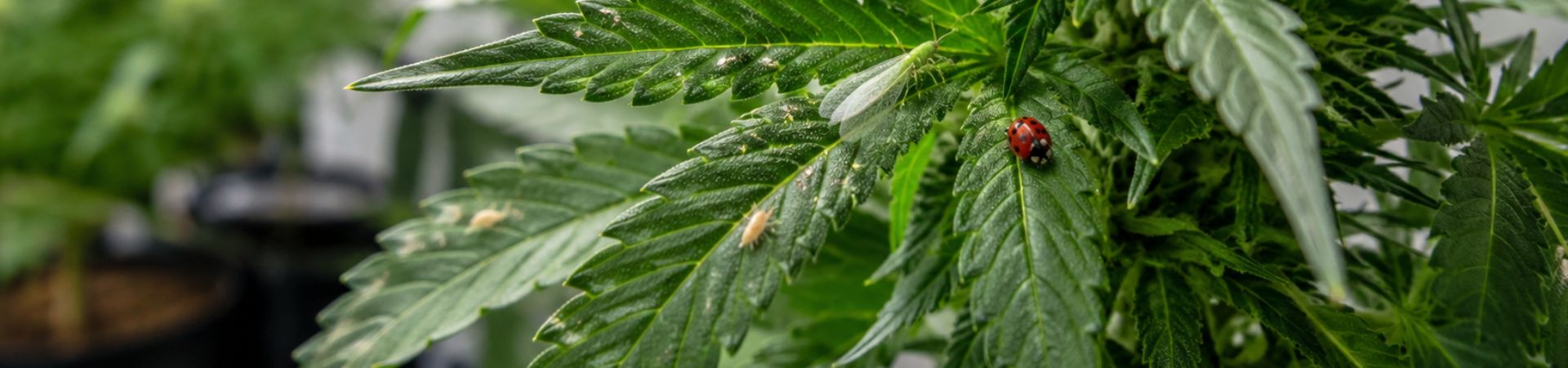
Biological pest control in marijuana crops is a natural way to manage harmful insects by using other beneficial organisms. Instead of applying chemical pesticides, natural predators capable of feeding on common pests like two-spotted spider mites or thrips are introduced, helping to keep the crop more balanced and reducing the impact on the plant.
This method is especially interesting for crops where a cleaner production is sought, free of chemical residues and with higher final quality. Furthermore, it can be a very effective alternative when certain pests have become more resistant due to the repeated use of conventional insecticides.
What is biological control in marijuana cultivation?
Biological control consists of introducing beneficial insects or mites that feed on the pests present in the crop. Each species acts against a specific problem, so it is important to choose the right organism based on the type of pest, the size of the crop, and the level of infestation.
Although it may be a more expensive option than other treatments, in many cases biological control is one of the most respectful and effective solutions, especially when you want to avoid the use of chemical products during sensitive phases of cultivation.
At GB, you will find different species of beneficial insects to combat specific pests in a natural and controlled way.
How to release beneficial insects
To correctly apply this type of treatment, it is standard practice to distribute the contents of the container progressively. This should be applied to the leaves or at specific points in the crop, always following the recommended dosage for each product.
For example, if a container holds 5000 units and the indicated dosage is 2000 to 2500 per m², approximately half of the container should be used for each square meter of crop.
The ideal approach is to distribute them in small groups on the leaves, avoiding areas where the fan blows directly, as they could fall to the ground before settling properly on the plant. Once released, the beneficial insects will move through the crop in search of food.
Phytoseiulus persimilis against two-spotted spider mites
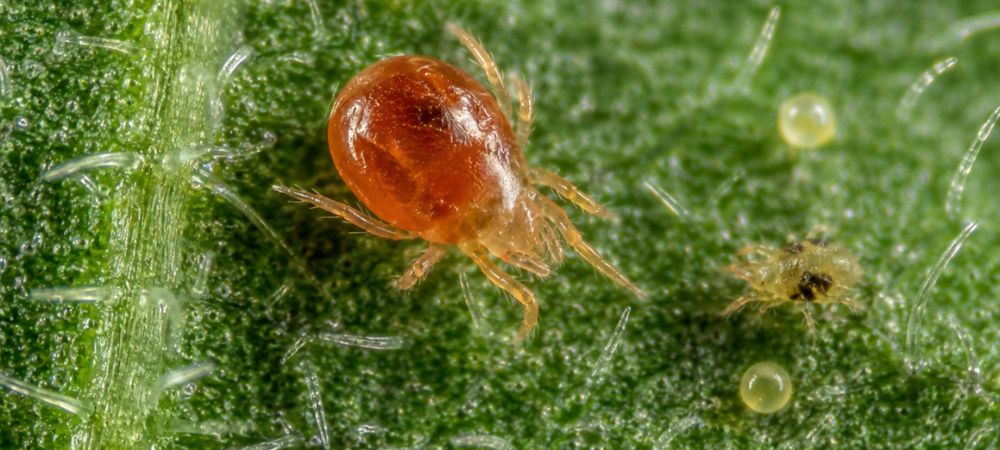
The Phytoseiulus persimilis is one of the most widely used natural predators to combat spider mites in marijuana. It is a reddish predatory mite that feeds on adult spider mites, eggs, and larvae.
Unlike the spider mite, which feeds on leaf fluids, the Phytoseiulus persimilis acts directly on the pest, helping to reduce its population naturally. It is especially useful when the spider mite is already established in the crop, as it needs food to survive and reproduce.
One of its strengths is its great voracity. Each specimen can consume several adult spider mites per day or a large number of eggs and larvae, making it a very effective tool when conditions are right.
However, for it to work correctly, it needs a relative humidity above 40%, as it may have more difficulty surviving in environments that are too dry. For this reason, it is advisable to carefully monitor crop conditions before and after release. Each container can cover approximately 40 indoor plants or between 3 and 4 outdoor plants, always depending on the size of the specimens and the level of the pest.
Amblyseius californicus against two-spotted spider mites
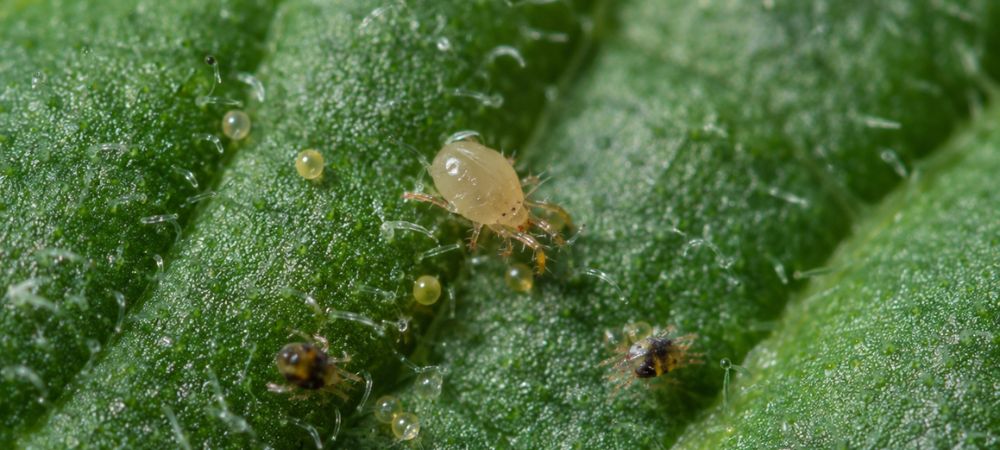
The Amblyseius californicus is another predatory mite widely used in biological control against spider mites. It has a translucent appearance and feeds on eggs, larvae, and young specimens of this pest.
Its main advantage is that it tolerates higher temperatures and lower humidity better. This is why it is especially interesting in indoor crops where the environment can be drier or hotter.
Unlike the Phytoseiulus persimilis, it is transparent and not as aggressive against advanced infestations. It is recommended to use it preventively or as soon as the first signs of spider mites are detected. If the pest is already widespread, it may not be enough on its own.
Each container contains approximately 5000 units including adults, larvae, and eggs. The usual dosage is usually between 2000 and 2500 units per m², although it is always advisable to adapt the application to the actual state of the crop.
Orius laevigatus against thrips
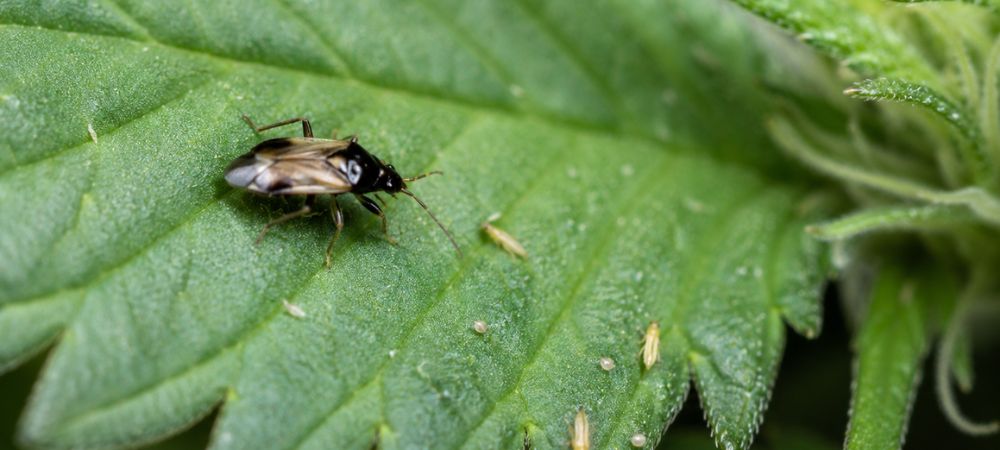
The Orius laevigatus is a very effective predatory insect against thrips in marijuana. It is a small winged insect, about 3 to 5 mm long, with a dark body and a beak-shaped mouthpart that it uses to pierce its prey and feed on them.
Its action is especially interesting because it can attack different stages of the thrip and move through the crop in search of active hotspots. Adults are good trackers and usually locate the areas where there is a higher concentration of the pest to feed more efficiently.
When it finds prey, it holds it with its front legs, inserts its beak, and absorbs its contents, leaving only the exoskeleton. Furthermore, if it has enough food, it can reproduce within the crop, helping to keep the pest under control for longer.
Orius laevigatus can be used in both indoor and outdoor crops. Before releasing them, it is advisable to place blue sticky traps to reduce part of the adult thrip population and better detect the pest pressure.
If any compatible insecticidal treatment has been applied previously, it is advisable to wait the indicated time before introducing the beneficial insects to avoid harming the Orius population. The indicative dosage is usually about 100 units per m², and each container includes approximately 500 individuals including adults, larvae, and eggs.
Advantages of biological control in marijuana
Biological control allows for pest management in a way that is more natural and respectful of the crop. By not relying solely on pesticides, residues on the plant are reduced, and a more balanced environment is fostered.
Its main advantages include:
- It helps combat pests like spider mites and thrips naturally.
- It reduces the need to apply chemical insecticides.
- It is an interesting option for crops in sensitive phases.
- It can be used indoors and outdoors, depending on the species chosen.
- It promotes cleaner production that is respectful of the plant.
When is it advisable to use beneficial insects?
Biological control can be used preventively or as a treatment for an already detected pest, depending on the species chosen.
The Amblyseius californicus, for example, works better when the spider mite has just appeared or when the crop is prone to this problem. In contrast, the Phytoseiulus persimilis is more suitable when the pest is already present and requires more direct control. For thrips, the Orius laevigatus is one of the most complete options due to its searching and predatory capacity.
The key is to act in time. The sooner the pest is detected and the appropriate predator is introduced, the better the chances of controlling the problem without resorting to aggressive treatments.
Fight pests naturally
If you want to protect your plants without resorting to chemical pesticides, biological pest control in marijuana is an effective, clean, and crop-friendly alternative. Choosing the right beneficial insect can make the difference between a pest that is difficult to control and a healthy, balanced crop with better final quality.
At GB, you will find different biological control solutions to combat common pests like spider mites or thrips naturally and effectively.