

 Personalized Attention +44 151 947 0713
 SHIPPING TO ALL

 9/10 Rating
 SALE TO MINORS PROHIBITED
 Iniciar sesión
 0
0

Lion's Mane extract is obtained from the fruiting body of the mushroom Hericium erinaceus, a species with a long tradition in Asia. In the past, it was used in Chinese medicine and Eastern herbalism as part of preparations associated with general well-being and vitality.
Subscribe and we'll let you know when we have stock.
 2
loyalty points.
Your cart will total 2
loyalty points
that can be converted into a voucher of
0.40€
2
loyalty points.
Your cart will total 2
loyalty points
that can be converted into a voucher of
0.40€

Data sheet
Description
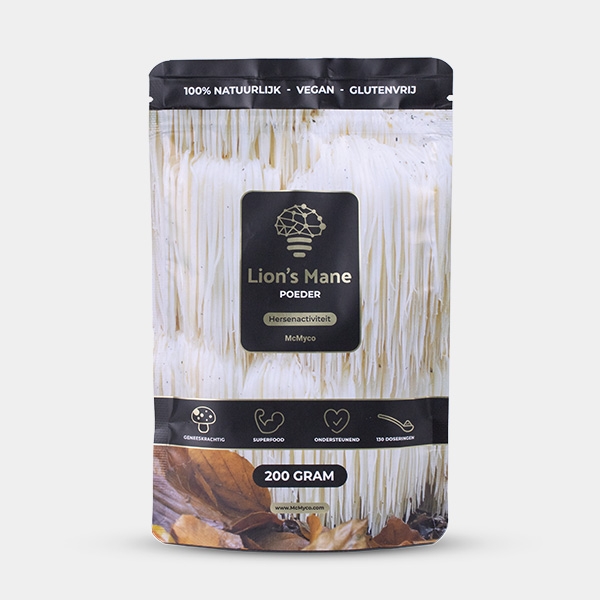
Lion's Mane extract is a concentrate derived from the mushroom Hericium erinaceus, a species recognizable by its characteristic white, filamentous shape, similar to a lion's mane. Native to Asia, where it is known as hou tou gu, this mushroom has been valued both for its culinary interest and its distinct botanical profile within Eastern tradition.
In its natural state, Lion's Mane grows on hardwood logs and develops globular fruiting bodies made up of long, hanging spines. Lion's Mane extract is made exclusively from these fruiting bodies, without adding mycelium or substrate, which allows the composition to focus on the most prized part of the mushroom.
Thanks to a double extraction process with water and ethanol, a full-spectrum extract is obtained that concentrates both water-soluble and fat-soluble compounds, including 5% polysaccharides and beta-glucans naturally present in the species.
Lion's Mane is a mushroom that grows naturally on tree trunks in temperate forests of Asia, Europe, and North America. It belongs to the Hericiaceae family and is characterized by developing globular fruiting bodies formed by long white spines that hang like a waterfall.
Its unique morphology not only gives it an easily recognizable appearance but has also made it a highly valued mushroom in Asian culinary tradition. In its fresh state, it has a firm and fleshy texture, while in extract form, its botanical profile is concentrated to facilitate its preservation and use.
In traditional Chinese medicine, Lion's Mane was used for centuries as part of herbal preparations aimed at supporting the digestive system and the overall balance of the body. It was also included in traditional formulations associated with maintaining mental clarity and vitality.
Historically, it was attributed effects related to cognitive well-being and emotional stability. Its use was integrated into both food and herbalism, forming part of a tradition in which medicinal mushrooms held a prominent place.
You might also like


