Personalized Attention +44 151 947 0713
 SHIPPING TO ALL

 9/10 Rating
 SALE TO MINORS PROHIBITED

One of the primary goals of cannabis growers is to achieve good yields in the shortest time possible. Over the years, various techniques have been invented and experimented with for this purpose. However, surprisingly, hydroponic farming is not a modern system but a growing method that has existed for thousands of years. Here we discuss everything about the characteristics of this cultivation to create your own homemade hydroponic cultivation.
What is hydroponics?
Hydroponics is a cultivation technique where plants are grown using inert growing media or without any growing medium. In this method, the plant roots are suspended or submerged in a nutrient-rich aqueous solution, effectively absorbing the applied nutrients.
Hydroponic farming is especially popular in cannabis cultivation due to its ability to provide a controlled and highly efficient environment for plant growth.
Further, the origin of the word hydroponics derives from “Hydro,” which means water, and “Ponos,” which means work.
Essential parameters: temperature, pH, and EC
Hydroponic systems presents some fundamental characteristics and requirements that cannot be overlooked. Indeed, you must strictly control the ideal values of temperature, pH, and EC.
Water temperature
For effective hydroponic farming, the water temperature should be between 18°C and 20°C, as this is the optimal point for proper nutrient absorption. You can easily control this parameter with a water thermometer; if you need to increase the observed temperature, you can use a water heater.
pH (Hydrogen potential)
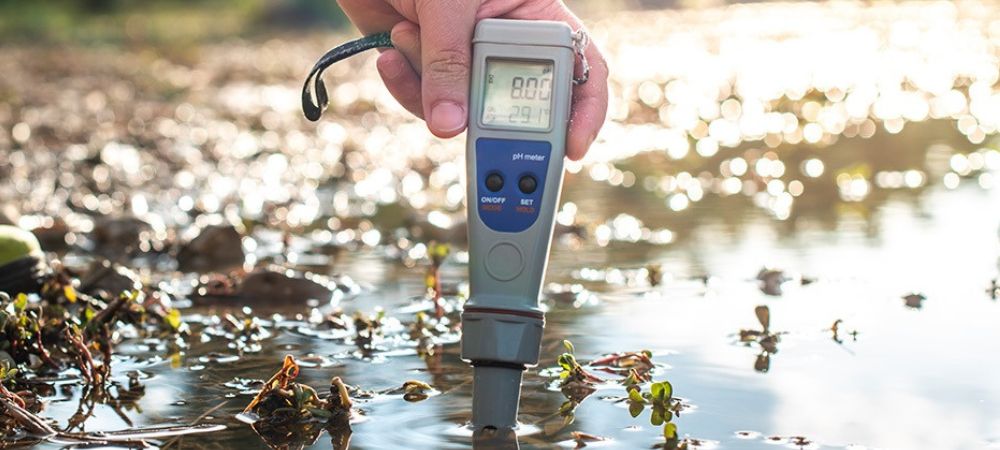
The pH indicates the alkalinity level of water, that is, the predisposition for nutrients to be correctly absorbed by plants. Nutrients will be more available to the plant when it has slightly acidic values.
Therefore, a pH of 5.5 to 5.8 is recommended for the growth phase and 6.0 to 6.2 for the flowering phase. The pH level should be regularly monitored using a pH meter.
Electrical conductivity (EC)
Electrical conductivity (EC) refers to the measure of a solution’s ability to conduct an electric current.
Like pH, EC measurements should be adjusted according to the growth phase of your plants. However, you can start with an EC of approximately 0.6 in the germination phase, increasing this value as the plant develops, up to a maximum of 1.6 to 1.8.
The ideal EC values vary according to each strain, provided nutrients, and even the growth and flowering stage.
Materials needed to prepare a hydroponic crop
- Seeds
- Lighting
- Inert substrate (coco, perlite, rock wool…)
- pH and EC meters
- Hydroponic systems
- Fan
- Fertilizers
- Thermohygrometer
- Extractors like the VK Tubular Extractor

GB Lighting 600W V3.0 Dimmable LED System

GB Lighting LED Panel Pro V3 150W

GB Lighting Dimmable 250W Pro V3.0 RESINX LED System
Different hydroponic systems
There are different types of hydroponic systems, such as the ebb and flow system, the NFT (Nutrient Film Technique) system, the aeroponic system, or the DWC (Deep Water Culture) system, among others. Each of these systems has its pros and cons, but they all share the characteristic of providing a nutrient solution directly to the plant roots.
Ebb and Flow System
This ebb and flow system, also known as flood and drain, involves growing marijuana seeds in pots with an inert substrate, which helps anchor the roots and promote slower drainage.
Furthermore, to implement this technique, individual pots should be placed inside a tray. The tray is then placed on upper floors above the water tank, where nutrients will be introduced. The nutrient-rich water in the tank will then be pumped from the reservoir to the respective pots or PVC tubes. Plants can be watered through a drip system or by flooding.
NFT (Nutrient Film Technique)
The Nutrient Film Technique (NFT) uses a pump to bring nutrient-rich water to the cultivation tray where the plants will be in pots with inert growing media (if used). In the end, there will be a drain pipe to recycle the nutrient solution from unused water.
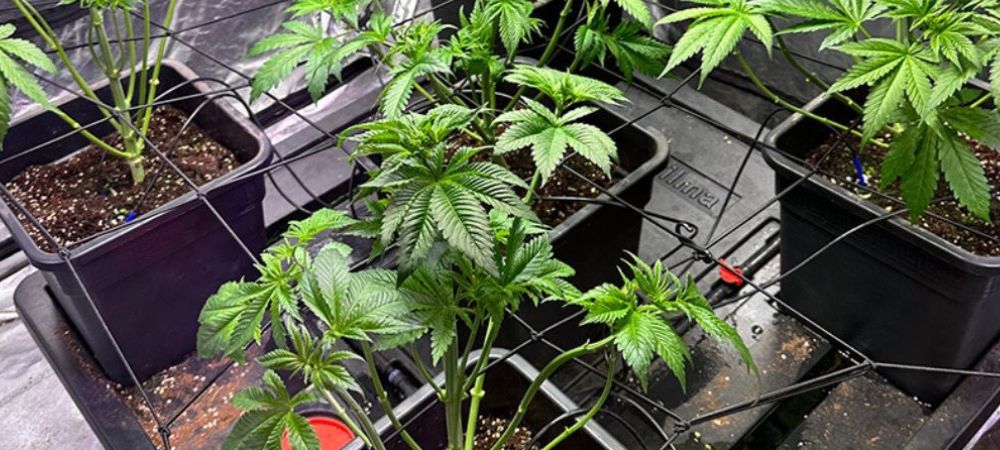
This system is similar to ebb and flow, as both use water pumps to bring nutrients to the plants. However, NFT is distinguished by being a constant flow system, where water not absorbed by the plants will be reused, falling back into the water tank.
DWC (Deep Water Culture)
Deep Water Culture (DWC) or floating root system is one of the simplest hydroponic systems to set up and at the same time, one with lower costs.
This system uses extensive cultivation trays, pots, or PVC tubes, where plants are placed. These plants will be placed directly on a tank with the nutrient-rich aqueous solution, while the roots will be constantly submerged in oxygenated water, with fertilizers and properly controlled.
Inert growing media necessary for hydroponic farming
Before identifying possible inert growing media used in hydroponics, it is essential to clarify what these inert growing media are.
Inert growing media are growing media that do not contain any nutrients in their composition, and their pH is ideal for cannabis cultivation. Indeed, they are used mainly in hydroponic or aeroponic systems so that growers can control their crop’s nutrition 100%.
Moreover, to carry out hydroponic farming, no specific inert growing media are strictly necessary, but these help fix stems, increase plant oxygenation flow, as well as in drainage and water retention.
Some types of inert growing media that can be used when opting for hydroponic cultivation include:
- Rockwool
- Coconut fiber
- Perlite
- Vermiculite
- Clay
- Neoprene clone collars
- Etc.
Advantages and disadvantages of hydroponics
| Advantages and disadvantages of hydroponic cultivation | |
|---|---|
| Advantages | Disadvantages |
| Faster plant growth. | Need for constant monitoring of environmental and cultivation conditions (pH, water, EC). |
| 100% control of supplied nutrients. | The installation and assembly of the hydroponic system require a higher cost. |
| Easy access to fertilizers, which are directly absorbed by the roots. | Specific fertilizers will be needed. |
| High productivity and excellent resin level. | Constant cleaning of the water tank and the hydroponic system will be required. |
| Lower risk of pests, fungi, and soil diseases. | The flavor of the buds may acquire less natural flavors compared to soil cultivation. |
In summary, the choice between growing cannabis in hydroponic systems or traditional soil will depend on each grower’s goals, especially the available monetary resources and level of knowledge.
While hydroponics offers more efficient and completely controllable harvests, the associated disadvantages should not be underestimated. Therefore, it is crucial for producers to carefully consider the pros and cons before opting for hydroponic farming for cannabis.




 Add as preferred source in Google