Personalized Attention +44 151 947 0713
 SHIPPING TO ALL

 9/10 Rating
 SALE TO MINORS PROHIBITED

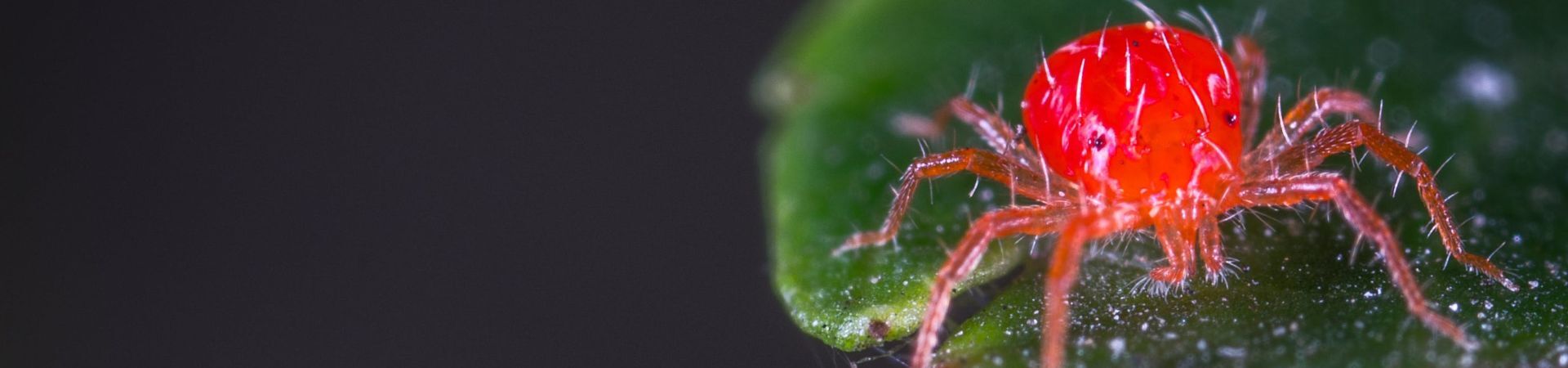
The red spider mite is one of the most aggressive and difficult pests that can appear in a cannabis crop. Red spider mites usually settle in dry but warm environments, and a plague of this type gradually weakens the plant. At first, red spider mites may go unnoticed, but we must act as soon as possible. Find the best insecticide for red spider mites at GB The Green Brand!
In this blog, you will find solutions designed to help you choose the best red spider mite insecticide according to the stage of the infestation. The same treatment is not needed for a plant with mild symptoms as for a crop with an advanced infestation.
In addition to red spider mites, you may have other types of pests in your cannabis crop. Therefore, in addition to gathering different products, GB The Green Brand explains which option best suits each case and how to apply it.
How to choose best insecticide for red spider mites?
Choosing the best red spider mite insecticide is key to not wasting time or letting the plague advance. When red spider mites are just starting, they are usually detected by small light spots or a dull appearance. At this point, a milder strategy against red spider mites can still work. For example, a treatment focused on slowing down the spread and preventing the problem from getting worse.
However, when the red spider mite infestation is already more developed, the plant shows more evident deterioration. Damaged leaves, loss of vigor, and fine cobwebs reveal that the red spider mite plague has been established for some time. In this scenario, it is advisable to opt for a more forceful solution and apply the treatment against red spider mites consistently.
There are also cases where the user is looking for a more preventive or ecological option. This approach can be useful when red spider mites have just been detected or when the risk of recurrence needs to be reduced. But it will not always be enough if the red spider mite plague has already spread to several parts of the plant.
| Crop situation | What is usually observed | Most suitable approach | What to consider |
|---|---|---|---|
| Red spider mite in initial phase | Light spots, somewhat dull leaves, slight damage | Gentle or fast-acting treatment | Act early and thoroughly check the underside |
| Medium red spider mite infestation | More affected leaves, loss of vigor, visible expansion | More specific treatment | Maintain consistency and do not leave untreated foci |
| Advanced red spider mite infestation | Fine cobwebs, evident damage, several affected areas | More forceful solution | Usually requires follow-up and several applications |
| Prevention or maintenance against red spider mites | No visible plague, but risk of appearance | Preventive or support product | Useful for reducing recurrences, not for serious foci |
| Complementary strategy | Need to reinforce control | Support with biological control | Can complement, but does not always replace treatment |
What kind of treatment do red spider mites need?
When choosing the best red spider mite insecticide, it is important to understand that not all solutions work the same way. Some are more geared towards a quick intervention on visible red spider mite foci. Others, however, fit better within a prevention strategy.
Direct action options are usually useful when the first red spider mite foci are detected and quick intervention is desired. They work best when applied with good coverage, especially on the underside of the leaves, where the pest usually concentrates.
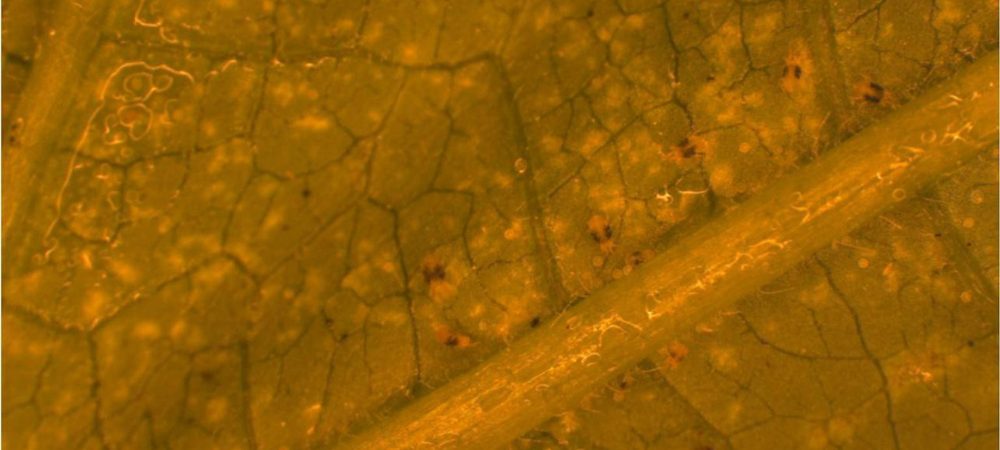
When the crop already has several points affected by red spider mites or signs of clear expansion, more specific treatments are needed. In these cases, not only the product matters, but also following an appropriate pattern and not abandoning the treatment prematurely.
Preventive and support products make sense in crops prone to this pest or as reinforcement once the main focus is controlled. These help keep the crop more protected, but should not be understood as a total solution in advanced cases.
Furthermore, in certain contexts, biological control can be a great complement. It does not always completely replace a treatment, but it can be part of a more balanced strategy to keep red spider mites at bay.
How to know if you need to treat a red spider mite infestation?
One of the most common mistakes is waiting too long. Red spider mites usually start discreetly, with small signs that are often confused with other crop problems.
As it progresses, the damage becomes much more evident. The leaves deteriorate, the plant loses strength, and cobwebs begin to appear. These signs are more present on the underside of the leaves and in more protected areas.
The sooner the pest is detected, the easier it is to control. Therefore, if you observe clear symptoms, it is best to thoroughly check the crop. Choose a red spider mite insecticide that matches the actual level of the problem as soon as possible.
Why are red spider mites so difficult to eliminate?
The problem with this pest is not only that it appears, but how quickly red spider mites can spread when there is a favorable environment.
That’s why it’s important to know at what temperature red spider mites die and how climate influences their development.
Another reason why it is difficult to eliminate is that it hides in less visible areas. Many times the grower detects the damage on the leaf before the presence of the pest itself. If the treatment is applied only superficially or without paying attention to the underside, it is easy for it to be insufficient.
It is also common to make the mistake of making a single application and thinking that the problem is already solved. In practice, red spider mites require monitoring, review, and the correct pattern to prevent the focus from reappearing within a few days.
How to correctly apply a red spider mite insecticide?
It is important to choose the right product, but it is even more important to know how to apply it correctly. A poorly applied treatment may not work, when the reality is that coverage or consistency is the problem.
- Proper application: The product should be applied especially to the underside of the leaves, which is where the pest usually settles most easily. It is also advisable to focus on areas with visible symptoms and check plants close to the damaged one if the crop shares space.
- Consistency: It is also important not to stop the treatment prematurely. In many cases, it is necessary to apply the product following a recommended pattern and observe the evolution over the following days. If interrupted too soon, the pest can quickly regain ground.