 Personalized Attention +44 151 947 0713
 SHIPPING TO ALL


 9/10 Rating
 SALE TO MINORS PROHIBITED

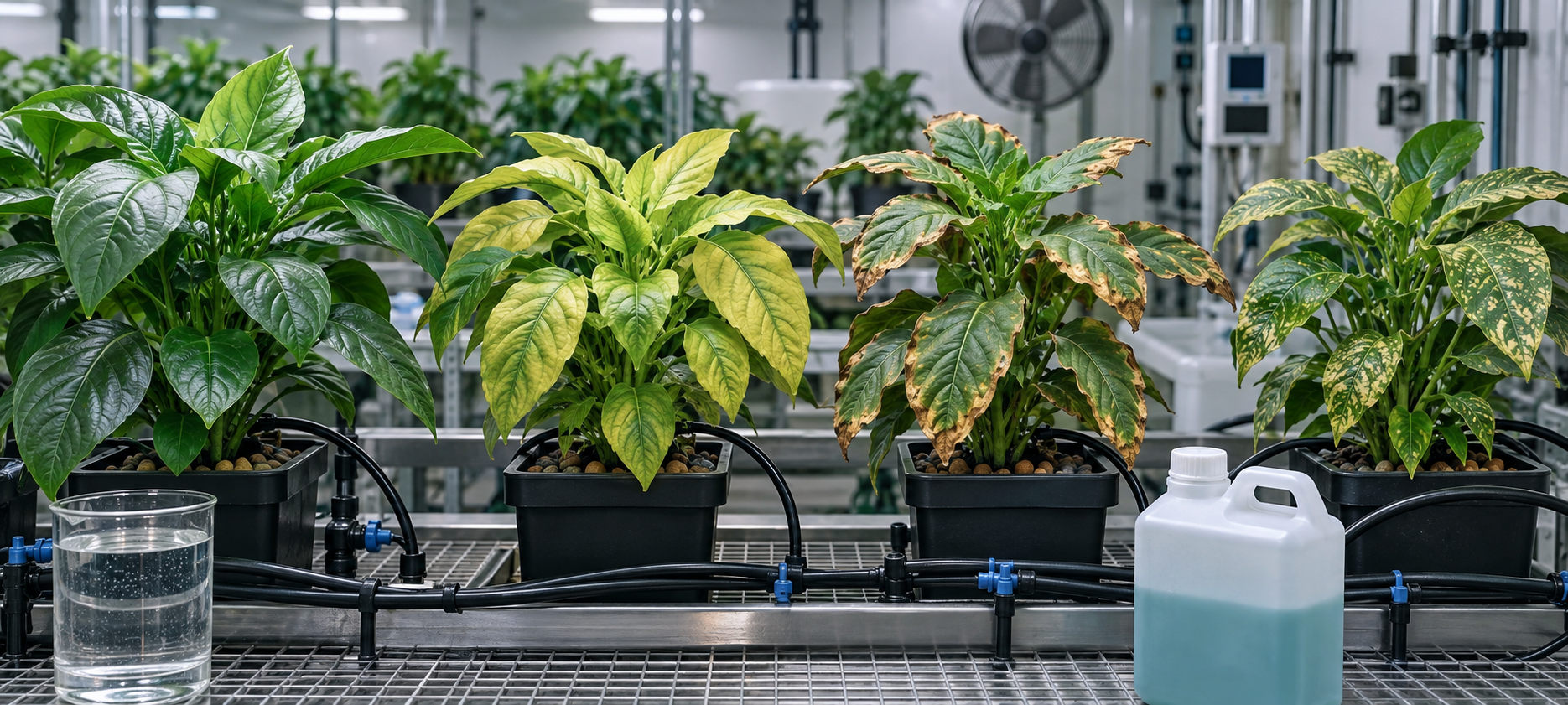
There are various toxic substances and materials for plants that can be found in the air, water, substrate, or the cultivation equipment itself. Some are easy to identify, while others are essential nutrients that only cause damage when present in excessive concentrations.
Temperature, pH, water quality, ventilation, and the sensitivity of each species influence the appearance of phytotoxicity. Therefore, similar symptoms can have very different causes, and it is not always possible to determine the problem by observing only the leaves.
Controlling the environment with a thermo-hygrometer, checking irrigation water, and using appropriate materials helps to reduce these risks.
What is phytotoxicity?
Phytotoxicity is the set of damages that a substance causes to the growth, metabolism, or development of a plant.

It can be caused by:
- An excessive concentration of nutrients.
- Incorrect application of a fungicide or insecticide.
- Contaminants present in the air.
- Accumulated salts in the water or substrate.
- Cleaning products and other chemical substances.
- Materials not suitable for agricultural use.
- Incompatible mixtures between different treatments.
Among its most common symptoms are chlorosis, spots, burns, deformations, necrosis, and slowed growth. However, these signs can also be due to nutritional deficiencies, diseases, pests, or environmental problems.
Sulfur and high temperatures
We begin the list with a product that we have used in agriculture, both for edible and ornamental plants: sulfur (S). It is an essential nutrient for plants. It participates in the formation of amino acids, proteins, enzymes, and other compounds necessary for their development. It also indirectly intervenes in the production and functioning of chlorophyll.

In addition to its nutritional function, it is used as a fungicide and acaricide to control certain problems. However, improper application can cause phytotoxicity.
Risks increase when:
- The ambient temperature is high.
- An excessive amount is applied.
- The plant is dehydrated or stressed.
- It is used on sensitive species or varieties.
- It is combined with oils or other incompatible treatments.
- The indicated time between different applications is not respected.
I would not use a universal temperature of 35 °C, as the limit changes depending on the product, the method of application, and the species treated. Numerous sulfur formulations already advise against its use at temperatures close to 28–30 °C.
Damage usually appears as spots, burns, yellowing, or necrosis on the treated leaves.
Polluting gases that harm plants
Plants can also suffer damage from air pollutants. Outdoors, these can come from traffic, industry, and other combustion processes. In closed spaces, they can also be generated by faulty heaters, engines, and poorly ventilated combustion equipment.
Nitrogen dioxide

Nitrogen dioxide (NO2) is a pollutant produced mainly during combustion processes. High exposure can cause foliar damage, reduced photosynthesis, and slowed growth.
Symptoms can include lightened areas, irregular spots, and necrosis. Their appearance varies depending on the concentration, exposure time, and the plant’s sensitivity.
Nitrogen dioxide should not be confused with the group of nitrogen oxides, usually identified as NOx.
Sulfur dioxide
Sulfur dioxide (SO₂) can also damage plant tissues. In high concentrations, it can cause discolored areas between the veins and foliar necrosis.
The combination of several pollutants can increase plant stress, although the damage is not always simply the sum of their individual effects.
Ozone
Tropospheric ozone is formed when certain pollutants react in the presence of sunlight. It can enter leaves through the stomata and damage their cells.
Symptoms associated with ozone exposure include:
- Small light, reddish, or dark spots.
- Bronzing of the leaf surface.
- Premature aging.
- Necrosis.
- Reduced growth.

These symptoms usually appear first on the most exposed leaves, but they are not exclusive to ozone. To confirm the diagnosis, pests, diseases, and nutritional problems must also be ruled out.
Ozone generators should not expel this gas directly onto plants. Ozone is also harmful to people and animals, so this equipment must be used by strictly following the manufacturer’s instructions.

Peroxyacetyl nitrate
Peroxyacetyl nitrate (PAN) is another component of photochemical pollution. It does not come directly from a single combustion, but is formed in the atmosphere through reactions between nitrogen oxides and volatile organic compounds in the presence of light.
It can cause a silvery or bronzed appearance on the underside of young leaves, as well as spots and damage to their tissues.
Excess and deficiency of boron
Boron is an essential micronutrient that participates, among other functions, in the formation of cell walls and the development of new tissues.
The difference between an adequate amount and a toxic concentration can be relatively small. Furthermore, tolerance varies considerably between species.
Symptoms of boron excess
When too much boron accumulates in the soil or irrigation water, the first symptoms usually appear on the older leaves:
- Yellowing of the edges.
- Dry tips and margins.
- Necrotic spots.
- Premature leaf drop.
- Reduced growth in severe cases.
I would not maintain as a general fact that asparagus tolerates between 6 and 15 mg/L. Although it is a comparatively tolerant crop, the limits depend on soil conditions, irrigation duration, and the variety.
Symptoms of boron deficiency
Lack of boron mainly affects young tissues and growth points. It can cause:
- Slow development.
- Deformed new shoots.
- Death of apical buds.
- Fragile stems.
- Poorly developed roots.
A soil can contain boron and still present insufficient availability due to pH, dryness, or interaction with other elements.
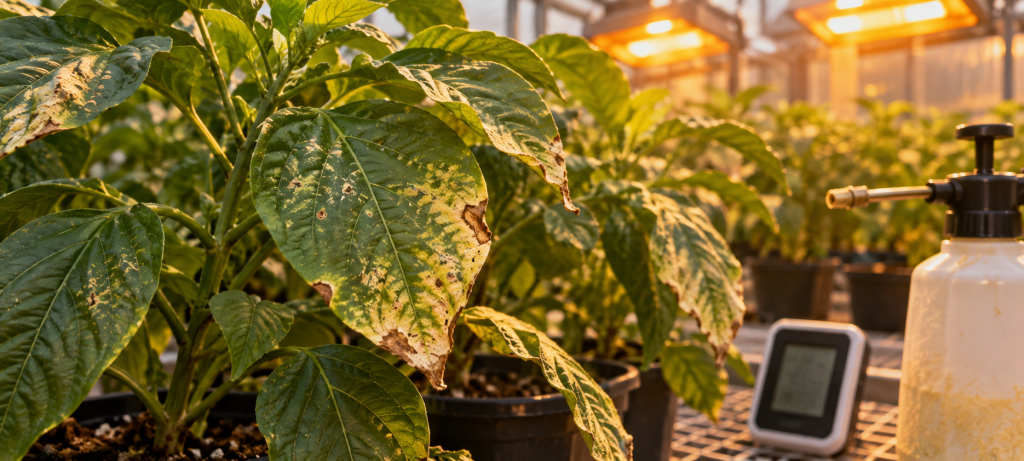
Excess chloride in water
The original text mentions “chlorine,” but nutritionally we must refer to chloride (Cl⁻). This is the form that plants absorb and one of the micronutrients needed in small amounts.
Chloride is involved in:
- Osmotic balance.
- Opening and closing of stomata.
- Electrical charge balance.
- Certain photosynthesis reactions.
It does not specifically activate the absorption of magnesium, so I would remove that statement.
Chloride deficiency
Actual chloride deficiency is rare because it is usually present in water, fertilizers, and the environment.
When it appears, it can cause wilting, chlorosis, leaf bronzing, and poor root development. I would not maintain the 2 mg/kg threshold without specifying the species and the type of analysis.
Chloride toxicity
An excessive concentration can accumulate in the margins and tips of the leaves. The most common symptoms are:
- Burns on tips and edges.
- Yellowing.
- Leaf curling.
- Premature leaf drop.
- Slowed growth.
These damages can be confused with a general accumulation of salts or with problems related to potassium. An analysis of the water, substrate, or plant tissue can help identify the cause.
It is also advisable to differentiate the free chlorine used to disinfect water from the chloride ion absorbed by the plant. Although they are chemically related, they are not exactly the same, nor do they act in the same way.
Plastic materials in the cultivation system
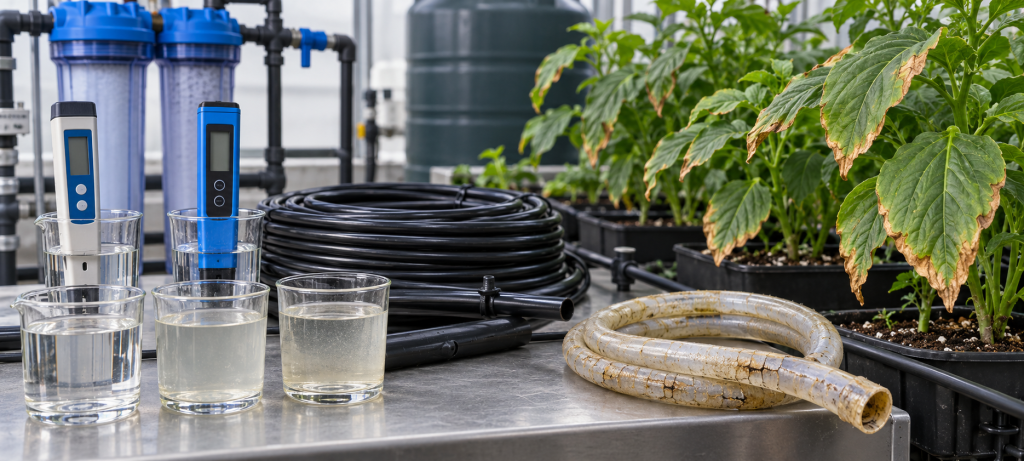
The composition of tanks, pipes, and accessories can influence water quality, especially when these materials are not designed for agricultural or food use.
Polyethylene (PE) is commonly used in irrigation systems for its strength, flexibility, and compatibility with water and numerous fertilizers. You can find different options in the pipes and irrigation parts category.
PVC is also widely used in water conduits and is not automatically toxic to plants. Therefore, I would remove the claim that any PVC releases a toxic gas upon reaching normal cultivation temperatures.
Problems can appear when:
- Plastics of unknown origin are used.
- The material is not approved for conveying water.
- Flexible pipes with unsuitable plasticizers are used.
- The plastic degrades due to heat or ultraviolet radiation.
- It has previously contained chemical products.
- It heats up until it deforms or decomposes.
- Incompatible adhesives or sealants are used.
Thermal decomposition of PVC can release dangerous compounds, but this happens at temperatures much higher than those normal for cultivation. If a pipe reaches those conditions, there is also a serious problem of overheating or fire.
The best option is to use tanks, pipes, and connections certified for irrigation or food use, avoiding recycled materials of unknown origin.
How to identify a possible toxicity problem
Phytotoxicity can resemble a nutritional deficiency, a pest, a disease, or a temperature problem. Before applying a corrective measure, it is advisable to check:
- The distribution of symptoms: whether they affect new leaves, old leaves, or all of them equally.
- The time of appearance: especially after applying a treatment or changing the water.
- Temperature and humidity: both current and maximum/minimum.
- pH and electrical conductivity: to detect imbalances or salt accumulation.
- Water quality: including the elements present and their concentration.
- Combustion equipment: in case there is a leak or poor ventilation.
- Materials used: tanks, pipes, adhesives, and cleaning products.
- The presence of pests or diseases: before attributing the damage to a toxic substance.
In plant nutrition, an insufficient amount can cause a deficiency, and an excessive concentration can cause toxicity. Therefore, adding more product without confirming the origin of the problem can worsen the symptoms.
The best way to prevent this damage is to use suitable products, respect their labels, control the environment, and perform analyses when the problem cannot be clearly identified.



 Add as preferred source in Google


