 Personalized Attention +44 151 947 0713
 SHIPPING TO ALL


 9/10 Rating
 SALE TO MINORS PROHIBITED


Marijuana lighting needs are one of the main factors to take into account in order to obtain great quality yields. The available lighting option for indoor grows is quite wide and they are differentiated by their heat emission, manufacturing materials, consumption or durability, among others. With this article, GB The Green Brand would like to approach the differences between LED and LEC, two lighting systems that are here to stay and have become the main options for indoor grows in enclosed spaces.
According to the different LED and LEC manufacturers, their product is always the best one. But of course, it would be a mistake to think that one lighting system is better than the rest for all indoor grows as other aspects also come into consideration, such as grower’s experience, seeds genetics, growth medium, fertilizers and additives used. However, there are certain differences between them that could facilitate the task of choosing which one adapts better to our indoor crop.
What is LED lighting?
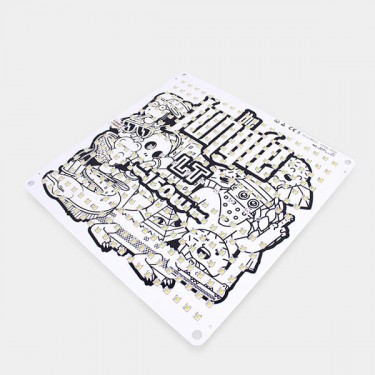
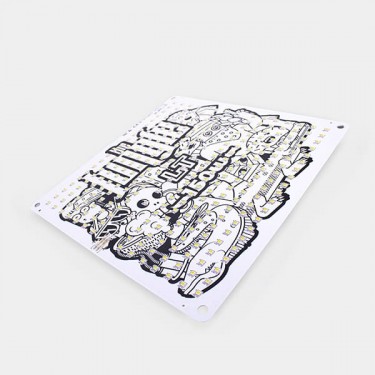
LED lights are based on the principle of electroluminescence; which consists in the emission of photons that vary the lighting according to the materials with which the diode capsules are made. LED (Light-Emitting Diode) lamps are the future in lighting. They are capable of increasing the yield, emitting less heat and saving energy, and therefore, money.
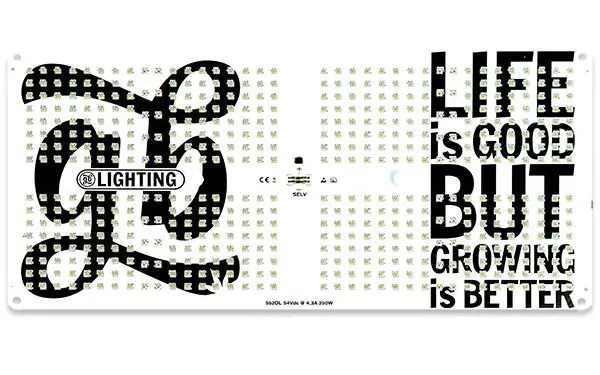
Another advantage of LED lighting systems is their long useful life, which ensures an average rated life of more than 10 years, a feature that other lighting systems don’t have. The fact that they emit less heat means they are a great option for indoor grows during the summer months, where high temperatures could pose a problem. This also reduces the cost of refrigeration and prevents plants from burns.
Functionality is another pro.These lighting systems do not require an electronic or magnetic ballast. A Plug & Play connection and the included drivers are all they need to start working right after plugging them in. They also stand out for their full spectrum lighting aspect that makes them suitable for both growth and flowering phases.
What are LEC lights?
LEC lighting, also call CMH (Ceramic metallic halide) is considered as the next generation of HPS lights; the main difference is that they contain ceramic gas. This lighting system produces infrared and uv rays that mimic natural lighting; thus increasing the production of trichomes, terpenes and cannabinoids. This UV-B lighting is harmful for people, therefore, safety clothing must be worn to avoid damage to eyes or skin.
As it’s obvious, plants need light to perform photosynthesis, thus, for this reason, the concept of Photosynthesis Active Radiation (PAR) has been deeply studied; which bases itself in how much radiation can plants absorb. LEC bulbs are different because they produce more PPF (Photosynthetic Photon Flux Density); meaning that one 600W HPS bulb can produce the same yield as a 315W LEC lighting system.

Despite this advanced light emission, LEC lighting component are very similar to those offered by HPS or HM systems. They also include a ballast, a reflector, bulbs and a socket, and are easy to install and use. This lighting systems offer greater durability and less heat than HID lights (although more than LED).
Differences Between LED and LEC
Now we are going to list the main differences between LED and LEC lights; in order to provide growers interested in a new lighting system, all the necessary information.
- Lifespan: LEC technology has exceeded HPS lamps regarding durability and useful life, lasting up to two years; although it is still lower than LED lights, which are useful for up to 11 years. Here the winner is LED.
- Light emission: LEC lights emit UV-B rays, which permit a larger production of trichomes during the flowering period. LEDs don’t normally generate UV radiation, although some specific models do include this function. Because they mimic sunlight, they offer greater protection against fungi or other pathogens and also increase the production of resin and terpenes.
- Yield: While the ratio g/w doesn’t differ too much; LED yields can sometimes get near 2 g/w while LECs produce approximately 1.5 g/w.

- Temperature: LEC lights are up to 6 ºC cooler than sodium bulbs; but LED’s can lower the temperature an extra 3-6 ºC. Both options are excellent for hot areas, but LEDs are more likely to promote a larger yield.
- Available space: As a general rule, LEC lights are more suitable for enclosed spaces with high ceilings; as the extra heating emission will compensate for the distance from the plants. LEDs on the other hand, are a better option for grow tents or small areas because they emit less heat.
- Costs: To this day, preparing a grow room with LEC bulbs is cheaper than installing grow LED lights.
Differences Between LED and LEC. What Lighting System is Better to Grow Cannabis?
Making a decision is difficult; but if growing during the summer is a priority, then you should opt for LED lighting systems. However, if the focus is on using UV rays to increase the production of resin and terpenes; then go for LEC. Nowadays, lighting systems are a thing of the present rather than the future; and as years go by, these lighting systems are becoming more popular among marijuana growers.



 Add as preferred source in Google


