Personalized Attention +44 151 947 0713
 SHIPPING TO ALL

 9/10 Rating
 SALE TO MINORS PROHIBITED
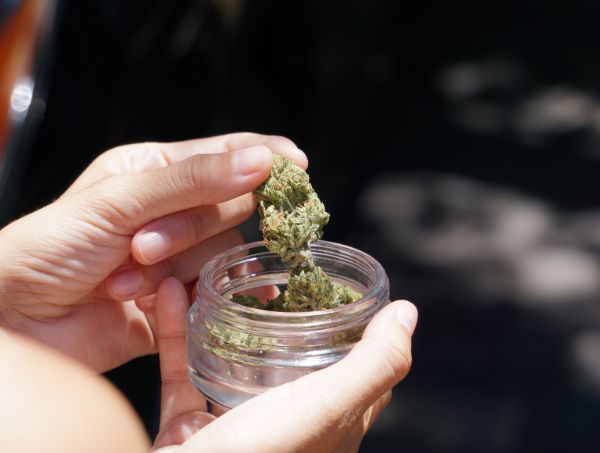
As with other natural products such as wine, there are also cannabis tastings, which allow us to discover the various aspects offered by this plant. Experts have the opportunity to refine their sense of smell and taste, in order to identify all the varieties‘ nuances. That’s why it’s important to know how to hold a cannabis tasting properly.
Growers and consumers agree on the complexity of the cannabis plant. Inside each individual, we can find up to 100 terpenes, providing the plant with the most organoleptic variations. All these properties can be discovered during a cannabis tasting by examining elements such as flavour, appearance, smell and effect. In order to do it correctly, it is advisable to:
Prepare the environment for cannabis tasting
First of all, before starting the tasting, it is necessary to prepare the environment well so that it does not affect cannabis’ properties:
- 60% of humidity is preferable so as not to affect the olfactory sensitivity.
- The temperature should be between 21 and 24 degrees. Outside this range, the nasal mucosa can be affected. In addition, it can alter the aromatic compounds’ volatility.
- Regarding light, sunlight is preferable in order to appreciate the flower’s. If you use an artificial light source, use solar spectrum lamps.
- The table where the tasting will take place must be white or place a white base (papers, tablecloth…) which favours the perfect observation of the sample’s colours.
- During the tasting, use the method you usually do to so as to ensure an objective evaluation.
- Wash your hands and mouth well to free them from odours.
- Keep the flowers in excellent conditions, clean, well manicured and free of cannabis seeds.
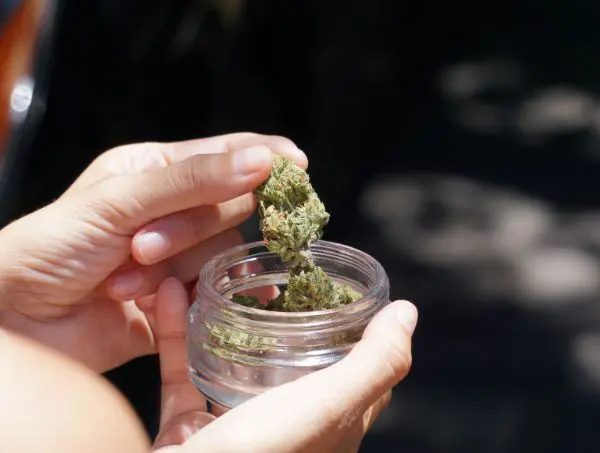
How to perform a cannabis tasting
Once everything is ready, the weed tasting can begin. It is possible to differentiate two types of tasting:
Organoleptic tasting
This one starts with the observation of the sample by using the senses, then combustion to evaluate other aspects. These are the 3 criteria to analyse:
Aspect
Observe the flower’s hygiene, that is to say that the manicure is correct and without remains of seeds, leaves or stems as well as the drying. It is enough to press lightly the herb and to verify the humidity and its density. Finally, look at the colours of pistils, leaves, buds, smoke and ash.
Moreover, it is necessary to take into account the sample’s variety. Then, with the help of a microscope or a magnifying glass, it’s time to judge the trichomes, as much the quantity of resin, the size, the colour and the shape of these.
If they present the shape of a white lollipop, the plants were cut when their psychoactivity is at the maximum; while if they turn out amber, the effects will be more narcotic.
Aroma
The factors that determine the aroma are diverse, such as the chosen genetics or the method of culture. As for the smell, approach the flower to your nose and press gently with the fingers to extract all the aroma and inhale. Repeat this action several times and take in the multiple touches. Then, put the flower through a grinder to reveal its full power.
An earthy or mouldy smell indicates that the place where the drying took place was too humid. On the other hand, if the aroma is of straw, it proves that during the culture the terpenes and cannabinoids did not develop as they should. Besides, chlorophyll’s nuances put in evidence an incorrect drying and curing, as well as the metallic ones show an excess of fertiliser.
Flavour
Before checking the organoleptic qualities, the taster must make sure that he/she has not been in contact with objects or foods with strong aromas, which remain on the skin, and that the mouth is clean. This part takes place in two phases:
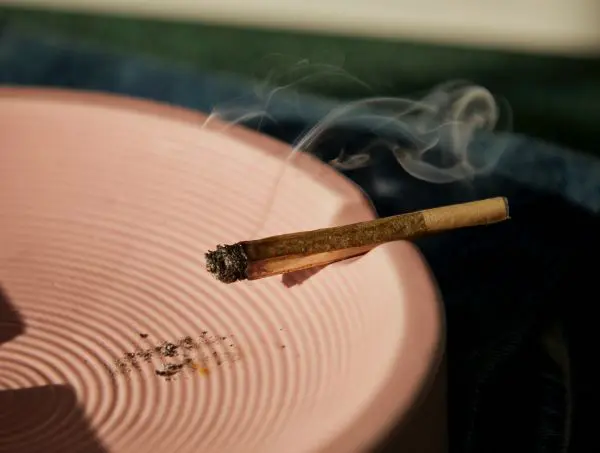
- Dry/Cold tasting. This is done without burning, taking a few puffs of the unlit cigar to check the taste.
- Burning tasting. Avoid lighting the cigar directly with the lighter, as the gas can alter the taste. On the first puff, hold the smoke in your mouth for 3 to 4 seconds and exhale without swallowing. Then inhale deeply while swallowing the smoke and exhale forcefully. Finally, a third puff is taken to further savour the smoke and get the main aromas. During the tasting, the aftertaste and nuances are taken into account.
Psychoactive tasting
This is the most subjective part of the tasting, as we evaluate the effect of the samples on the body.
Effect
The faster the effect is felt, the better the product is, because it has a large amount of cannabinoids in the resin, although this also depends on each person’s characteristics. The same goes for the duration. On the other hand, the type of effect, the tolerance caused by the strains or the amount of cannabis that can be consumed until it has no effect, will also be evaluated.
On the other hand, when tasting cannabis, everything is noted in a template with all the perceived criteria that will be measured, which will allow valid and specific conclusions to be drawn at the end of each tasting.



 Add as preferred source in Google