Personalized Attention +44 151 947 0713
 SHIPPING TO ALL

 9/10 Rating
 SALE TO MINORS PROHIBITED

In cannabis cultivation, certain factors are of great importance, such as light, which will depend on the chosen luminaire. When choosing, different concepts such as lux and lumen affect, which are essential to ensure adequate light intensity, depending on the characteristics of the environment where the specimens are located. If you know how many lumens do cannabis indoor plants need, you will be able to obtain good results. To facilitate the choice, a recommended lumens chart has been elaborated.
Lumen and lux: differences
These two terms often cause problems when it comes to differentiating between them. The following explains what each of these concepts are and how they affect the crop.
Lumen: definition
Lumens measure the luminous flux emitted by a lighting system. This measurement adopted by the International System of Unit is used to know the total amount of visible light emitted by a bulb or light source. Therefore, the more lumens, the greater the brightness power it will provide. It is useful to measure luminous efficiency, which is the ratio of lumens to power used (lm/W).

What is a lux?
This concept is closely linked to that of lumen, as it relates the light emitted to the surface area it covers. In other words, it is the same amount of light measured by lumens but projected onto a surface. For this reason, lux can be considered to be one lumen per square meter.
Difference between lux and lumen
In short, the main difference is that the lux measures the intensity of light on a surface, while the lumen does not take into account the distance or the space that is illuminated. To measure these characteristics in a room or grow room you can use tools such as a lux meter.

What is a lux meter for?
If you want to achieve a healthy crop and good harvests, one of the things to consider is how to measure and optimize the amount of light in the grow room to increase yields. The luxmeter allows you to measure the intensity of illumination. The unit of measurement it uses is lux, so it will indicate the number of lumens per square meter.
How many lumens are needed for indoor cannabis growing?
The amount of light needed by cannabis plants varies depending on the stage they are in. Therefore, it should be kept in mind that seedlings do not absorb much light, but during the growth phase they need all the light they can get. The same applies during the flowering phase, when it must be ensured that the buds will be as large as possible. For this purpose, a chart has been drawn up with the recommended lumens per square meter.
| Phase | Lux (lm/m²) |
| Cuttings/young plants | 5.000 – 10.000 lx |
| Growing | 15.000 – 50.000 lx |
| Flowering | 50.000-75.000 lx |
The maximum recommended amount is 75,000 lx. Exceeding this limit can cause light stress in plants and above 80,000 lux increases the risk of bleaching. Raising the light more than recommended will decrease the yield.
Types of light for crops
In addition to intensity, the type of lighting being used is also important. Thus, during rooting and the first stages of seedling growth it is recommended to opt for a blue light, such as CFLs or fluorescent. With the same spectrum, in many cases we switch to HM bulbs, allowing them to grow strong and prepare for flowering. During the generative phase, it is recommended to use a red spectrum, imitating that of natural light, being able to use a HPS. However, thanks to innovations in LED lighting for cannabis growing, nowadays these lights can cover the whole cycle, due to their full spectrum.
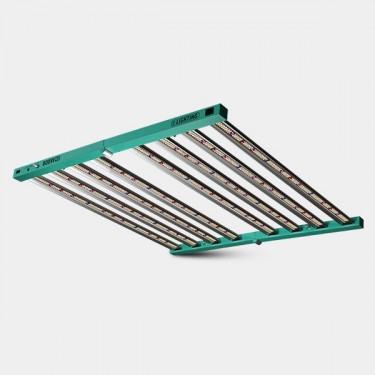
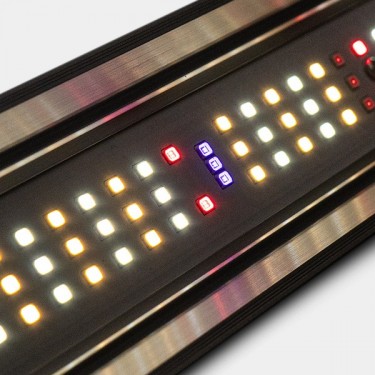
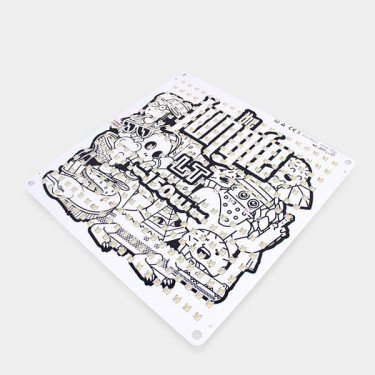
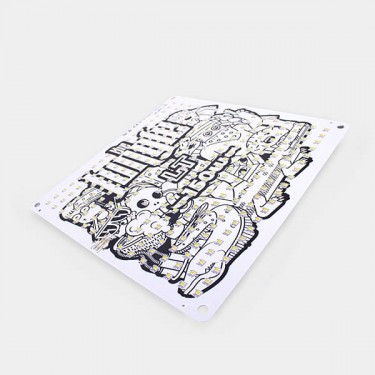
There is a relationship between the different types of lights and lumens. For this purpose, the following chart shows the relationship between LED, halogen lights and lumens:
| LED | Halogens | Lumens equivalence |
| 1 W | 10 W | 70-110 lm |
| 3 W | 15 W | 180-250 lm |
| 5W | 35-45 W | 380-450 lm |
| 7W | 45-60 W | 500-620 lm |
| 10 W | 60-70 W | 800-980 lm |
| 15 W | 60-120 W | 1100-1300lm |
| 24 W | 165 W | 1800-2100 lm |
| 30 W | 200 W | 2300-2750 lm |
| 40 W | 270 W | 3000-3600 lm |
| 45 W | 300 W | 3500-4200 lm |
| 50 W | 250 W | 4500-5000 lm |
| 70 W | 400 W | 6300-7000 lm |
| 80 W | 500 W | 6400-7200 lm |
If this variable is under control thanks to the luxmeter, you’ll be then able to adapt light to the plant’s needs. You only have to observe the recommended lumens chart for indoor crops and keep an eye on the lighting’s used intensity.




 Add as preferred source in Google