Personalized Attention +44 151 947 0713
 SHIPPING TO ALL

 9/10 Rating
 SALE TO MINORS PROHIBITED

Blonde Pollen is one of those names almost everyone has heard at some point, yet not everyone fully understands. For some, it’s synonymous with quality; for others, it’s a classic old-school concentrate; and for many, it’s simply “that light-colored pollen that smells so good.”
The truth is that behind its golden color and sandy texture lies a specific production process, clear quality standards, and several myths worth clearing up. In this guide, we explain what Blonde Pollen really is, how it’s made, and what details to look for to determine whether you’re dealing with a premium product… or just something that looks the part.
What is Blonde Pollen?
Blonde Pollen is a cannabis resin obtained from trichomes, the microscopic glands that coat the flowers and concentrate cannabinoids and terpenes. It is also commonly referred to as blonde hash, since this pollen is often lightly pressed to give it a compact shape. There are key differences between hash and pollen that you can explore on our blog.
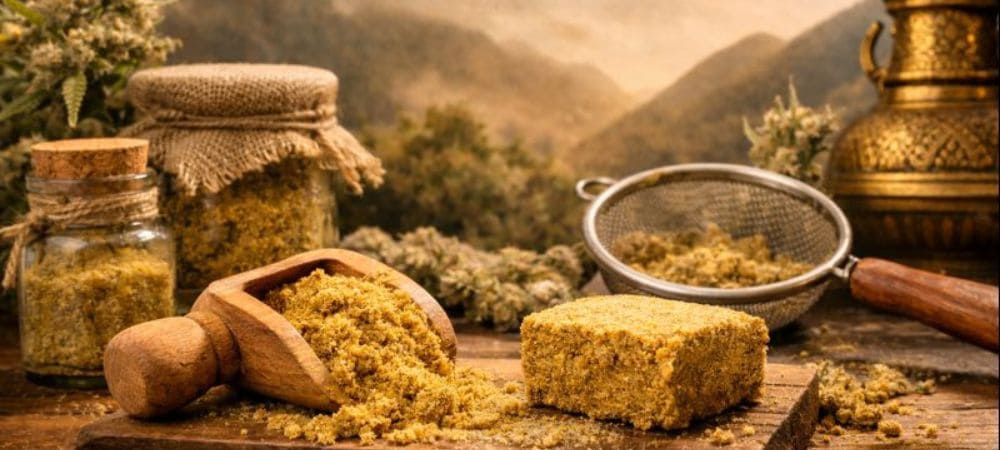
Blonde Pollen is known for delivering a balanced and progressive psychoactive effect, very similar to that of marijuana. These effects are primarily produced by tetrahydrocannabinol (THC).
Its effects are typically characterized by a sense of both mental and physical relaxation. The experience tends to develop gradually, promoting well-being, calmness, and a more uplifted mood, without becoming overwhelming at moderate doses.
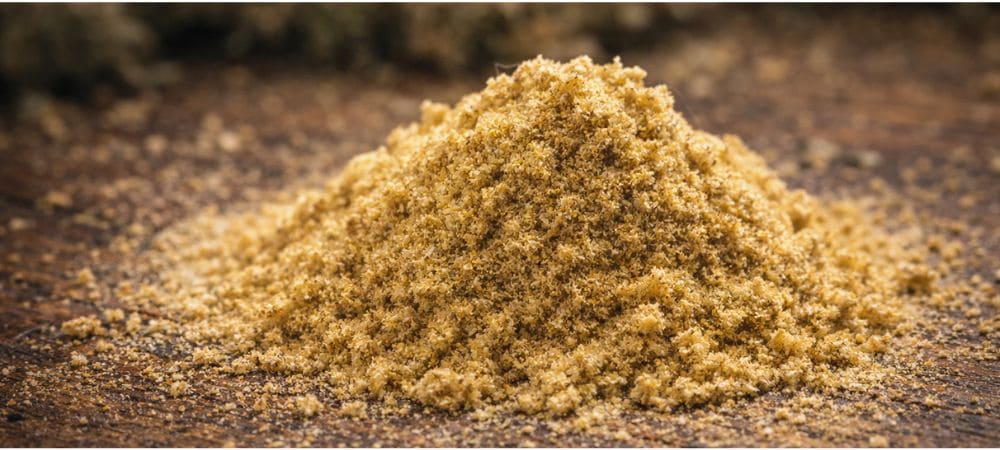
On a physical level, it may help relieve tension and encourage relaxation, while mentally it can create a more positive and easygoing perception of your surroundings. The intensity of these effects depends on the quality of the pollen, its concentration, and individual tolerance, so responsible and mindful use is always recommended. The term “blonde” refers to its light color, typically ranging from pale gold to beige. This tone is usually associated with clean dry sifting, minimal plant material, and careful processing.
How Blonde Pollen is made
To understand the quality of Blonde Pollen, it’s important to know how it’s produced. Unlike many modern cannabis extracts, no solvents or complex chemical processes are involved.
Dry Sifting: The Origin of Blonde Pollen
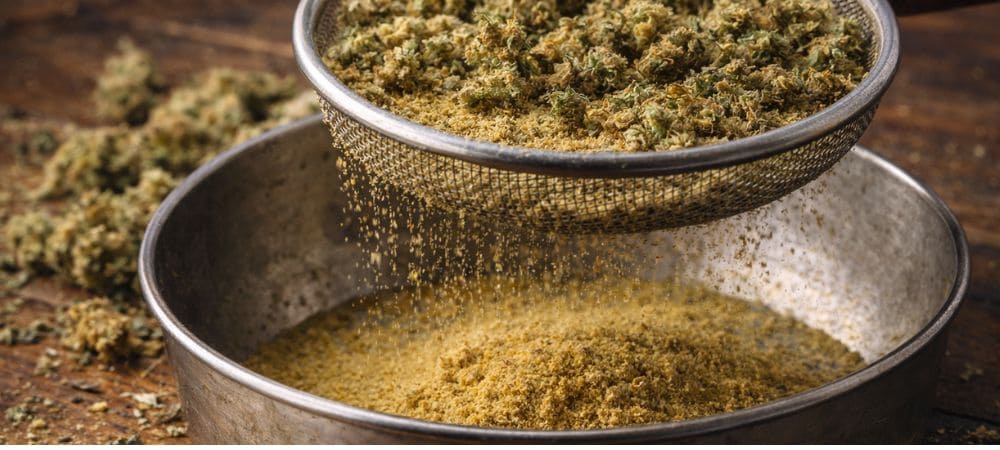
Blonde Pollen is obtained through dry sifting, a traditional technique that separates trichomes from the plant using screens with different micron sizes. By gently shaking or rubbing dried plant material over these screens, the trichomes detach and fall as a fine powder.
This powder is commonly known as pollen or kief. When the process is clean and appropriate mesh sizes are used, the result is a light-colored, loose, and highly aromatic Blonde Pollen.
Today, recent research is exploring advanced trichome separation methods, such as electrostatic techniques that allow producers to obtain high-purity solventless extracts, representing an evolution of traditional dry sifting.
Pressing: From pollen to blonde hash
In many cases, Blonde Pollen is lightly pressed into slabs or small blocks. This pressing can be done cold or with a slight application of heat.
- Pressing improves handling and storage stability.
- It may slightly modify the texture and aroma, making it more compact.
Blonde pollen, Dry Sift, and Traditional Hash: key differences
Although these terms are often used interchangeably, they are not exactly the same. Understanding the differences can help you make a more informed choice.
| Traditional Hash and Concentrate Formats | ||||
|---|---|---|---|---|
| Format | How It’s Made | Appearance | Texture | Main Advantage |
| Blonde Pollen | Dry sifting | Light golden | Sandy, loose | Classic, clean profile |
| Dry Sift | Ultra-fine sifting | Trichome powder | Very loose | Potentially higher purity |
| Traditional Hash | Pressed pollen | Darker | Compact | Greater stability |
The difference between Blonde Pollen and dry sift is often commercial and based on the level of refinement; both originate from the same dry sifting principle.
Origin of Blonde Pollen
Talking about Blonde Pollen means traveling back in time and across landscapes where cannabis cultivation has been part of everyday life for centuries. Its history does not begin with the modern industry, but with the patient knowledge of communities that learned to work the plant’s resin with respect, observation, and experience. Along this journey, Morocco holds a leading role.
In the Rif Mountains, the environment provides ideal conditions: a dry climate, mild winters, and soils that allow plants to develop a particularly rich and aromatic layer of trichomes. There, the production of blonde hash became a tradition passed down from generation to generation, where every gesture and every tool serves a specific purpose.
The process is as simple as it is fascinating. After the plants are naturally dried, a delicate dry sifting process separates the resin from the plant material without forcing it. This golden, light, and fragrant powder is then gently pressed until it takes its final shape. There are no shortcuts or chemicals involved—only time, technique, and skilled hands.
Although Morocco remains the main reference point, this traditional approach to hash-making has inspired growers in other parts of the world. Across Europe and North America, the traditional method has been reinterpreted and adapted to new climates and genetics, while preserving the core essence of Blonde Pollen: purity, texture, and character.
How to identify high-quality Blonde Pollen
Even without laboratory analysis, several visible and sensory factors can help you determine whether you are dealing with premium Blonde Pollen.
Color and appearance
High-quality Blonde Pollen typically displays a light, uniform golden or pale beige tone, indicating purity and careful processing. A clear, bright color usually means minimal plant material is present.
An excessively dark or uneven color may indicate too much leaf content, oxidation, or overly aggressive pressing.
Aroma
Aroma is one of the most reliable quality indicators. It should present earthy, herbal, or slightly sweet notes, with a clean and well-defined scent profile. A dull or stale smell may signal poor storage or low-grade material.
Texture
To the touch, Blonde Pollen should crumble easily. It should not feel excessively hard or sticky. A slightly sandy, free-flowing texture is usually a sign of proper dry sift extraction and minimal contamination.
| Quick Quality Checklist for Blonde Pollen | ||
|---|---|---|
| Indicator | Positive Sign | Warning Sign |
| Color | Light golden | Dark or greenish |
| Aroma | Clean and defined | Stale or neutral |
| Texture | Sandy and loose | Too hard |
Blonde Pollen Storage: key tips to preserve quality
Improper storage can ruin even high-quality Blonde Pollen. To maintain its freshness, aroma, and texture:
- Store it in an airtight container
- Protect it from direct light exposure
- Keep it in a cool, dry place
- Avoid sudden temperature fluctuations
At GB The Green Brand, Blonde CBD hash-style products are made from European Union–authorized industrial hemp and comply with the legal THC limit of below 0.2%. They are sold exclusively for purposes permitted under current regulations, such as collecting, aromatherapy, or decorative use. Under no circumstances are they marketed as food, therapeutic, or products intended for human consumption.



 Add as preferred source in Google