Personalized Attention +44 151 947 0713
 SHIPPING TO ALL

 9/10 Rating
 SALE TO MINORS PROHIBITED


For years, when discussing cannabis and health, almost all attention focused on two names: THC and CBD. However, as research has progressed, other lesser-known cannabinoids have begun to take center stage. One of them is THCV and its relationship with diabetes, a compound that by 2026 has become a major area of interest in the fields of metabolism and blood glucose control, especially in discussions around THCV and Diabetes.
THCV (tetrahydrocannabivarin) is a minor cannabinoid naturally present in certain cannabis strains. Although its name resembles THC, its behavior in the body is very different. It is precisely this difference that has attracted the attention of the scientific community, particularly following clinical findings related to type 2 diabetes and glucose control.
In a context where millions of people live with metabolic disorders and where traditional treatments do not always provide comprehensive solutions, THCV has evolved from a scientific curiosity into a serious and promising line of research.
The study on THCV and diabetes
The turning point came with a clinical trial led by Dr. Khalid Jadoon at the University of Nottingham, whose results were published in the medical journal Diabetes Care. This study remains one of the most frequently cited references when discussing THCV and Diabetes, particularly in relation to glycemic metabolism.

Unlike many preliminary studies, this trial was designed according to the highest standards of medical research: it was randomized, double-blind, and placebo-controlled. In other words, bias and subjective interpretation were minimized as much as possible.
The study involved 62 individuals diagnosed with type 2 diabetes, all of whom had poor glycemic control but were not insulin-dependent. Over a period of 13 weeks, participants received different treatments, including pure THCV, pure CBD, and a placebo.
How the clinical trial was structured
To better understand the results, it is helpful to clearly outline how the study was organized:
| Treatment groups and objectives | |||
|---|---|---|---|
| Treatment group | Substance administered | Daily dose | Objective |
| THCV group | Pure THCV | 5 mg, twice daily | Evaluate metabolic impact |
| CBD group | Pure CBD | 100 mg, twice daily | Cannabinoid comparison |
| Placebo group | Inactive substance | — | Psychological effect control |
This structure allowed for a direct comparison of how THCV performed relative to other cannabinoids and to the complete absence of active compounds.
What happened with glucose and metabolism
The results were clear and, in some respects, surprising. THCV showed positive effects on glycemic control, something that was not observed in the group receiving CBD.
One of the most important indicators was the reduction in fasting plasma glucose. Individuals who took THCV exhibited more stable blood sugar levels, suggesting improved glucose management by the body.
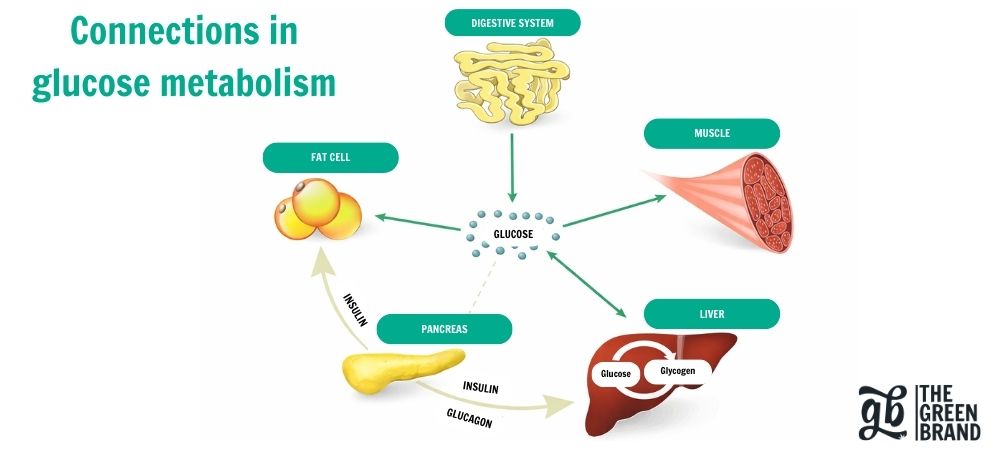
In addition, researchers analyzed pancreatic function, specifically the activity of cells responsible for insulin production. Using widely accepted mathematical models in medicine, it was observed that THCV helped optimize pancreatic response, a key factor in type 2 diabetes.
A favorable trend in insulin resistance was also detected, meaning that the body’s cells appeared to respond more effectively to this hormone, facilitating the use of glucose as an energy source.
THCV vs. CBD: two cannabinoids, very different effects
One of the most interesting aspects of the study was the direct comparison between THCV and CBD. Although CBD is known for its potential anti-inflammatory and relaxing effects, in this trial it did not show significant improvements in glycemic parameters.
This difference reinforces an idea increasingly present in cannabinoid research: each cannabinoid has its own profile, and not all are suitable for the same purposes.
| Effect of cannabinoids on glucose and metabolism | ||
|---|---|---|
| Cannabinoid | Effect on glucose | Metabolic impact |
| THCV | Significant reduction | Improved glycemic control |
| CBD | No relevant changes | Neutral in this context |
Safety, tolerability, and a key point: body weight
Beyond the results, any potential future application of THCV depends on its safety profile. In this regard, the data were particularly encouraging.
THCV was well tolerated, with mild side effects very similar to those observed in the placebo group. No concerning adverse events or study dropouts due to side effects were reported.
A particularly relevant detail is that no weight gain was observed, something that does occur with certain traditional treatments for type 2 diabetes. This factor is crucial, as weight management is a fundamental part of metabolic control.
What THCV means in the current context
As of 2026, THCV is not an FDA-approved medication for treating diabetes, and it is important to clarify this. However, existing clinical results have positioned this cannabinoid as a potential candidate within future therapeutic strategies.
Research into THCV and Diabetes has also helped change the perception of cannabis in the medical field. The focus is no longer on the plant as a whole, but on specific compounds, precise dosages, and measurable effects.
This approach aligns with the current trend toward precision medicine, where treatments are increasingly tailored to the body’s actual biological mechanisms.
THCV: education and reality
It is essential to avoid oversimplified messages. THCV is not a miracle solution, nor does it replace current medical treatments. Its value lies in what it represents: a new research pathway that expands our understanding of how cannabinoids interact with human metabolism.

For brands such as GB The Green Brand, discussing THCV from an educational, rigorous, and responsible perspective is essential to provide real value and combat misinformation.