Personalized Attention +44 151 947 0713
 SHIPPING TO ALL

 9/10 Rating
 SALE TO MINORS PROHIBITED

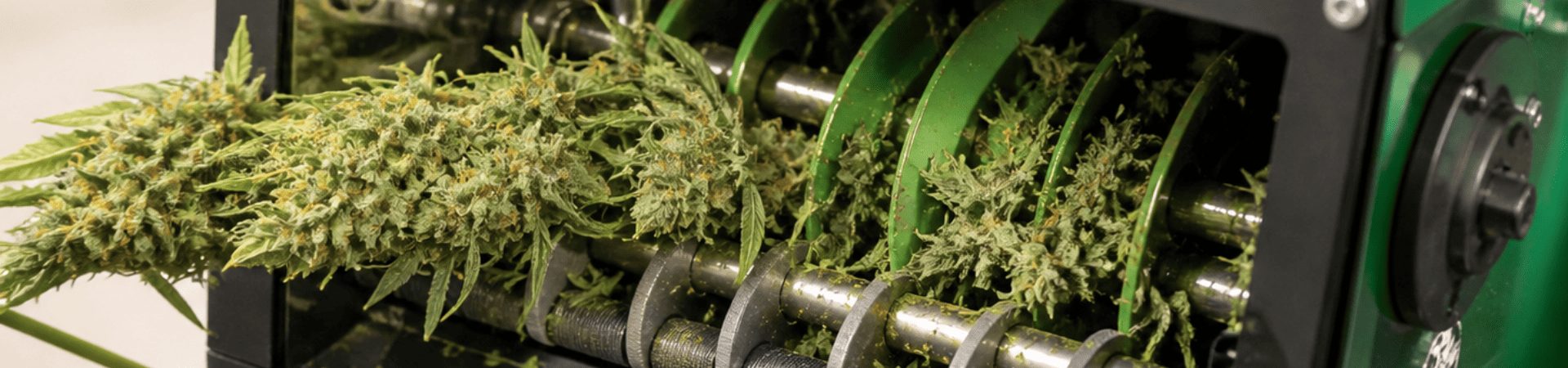
After weeks of tending to your crop, one of the most important moments arrives: the harvest. And right then, a very common question arises: is a dry or wet bud trimmer better?
The answer depends on several factors: the volume of work, ambient humidity, the type of finish you are looking for, and the time available. Manicuring a few plants at a leisurely pace is not the same as processing a large harvest.
That is why, before choosing a machine or a work method, it is worth understanding exactly what changes between dry trimming and wet trimming, when each option is beneficial, and what mistakes can affect the final result. Nowadays, having good bud trimmers allows you to save time, improve the uniformity of the manicure, and adapt the process according to the type of harvest.
What does dry or wet bud trimming mean?
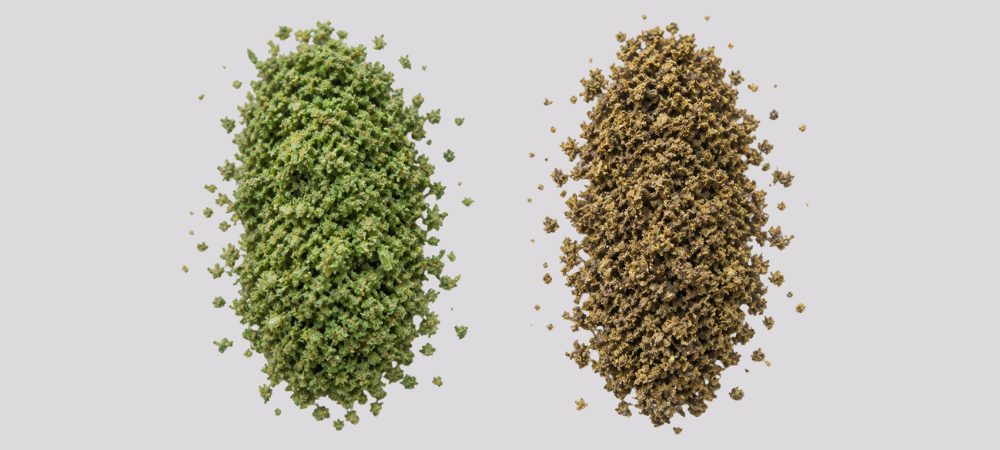
Trimming or manicuring consists of removing the excess leaves surrounding the buds. This process improves the final appearance, facilitates drying, and helps leave the flower cleaner for subsequent storage. The main difference lies in the moment it is performed.
Wet trimming
Wet trimming is done right after cutting the plant, when the buds still retain much of their moisture. At this point, the leaves are more open, flexible, and separated from the bud, making them easier to remove. This is why it is usually a fast and practical method, especially when working with many plants.
Dry trimming
Dry trimming is performed after drying, when the buds have already lost a good portion of their moisture. In this case, the leaves remain closer to the flower, and the work is usually more delicate. However, it also allows for better preservation of certain aromatic nuances and reduces some of the handling during the first few days of drying.
Why have trimmers changed the manicuring process?
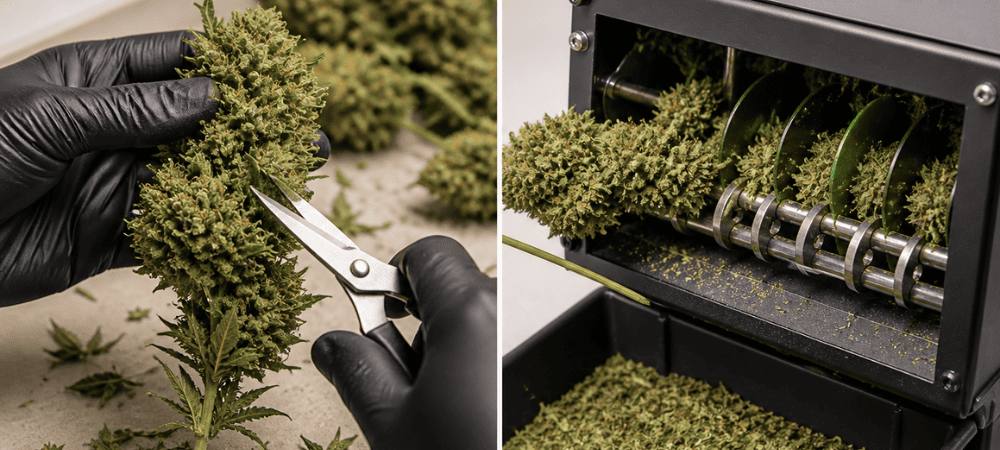
For a long time, manicuring was done solely by hand, with scissors and a lot of patience. It was slow, repetitive, and tiring work, especially in larger crops.
With the evolution of cultivation and the appearance of specific machinery, bud trimmers have become a very useful tool for those looking to save time and achieve a more uniform finish. A trimmer does not replace the grower’s judgment, but it does help to:
- Reduce hours of manual labor.
- Maintain a more consistent finish.
- Process more quantity in less time.
- Avoid fatigue in large harvests.
- Adapt the manicure to the chosen drying method.
The key is to choose the method well, because not all harvests need the same type of trimming.
| Differences between dry and wet bud trimmers | ||
|---|---|---|
| Aspect | Dry Trimmer | Wet Trimmer |
| Time of use | After drying | Right after cutting |
| Work speed | Medium | High |
| Trimming ease | More delicate | Very high |
| Aroma preservation | Higher | Good |
| Risk of trichome loss | Lower if drying is correct | Higher if handled too much |
| Visual finish | More natural and careful | Cleaner and more uniform |
| Mold risk | Depends more on drying | Lower, because plant mass is removed earlier |
| Ideal for | Crops where final quality is paramount | Large productions or humid environments |
How to choose your trimming method in 30 seconds
💧 Choose wet trimming if…
- Do you have many plants? Wet trimming.
- Is your drying area very humid? Wet trimming.
- Do you need to finish quickly? Wet trimming.
🌿 Choose dry trimming if…
- Are you looking for maximum aromatic quality? Dry trimming.
- Can you dry calmly and control the environment? Dry trimming.
- Do you want to better preserve trichomes and terpenes? Dry trimming.
⚖️ Combine both methods if…
- Are you looking for a balance between speed and quality? Both methods.
When to use a dry bud trimmer
The dry bud trimmer is a very interesting option when looking for a more careful finish and better preservation of the aromatic profile. In this case, the plant is dried first with some of its leaves. This can help the drying process be more gradual, something many growers value when they want to better preserve aroma, texture, and final quality.
Before using a dry trimmer, it is essential to know how to dry buds correctly, as incomplete drying can affect the final finish.
Advantages of dry trimming
- Helps better preserve the aroma.
- Can better protect trichomes during drying.
- Offers a more artisanal finish.
- Allows you to work more calmly.
- It is ideal for those who prioritize quality over speed.
When to choose it?
- You are looking for maximum final quality.
- You have a small or medium crop.
- You can control the drying well.
- You want to better preserve terpenes.
- You prefer a more natural finish.
Possible drawbacks
Dry trimming requires more control. If the buds are too dry, they can become brittle. If they still retain too much moisture, the trimmer will not work well and the finish may be uneven.
When to use a wet bud trimmer
The wet trimmer is a good option when you need to work quickly and reduce plant volume from the very first moment. This method is especially useful in large crops, where manicuring everything by hand can take many hours. It can also be interesting in areas with high ambient humidity, as removing leaves from the beginning helps make drying more manageable.
Advantages of wet trimming
- Allows you to work faster.
- Leaves are removed more easily.
- Reduces part of the plant volume before drying.
- Can help in humid environments.
- Offers a very clean visual finish from the beginning.
When to choose it?
- You have many plants to process.
- You need to save time.
- The drying environment is humid.
- You are looking for a more uniform finish.
- You prefer to remove leaves before hanging or drying the buds.
Possible drawbacks
The main drawback of wet trimming is that the flower is more exposed from the start. By removing protective leaves before drying, it can lose some of its natural protection against air, light, or excessive handling. Additionally, if worked aggressively, there may be more resin loss.
Hybrid method: an increasingly practical option
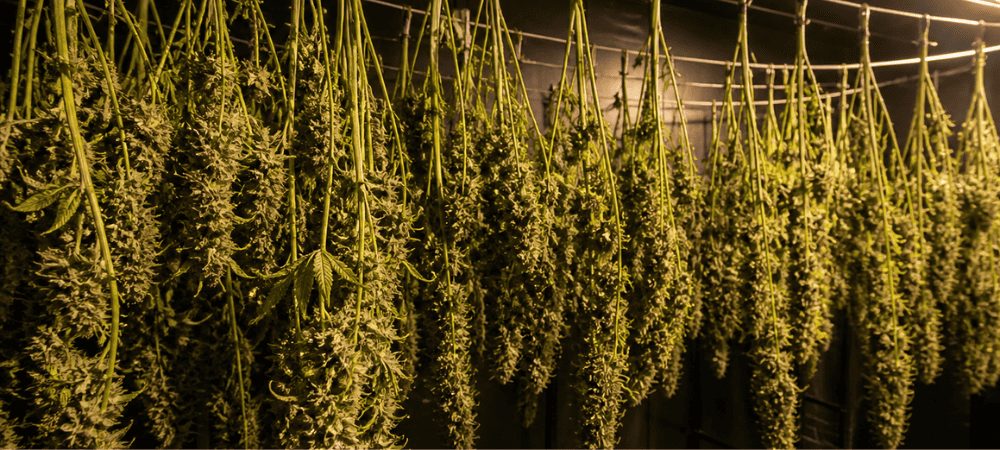
You don’t always have to choose between black and white. In many cases, the most interesting thing is to combine both methods. The hybrid method consists of first removing the largest leaves while wet, performing a controlled drying, and doing a final touch-up while dry. This reduces part of the initial work without completely giving up a more careful finish.
This system can be useful for growers who want to save time but also care about the final result. Especially in medium-sized harvests, it can be a very balanced solution.
Common mistakes when using a bud trimmer
Using a trimmer can make the work much easier, but there are also mistakes that can affect the result.
- Dry trimming too early: If the buds still have too much moisture, the machine will not work cleanly. The leaves may bend instead of being cut, leaving an uneven finish.
- Over-drying the buds: At the other extreme, if the flower is too dry, it can break easily. This can lead to resin loss and a less careful appearance.
- Not cleaning the trimmer: Resin, plant debris, and moisture can accumulate in the machine. Cleaning it after each use helps maintain performance and prevents contamination between batches.
- Using too much pressure or speed: More power does not always mean a better result. An overly aggressive setting can damage the buds, especially if working dry.
- Not controlling the drying: One of the most common mistakes is accelerating the marijuana drying process too much, which can affect the aroma, texture, and preservation of the buds.
How does the type of trimming affect the final quality?
The trimming method directly influences several aspects of the final result.
Aroma
Dry trimming usually helps to better preserve aromas, as the plant goes through a more gradual drying process with less direct exposure from the start.
Resin
The glandular trichomes are delicate. The more handling the flower receives, the greater the potential resin loss. For this reason, when working dry, it is advisable to use gentle settings and the appropriate moisture level.
Appearance
Wet trimming usually leaves a cleaner and more homogeneous finish. In contrast, dry trimming can offer a more natural result, especially if done carefully.
Storage
After manicuring, the marijuana curing process will be key to finishing the enhancement of the aroma, texture, and preservation. Once the process is finished, it is also advisable to know how to store marijuana to better protect the resin, aroma, and structure of the buds.
Manual manicuring vs automatic trimmer
| Aspect | Manual Manicuring | Automatic Trimmer |
|---|---|---|
| Work time | High | Much lower |
| Physical effort | High | Low |
| Finish | Very precise if done well | More uniform and fast |
| Initial cost | Low | Higher |
| Ideal for | Few plants or premium finishes | Medium and large crops |
| Learning curve | Simple, but slow | Requires adjusting the machine well |
Manual manicuring remains useful when maximum precision is sought or when the volume of work is small. However, when there are many plants, a bud trimmer can make a big difference in time and comfort.
Which is better: dry or wet bud trimmer?
There is no single best option for all cases. The choice depends on the main objective. If you want speed, ease, and efficiency, wet trimming is usually the most practical option. If you prefer to take maximum care of the aroma, resin, and final texture, dry trimming may be more suitable.
What to check before buying a dry or wet bud trimmer?
- Whether it works dry, wet, or both.
- Work capacity per hour.
- Ease of cleaning.
- Size and available space.
- Speed or pressure settings.
- Availability of spare parts.