Personalized Attention +44 151 947 0713
 SHIPPING TO ALL

 9/10 Rating
 SALE TO MINORS PROHIBITED


If we look at traffic accident data in the United States, cannabis frequently appears among the substances detected in deceased drivers. This is not just a statistic; it reflects how cannabis can impact driving ability and contribute to an increased risk of traffic accidents.
According to recent reports from organizations such as the National Highway Traffic Safety Administration (NHTSA), a significant proportion of drivers killed in traffic crashes test positive for alcohol, drugs, or medications. Among these substances, cannabis is consistently one of the most commonly detected in toxicology reports.
In this guide, we explain how cannabis affects driving, how long THC stays in the body, what tests detect, and what legal consequences it can have.
How does cannabis affect driving?: Brain effects
To understand how cannabis affects driving, you must first understand what happens in the brain.
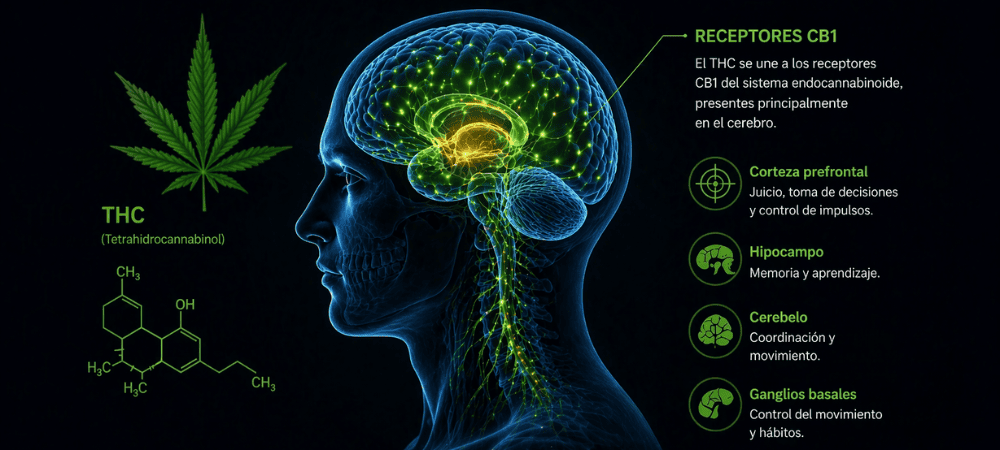
The main culprit is THC (tetrahydrocannabinol), the psychoactive compound in cannabis. When inhaled or ingested, THC binds to the CB1 receptors of the endocannabinoid system. These receptors are especially concentrated in brain regions involved in movement, coordination, memory, and judgment: the cerebellum, basal ganglia, hippocampus, and prefrontal cortex.
These interactions directly influence how cannabis affects driving. Driving requires the brain to constantly process visual information, make split-second decisions, and coordinate hands, feet, and eyes simultaneously. THC interferes with all these processes at once, not sporadically, but globally and simultaneously.
It is important to clarify from the beginning that this does not happen the same way with CBD (cannabidiol). CBD does not bind directly to CB1 receptors nor does it produce psychoactive effects.
How cannabis affects driving according to consumption method
The time it takes for THC to affect the brain varies depending on the method of consumption, and this directly affects driving.
| Consumption method | Onset of effects | Approx. duration | Peak intoxication |
|---|---|---|---|
| Smoking | 2 – 10 minutes | 2 – 4 hours | 30 minutes after consumption |
| Vaping | 5 – 15 minutes | 2 – 4 hours | 30 – 45 minutes after consumption |
| Edibles | 30 min – 2 hours | 6 – 12 hours | 2 – 4 hours after consumption |
Edibles pose the greatest risk in terms of unpredictability. The consumer may feel that it has not taken effect and drive, when in reality the THC has not yet reached its peak in the blood.
How cannabis affects driving: common effects
Slower reaction time
THC slows the transmission of signals between neurons in the motor areas of the brain. The direct result is that the driver takes longer to respond to any unforeseen event: a pedestrian crossing, a vehicle braking, a traffic light changing… At 90 km/h, even half a second of additional reaction time is equivalent to traveling 12.5 meters without responding.
Distorted spatial and speed perception
Cannabis distorts the perception of space and time. Those who drive under its influence may miscalculate distances between vehicles, underestimate a curve, or misinterpret the relative speed of other cars.
Some drivers try to counteract how cannabis affects driving by going slower than necessary, but this is a major danger. Others overestimate their safety margin and accelerate without perceiving the real risk.
Loss of concentration and memory
Driving on the road for a long period requires maintaining sustained attention, remembering recent traffic maneuvers, and anticipating what will happen a few seconds later. But cannabis impairs exactly these functions.
The driver can easily get distracted, forget that they just passed a traffic sign, or lose the thread of the route they were mentally following.
Fatigue and drowsiness behind the wheel
Indica varieties and high THC consumption produce a marked sedative effect. Drowsiness behind the wheel is one of the leading causes of accidents, especially on long trips and at night. A four-second microsleep at 120 km/h is equivalent to traveling 133 meters completely without control of the vehicle.
False sense of control
Many consumers believe they can compensate for the effects of cannabis by being more careful behind the wheel. They reduce speed, leave more safety distance, try to be more attentive…
The drawback of this compensatory approach is that it does not neutralize the actual cognitive deficits. Reflexes remain slower, perception remains altered, and working memory continues to function poorly.
The most recent scientific evidence is clear on this. A study published in JAMA (Effect of Cannabidiol and Tetrahydrocannabinol on Driving Performance, 2020) revealed that, although many drivers try to compensate for the effects, THC causes significant impairment.
These symptoms, according to the researchers, peak between 40 minutes and four hours after consumption.
Cannabis plus alcohol: the worst-case scenario
The combination of cannabis and alcohol multiplies the negative effects of both substances, it does not just add them. This mixture synergistically enhances loss of reflexes, lack of coordination, and impaired judgment.
In Spain, a significant portion of drivers who died in accidents where cannabis was detected also had alcohol in their blood. It is, without a doubt, the most dangerous combination behind the wheel.
How long does THC remain in the body?
After consuming cannabis, there comes a time when the visible effect disappears: you no longer feel high, you think clearly, you feel perfectly capable of driving; but the THC is still there. In blood, in fatty tissue, being released slowly. How long does marijuana last in the blood? Longer than most people think.
Factors that accelerate or delay its elimination
THC is a liposoluble molecule, which means it accumulates in the body’s fatty tissues before being slowly released into the bloodstream to be metabolized. This is why its elimination varies so much between people and is so different from that of alcohol (which is water-soluble and is eliminated much more predictably). The main factors are:
- Frequency of consumption: in occasional consumers, THC is eliminated more quickly. In regular users, it accumulates in fatty tissue and takes days or weeks to disappear completely.
- Dose consumed: the higher the amount, the longer it stays in the system.
- Body fat percentage: the higher the proportion of body fat, the greater the capacity to accumulate THC and the slower its elimination. This factor is rarely mentioned, but it is clinically relevant.
- Individual metabolism: the speed of hepatic metabolism varies significantly between people.
- Hydration: good hydration can slightly accelerate elimination through urine.
- Consumption method: edibles generate metabolites in higher concentrations and for longer than smoking.
Detection window by consumption method
| Fluid / tissue | Occasional consumer | Regular consumer |
|---|---|---|
| Blood | Up to 24 hours | 2 – 7 days |
| Saliva | 4 – 10 hours | Up to 72 hours |
| Urine | 3 – 5 days | 2 – 6 weeks |
| Hair | – | Up to 90 days |
How many hours should I wait before driving?
The honest answer is that there is no universally safe time. A study from Maastricht University recommends waiting at least four hours after smoking cannabis before driving, but this applies to occasional consumers with moderate doses. In regular consumers, cognitive deficits can persist beyond that threshold even when the person no longer feels under the influence.
With edibles, the recommendation increases to at least eight hours, given the delayed peak and prolonged duration of the effects. The only safe and unqualified recommendation is: do not drive on the same day you have consumed cannabis, especially if you are a frequent user.
How does the police detect cannabis on the road?
The saliva test: What does it detect and when does it fail?
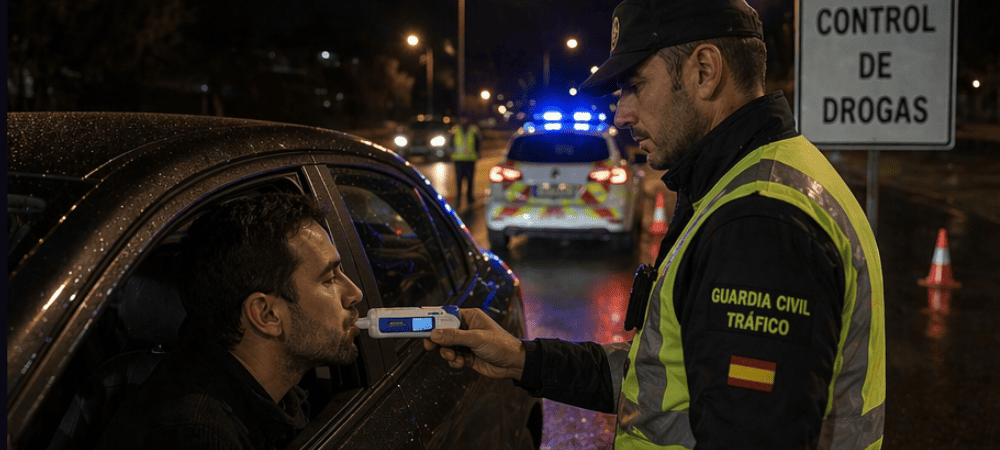
The method most used is the saliva test. It is performed in seconds with a portable device and detects the presence of THC in saliva. If the result is positive, a second sample is sent to the laboratory for confirmation.
The advantage of the saliva test is its speed. Its main limitation, and the most criticized, is that it detects the presence of THC, not actual impairment of capabilities. This means that a driver can test positive for consumption that occurred hours or even days before, when they are no longer under any psychoactive effect. In regular consumers, saliva can contain traces of THC almost permanently.
Blood and urine analysis
If the saliva test is positive, the driver can request a contrast test via blood analysis, which is performed at a medical facility. This test is more accurate regarding the actual concentration of THC in the blood at the time of the check. If the result is positive, the costs of the analysis are borne by the requester.
In special cases or when it is not possible to perform a saliva test, the authorities can directly order a medical examination or clinical analysis.
Can someone who is no longer under the influence test positive?
Yes, and this generates one of the most relevant debates about the fairness of the current system. Any presence of THC in the body constitutes an infraction, regardless of whether the driver shows actual impairment of their capabilities. There is no minimum concentration threshold, unlike alcohol.
This contrasts with the German model: since April 2024, Germany allows driving with up to 3.5 nanograms of THC per milliliter of blood, considering that below that threshold the effects do not objectively compromise road safety. For novice drivers and those under 21, they maintain zero tolerance.
The debate is open in Spain, but as long as the law does not change, the rule is clear: zero THC behind the wheel.
Sanctions for driving with cannabis
In the United States, the legal framework is not defined by a single federal law but varies by state. In general, however, driving under the influence of drugs (DUID) is illegal nationwide.
Most states prohibit driving while impaired by any drug, meaning that it is an offense if the substance affects the driver’s ability to operate a vehicle safely. In addition, some states have “per se” laws, which make it illegal to drive with certain drugs or specified concentrations of drugs in the body, regardless of whether impairment is visibly demonstrated.
At the national level, agencies such as the National Highway Traffic Safety Administration provide guidance and research, but each state establishes its own specific rules.
The use of prescription medications containing psychoactive substances is generally permitted; however, it remains illegal to drive if those medications impair driving ability, even when they have been legally prescribed.
Administrative sanction (without visible signs of impairment)
In the United States, there is no single, uniform administrative penalty applied nationwide for a positive drug test without signs of impairment.
In many states, a positive result alone is not enough to impose a sanction unless impairment is demonstrated.
However, in states with “per se” drug laws, a driver can face penalties based solely on the presence of certain drugs (such as THC) or exceeding specific legal limits, even without visible signs of intoxication.
Possible consequences (vary by state):
Fines (amounts vary widely)
Driver’s license suspension or administrative penalties
Mandatory drug education or assessment programs
Unlike Spain, there is no standardized penalty (such as a fixed fine or point deduction) at the federal level, and enforcement depends on each state’s legislation.
Crime against road safety
If the driver shows clear signs of being under the influence (erratic behavior, lack of coordination, dilated pupils, speech difficulties), the case may constitute a criminal offense according to Article 379 of the Penal Code:
- Prison sentence of 3 to 6 months (or a fine of 6 to 12 months, or community service of 31 to 90 days).
- License revocation of 1 to 4 years.
- If an accident with victims is caused, the penalties are substantially aggravated.
What happens with your insurance: the right of recourse
In the United States, if a driver under the influence of drugs (including cannabis) causes an accident, the insurance company will typically first pay for damages to third parties, as required under state liability insurance laws. However, what happens next depends on state law and the insurance policy.
In many cases, insurers may have the right to deny coverage or seek reimbursement from the driver if it is proven that the driver was operating the vehicle illegally (for example, under the influence of drugs). This is known as subrogation or recovery action, and it allows the insurer to attempt to recover the amounts paid from the responsible driver, especially in cases of gross negligence or illegal conduct.
In addition:
- Third-party damages (injuries or property damage to others) are usually covered initially, but the insurer may later seek reimbursement from the driver in serious violations.
- Damage to the driver’s own vehicle is generally only covered if the driver has collision coverage, and even then, coverage may be denied if the policy excludes driving under the influence or illegal acts.
- In severe cases, the driver may face personal financial liability far exceeding policy limits, including medical costs, property damage, and legal judgments.
Overall, driving under the influence in the U.S. can result not only in criminal penalties but also in significant personal financial exposure, depending on state law and insurance contract terms.
What if it is CBD and not THC? Does anything change behind the wheel?
It is a legitimate question, especially for those who consume CBD flowers or CBD oil regularly. The answer has two parts.
Real differences between CBD and THC in driving
CBD does not bind directly to the brain’s CB1 receptors, which explains why it does not produce psychoactive effects or impair the cognitive functions necessary for driving. A study published in the Journal of the American Medical Association in 2025 concluded that vaporized CBD does not produce effects different from a placebo on driving ability.
Participants showed no changes in attention, motor coordination, or decision-making. However, CBD can have a relaxing effect on some people that, in high doses, could induce some drowsiness. Each person may react differently, and combining CBD with medications that also produce sedation could enhance that effect.
As we explain in detail in our article on the differences between CBD and THC, both compounds interact with the body in fundamentally different ways.
Can CBD test positive in a drug test?
Here is the real risk of CBD in the context of driving: it is not the CBD itself, but the traces of THC that some products may contain. In Spain, CBD products are legal if they contain less than 0.2% THC.
In theory, this amount is insufficient to produce psychoactive effects. In practice, high or frequent consumption of full-spectrum products can accumulate enough traces of THC to trigger a saliva test.
If you are worried about this risk, the solution is to opt for CBD isolate or broad-spectrum products with an analytical certificate that proves the absence of THC.
In summary, understanding how cannabis consumption influences driving involves assuming that THC alters essential functions for safe driving. Reaction time, attention, coordination, perception, and judgment are compromised, and in Spain, there is also a sanctioning regime based on the mere presence of THC. The safest decision remains the same: if you have consumed cannabis, do not drive.