Personalized Attention +44 151 947 0713
 SHIPPING TO ALL

 9/10 Rating
 SALE TO MINORS PROHIBITED
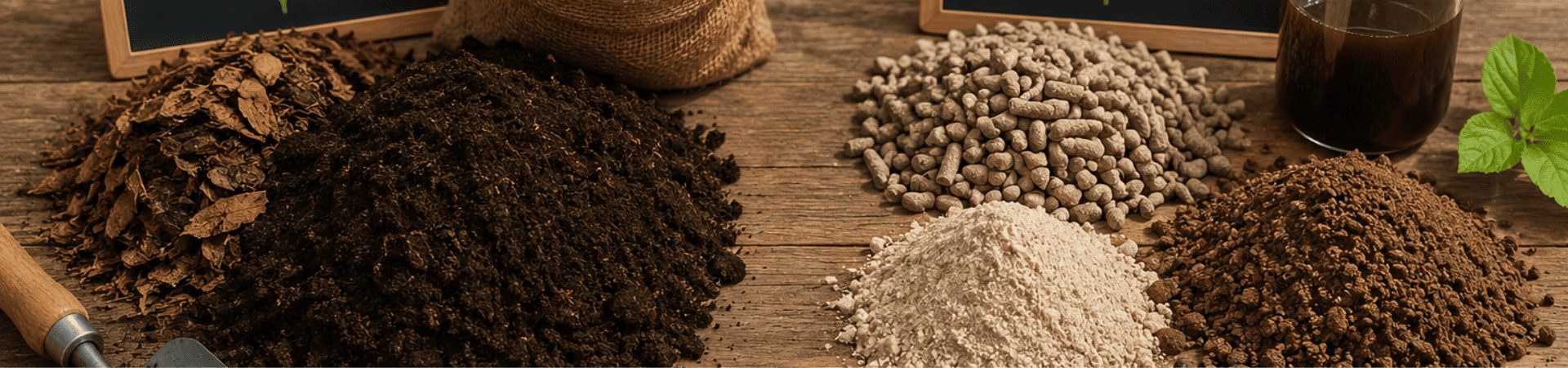
The difference between compost and organic fertilizer is not always clear, because both are used to improve plant development and are often referred to as if they were the same thing. However, they do not fulfill exactly the same function, nor are they always used at the same time.
Understanding what each one contributes, how it acts, and when it is best to apply it will help you better care for the soil, avoid excesses, and choose the most appropriate option based on the type of plant, the growth stage, and the condition of the substrate.
Compost is mainly used to improve soil quality and provide organic matter progressively. Organic fertilizer, on the other hand, is more focused on providing specific nutrients to the plant from natural materials.
Therefore, understanding the difference between compost and organic fertilizer is key to avoiding random product application and making better choices based on the state of the soil and the plant’s actual needs.
What is compost?
An organic compost is a substance incorporated into the soil or substrate to improve its fertility. In gardening and agriculture, it is usually associated with organic materials that enrich the earth, promote microbial activity, and help plants access nutrients progressively. This function is one of the keys to understanding the difference between compost and organic fertilizer.
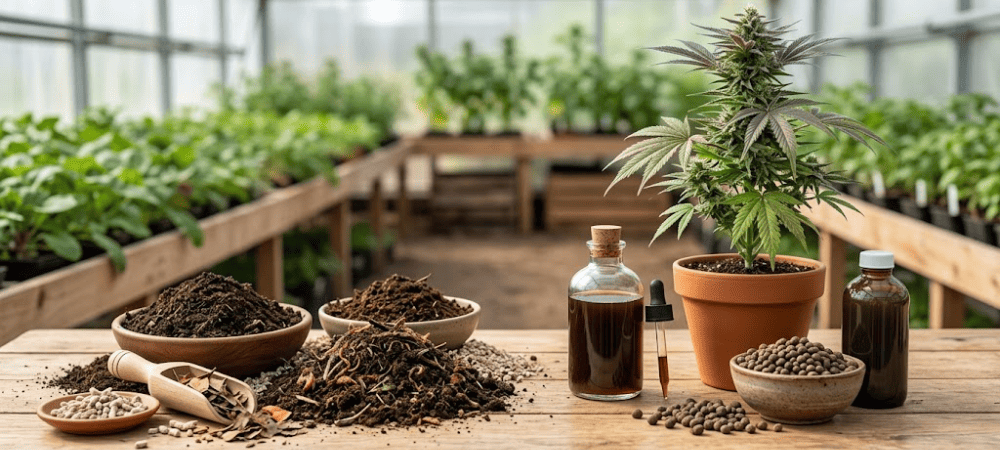
The most common examples of compost are:
- Compost: Obtained through the controlled decomposition of organic plant matter, such as plant remains, leaves, suitable kitchen waste, or manure mixed with plant matter. It is one of the most widely used composts for improving soil, although its nutritional richness can vary depending on the materials used and the degree of maturation.
- Mature manure: Well-composted manure can provide organic matter and nutrients, but it must be properly matured. Using fresh manure can cause excess salts, bad odors, unwanted seeds, or root damage. Therefore, it is always recommended to use cured, composted, or treated manure.
- Worm castings: Highly valued for their stability, texture, and ability to improve soil life. They are used in vegetable gardens, pots, seedbeds, and crops where progressive nutrition is sought. Additionally, they are usually easy to apply and less aggressive than other stronger composts.
- Mulch: Used to improve or protect the top layer of the soil. It helps conserve moisture, reduce erosion, and provide organic matter gradually. It can be useful in gardens, vegetable patches, and crop areas where the goal is to protect the soil from heat, cold, or moisture loss.
- Composted plant remains: Leaves, shredded branches, or pruning waste that have gone through a decomposition process and can improve the soil.
- Organic amendments rich in organic matter: Products intended to improve soil properties, such as structure, water retention, or biological activity.
Compost does not just feed the plant; it also helps improve the environment where the roots grow. Therefore, it usually has a broader focus: improving the soil so the plant can develop optimally.
Soil with good organic matter usually retains moisture better, has a more aerated structure, and promotes more stable biological activity. This is especially important in vegetable gardens, flower beds, and crops where long-lasting fertility is desired.
What is an organic fertilizer?
An organic fertilizer is a product of natural origin designed to provide nutrients to plants. It can come from plant remains, animals, algae, agricultural by-products, or other processed organic materials.
Unlike many traditional composts, organic fertilizer is usually formulated to provide nutrients more specifically. For example, it may stand out for its content of nitrogen, phosphorus, potassium, calcium, magnesium, or micronutrients. This nutritional orientation marks a large part of the difference between compost and organic fertilizer, as one works more on the base of the substrate while the other allows for better adjustment of inputs during cultivation.
Some examples of organic fertilizers are:
- Liquid organic fertilizers: These are convenient to apply in irrigation and allow for easy dosage adjustment. They are usually used when a more direct input is needed during the plant’s cycle. They can be useful in pots, fast-growing crops, or plants that need a specific boost.
- Solid organic fertilizers: These can come in pellets, powder, or granules. They are usually mixed with the substrate or applied to the surface so they release nutrients little by little. They are a good option when a more gradual and convenient fertilization is sought.
- Algae extracts: Used as support in different stages of cultivation. They can provide compounds of natural origin that are interesting for plant development, although it is always advisable to check the composition and method of use. Not all algae products have the same function, so it is important to read the label carefully.
- Meals and guanos: Bone meal, blood meal, or guano are used for their nutritional contribution. Depending on the product, they may be more oriented toward growth, root development, or flowering.
- Vinasses: An organic by-product usually derived from fermentation processes, used in agriculture for its potassium and soluble organic matter content.
- Plant-based amino acids: Compounds obtained from plant materials that can help the plant during times of high demand or stress, always depending on the product’s formulation.
In short, organic fertilizer seeks to nourish the plant with nutrients of natural origin. It can be used during different stages of cultivation, especially when the plant needs a more specific input.
So, are compost and organic fertilizer the same thing?
Not exactly. They are similar, they overlap, and they are often used as synonyms, but they do not always mean the same thing.
Compost usually has a function more related to the soil: it improves structure, increases organic matter, promotes microbial life, and releases nutrients little by little. Organic fertilizer focuses more on plant nutrition: it provides specific elements needed to grow, develop, flower, or overcome a deficiency.
The confusion arises because many products fulfill both functions. For example, compost can be considered an organic compost and also provides nutrients. However, if a plant needs a specific input of phosphorus or potassium, a formulated organic fertilizer may be more precise.
Difference between compost and organic fertilizer
To see it more clearly, this table summarizes the difference between compost and organic fertilizer according to their function, speed of action, typical use, and objective within the crop.
| Aspect | Organic Compost | Organic Fertilizer |
|---|---|---|
| Main function | Improve soil and provide organic matter | Provide nutrients of natural origin |
| Action | More progressive | Variable, depending on format and composition |
| Common examples | Compost, manure, worm castings, mulch | Guano, bone meal, algae, vinasses, plant extracts |
| Objective | Improve fertility, structure, and soil life | Nourish the plant in a specific phase or need |
| Speed | Slow or medium | Medium or faster in some formats |
| Typical use | Prepare or enrich the substrate | Complement growth, flowering, or deficiencies |
| Provides organic matter | Usually yes | Depends on the product |
| Improves soil structure | Yes, especially compost, humus, or mature manure | Not always |
| Nutritional precision | Lower | Higher |
| Ideal for | Improving the base of the crop | Adjusting nutrition more specifically |
When to use compost and when to use organic fertilizer?
| Situation | Best option |
|---|---|
| Poor or depleted soil | Compost |
| Compacted soil | Compost |
| Preparing a garden before planting | Compost |
| Improving soil life | Compost |
| Plant with specific nutritional need | Organic fertilizer |
| Demanding growth phase | Organic fertilizer |
| Flowering or fruiting phase | Specific organic fertilizer |
| Pot cultivation with limited substrate | Controlled combination |
| General garden maintenance | Compost + occasional inputs |
| Correcting a deficiency | Appropriate fertilizer based on diagnosis |
Can you combine compost and organic fertilizer?
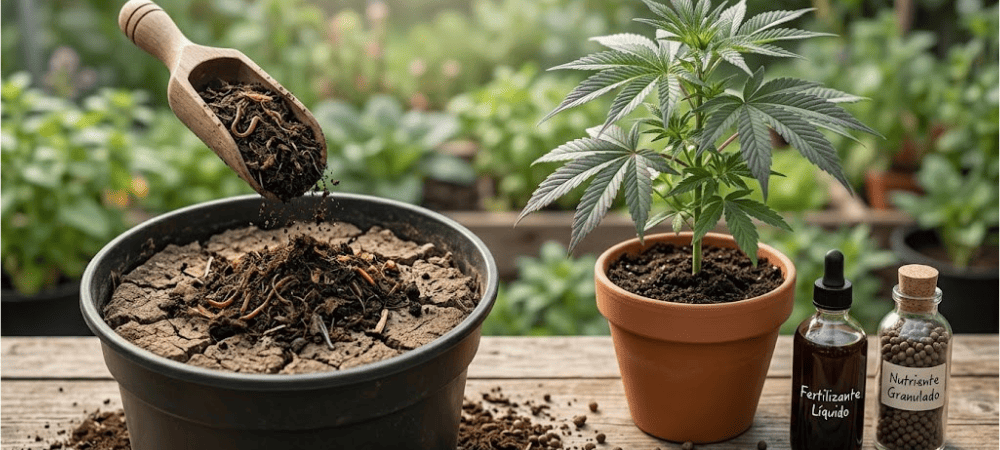
Yes, and in fact, it is usually one of the best strategies. Compost improves the base of the crop, and organic fertilizer helps cover specific needs. A simple way to organize it would be:
- Before planting: prepare the soil with compost, humus, or organic compost.
- During growth: observe the plant’s development and provide organic fertilizer if needed.
- In flowering or fruiting: use specific organic products according to the crop.
- After the season: re-enrich the soil with organic matter.
The key is not to apply products without control. Even if they are organic, an excess can also generate imbalances, salt accumulation, or problems in the substrate.
🌱 If the soil is poor
Compacted, or dries out too quickly, start by improving the base with compost, humus, or a mature organic compost..
🌱 If the plant is already developing and needs a specific boost
use an organic fertilizer suitable for its phase.
Advantages of organic compost
Organic compost is especially interesting when looking to improve the soil progressively and sustainably. Its main advantages are:
- Provides organic matter.
- Improves soil structure.
- Promotes moisture retention.
- Releases nutrients little by little.
- Helps reduce organic waste if homemade compost is produced.
- Improves fertility in the medium and long term.
- Promotes a more stable environment for roots.
It is an ideal option for vegetable gardens, flower beds, large pots, and crops where you want to work on soil quality, not just immediate nutrition.
Advantages of organic fertilizer
Organic fertilizer is useful when looking for more targeted nutrition, but without necessarily resorting to mineral or synthetic fertilizers. Its main advantages are:
- Allows for specific nutrient input.
- Can be adapted to different stages of cultivation.
- There are liquid, solid, and granular options.
- Usually integrates well into organic cultivation programs.
- Can complement already composted soils.
- Helps respond to specific plant needs.
- Allows for more controlled nutritional adjustment.
It is especially practical in pots, intensive crops, demanding plants, or situations where the soil alone does not cover the entire nutritional demand.
Frequent mistakes when using organic compost and fertilizers
Although organic composts and fertilizers are usually kinder to the soil than many mineral formulas, that does not mean they can be used without control.
Thinking that “organic” means it cannot burn
An organic product can also cause problems if applied in excess. Some natural fertilizers are concentrated and must be dosed correctly.
Fresh manure directly
Manure must be well-composted or mature. If applied fresh, it can damage roots, generate bad odors, or introduce unwanted seeds.
Confusing improving the soil with correcting a deficiency
If the plant shows a clear deficiency, adding compost may not be enough or may act too slowly. In that case, it is better to identify the problem and choose an appropriate fertilizer.
Not reading the label
Even if two products are organic, they can have very different compositions. Checking NPK, dosage, application method, and frequency is fundamental.
Always applying the same thing to all plants
Not all plants have the same needs. An aromatic plant, a tomato plant, a rose bush, or an indoor plant do not require the same type of nutrition.
Comparison: traditional use vs. planned organic nutrition
| Aspect | Traditional use without planning | Planned organic compost and fertilization |
|---|---|---|
| Product choice | “The usual” is applied | Chosen based on soil, plant, and phase |
| Dosage control | Approximate | Adjusted to label and need |
| Soil improvement | Variable | More constant |
| Risk of excess | Higher | Lower if planned well |
| Sustainability | Depends on the product | Better oriented to recycle organic matter and reduce losses |
| Result | Irregular | More predictable |
| Maintenance | Reactive | Preventive |
Planning does not mean complicating cultivation. It means observing better, applying only what is necessary, and understanding if the problem lies in the soil, nutrition, or cultivation conditions.
In conclusion, the difference between compost and organic fertilizer lies primarily in their main function. Compost helps improve the soil, while organic fertilizer allows for specific nutrient input. Therefore, the best option is not always to choose one or the other, but to know how to combine them with judgment.



 Add as preferred source in Google