Personalized Attention +44 151 947 0713
 SHIPPING TO ALL

 9/10 Rating
 SALE TO MINORS PROHIBITED

The influence of the moon on ocean tides is widely known; however, the moon also affects many factors beyond the sea. It is well established that the different phases of the lunar calendar can influence humans, animals, and plants, including cannabis plants. With this article, we aim to highlight the importance of the 2026 lunar calendar in Spain for growing our cannabis seeds and how to use it to your advantage, applying the principles of the lunar calendar cannabis method.
What Is the lunar calendar?
The lunar calendar is based on lunar cycles and is a way to measure and calculate time according to the phases of the moon (lunations). These lunar phases occur due to the interaction between the movements of the sun, the moon, and the Earth.
The moon has a direct influence on plants and vegetation, emitting different types of rays depending on its phase. Although it reflects light, it does not have enough intensity to activate photosynthesis in plants as the sun does during the day.
However, it regulates part of the photoperiod of all plants by stimulating the production of specific proteins that act as light receptors. The different lunar phases and lunar rays affect the circulation of sap within the plant and respond to gravitational forces.
The term “lunation” refers to the interval between two identical lunar phases, also known as the synodic month. It lasts an average of 29 days, 12 hours, and 44 minutes.
Before diving deeper into the influence of the lunar calendar for planting in 2025, it is essential to understand the difference between the two hemispheres and our geographic location.
- Northern Hemisphere: Portugal, the rest of Europe, most of Asia, North America, Central America, and most of Africa are located in the Northern Hemisphere.
- Southern Hemisphere: This includes most of South America, South Africa, Oceania, and Antarctica.
Therefore, it is important to consider the moon phases. In the Northern Hemisphere, when the moon is in the Last Quarter, it appears in a “C” shape, while in the Southern Hemisphere, it appears as a “D”.
During the First Quarter, the moon appears as a “D” in the Northern Hemisphere and as a “C” in the Southern Hemisphere.

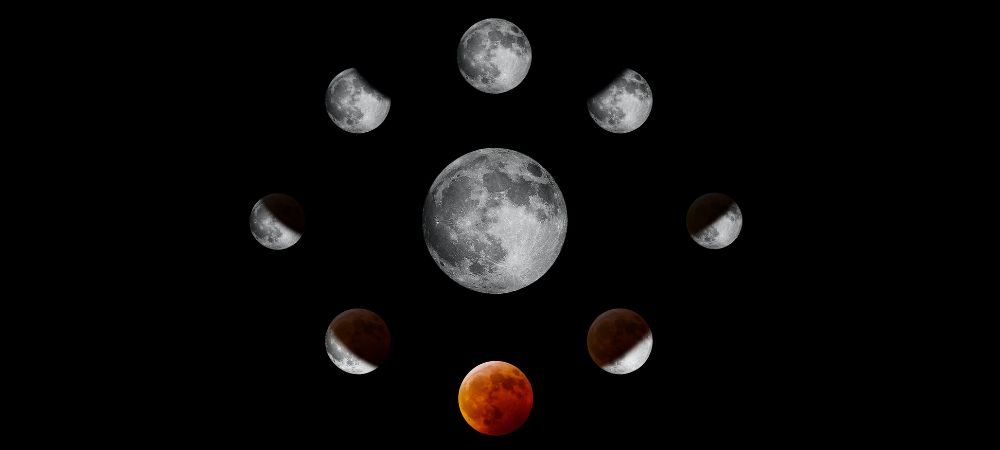
Moon phases and their influence on cannabis
The moon phases can be defined by the different shapes we observe as a result of the moon’s orbit around the Earth.
We can identify four main lunar phases:
New moon
When following the lunar calendar cannabis approach for pruning, this is the phase in which the moon emits the least amount of light, as it is positioned between the sun and the Earth. It is a resting phase for plants, as sap circulation is reduced and concentrates in the roots. This is a period of adaptation and recovery, during which plants store energy before redistributing sap throughout their structure.
This is the best time to carry out certain tasks such as:
- Pruning cannabis plants or removing wilted leaves, allowing branches to grow back more quickly.
- Removing weeds.
- Staking and harvesting.
- Indoor plants should not be watered during this phase.
Although the moon reflects light, it does not have enough strength to trigger photosynthesis like the sun does during the day. However, it regulates part of the plant photoperiod by stimulating the production of light-receptive proteins.
In agriculture, this phase is commonly used for maintenance tasks that may cause stress to the plant, as it is considered a natural resting cycle.
First quarter
At this stage, it is worth remembering that in the Southern Hemisphere the moon appears as a “D,” while near the equator it is almost horizontal. This is an ideal time for growing in sandy soils and cleaning leaves. When consulting the lunar planting calendar, this phase marks an excellent opportunity.
The moon begins to increase in brightness and emits more rays, causing the sap to move upward through the stem and branches, activating plant growth. Foliage and root development are enhanced, allowing plants to grow faster. This phase is ideal for seed germination and taking advantage of accelerated root development.
Full moon
During this phase, the moon shines at its brightest point. This results in a greater circulation of sap, which moves upward through the plant, reaching the highest areas such as the main shoot, branches, and leaves.
This is the ideal phase to carry out transplanting, planting, and germination, as sap is mainly concentrated in the plant’s foliage. Special attention should be paid to insects, since the higher concentration of sap in the leaves can attract more pests. Experts recommend avoiding pruning during this phase.
This is also the phase when plants should be watered. It is usually the right time to transplant indoor plants. On the other hand, pest activity tends to increase.
Last quarter
As the moon’s brightness decreases, light intensity is reduced and sap begins to descend again, accumulating mainly in the stem and lower leaves. Roots take advantage of this period to develop, while the plant focuses on flower production. This phase is also suitable for transplanting, taking cuttings, and fertilizing plants, following the principles of the lunar calendar cannabis method.
This is the time to remove wilted leaves and spray the plant. During this period, plants often appear more vigorous and tend to produce more fruit.
Different uises of the lunar calendar
As seen above, the lunar calendar has several applications beyond cannabis cultivation. It can be applied to various tasks and activities, such as:
- Agriculture
- Gardening
- Horticulture
- Forestry
- Beekeeping
In addition to the well-documented influence of the moon on plants and vegetation, it is believed that lunar phases may also affect humans, including their mood, behavior, sleep patterns, menstruation, and, to some extent, intellectual performance.
These indications have not been fully studied or scientifically proven, but it is believed that the type of energy generated by the moon is powerful enough to influence people in different ways.
Lunar calendar and cannabis cultivation
We can now identify which hemisphere our country or region belongs to and, from there, use the lunar calendar correctly when growing cannabis.
The lunar calendar is one of the most influential tools in cannabis cultivation, as growing at the right time can make a significant difference in results. For this reason, it is recommended to understand which moon positions are most favorable.
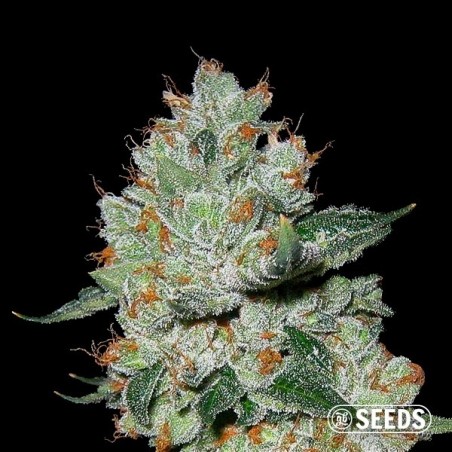
OG Kush
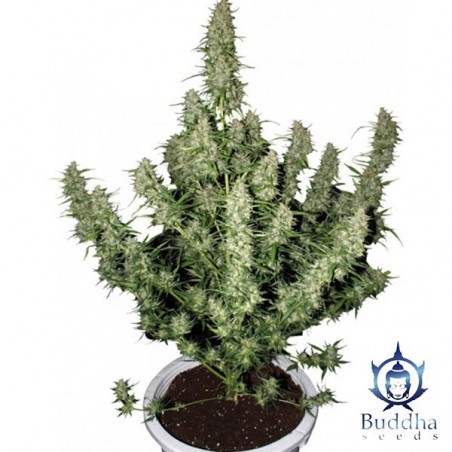
Magnum

Kritikal Bilbo
We know that both gravity and moonlight directly affect the production and development of cannabis plants. Therefore, lunar phases should always be considered, especially for tasks such as germination, pruning, and harvesting, following a lunar calendar cannabis approach.
Some key moments to keep in mind include:
- During the new moon, it is recommended to prune cannabis plants, as the plant will gain strength afterward.
- If germination is the goal, the best time is during the first quarter, when sap begins to rise again.
- During the full moon, it is advisable to plant or transplant.
- In the last quarter, as moonlight decreases, it becomes a good period for transplanting.
By being aware of the lunar calendar, during the ascending phase of the moon, sap rises toward the upper parts of the plant, making it the ideal time to prune or take clones. During the waning phase, sap descends, making it the ideal moment to germinate or plant.
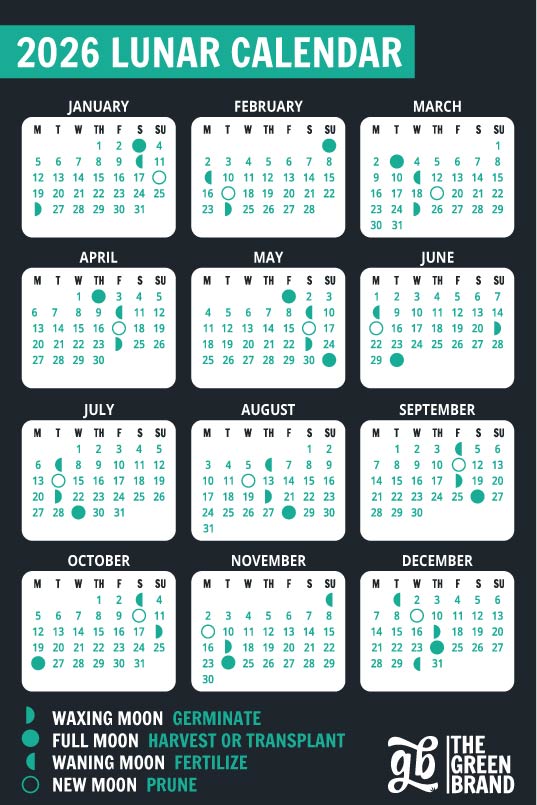
2026 Cannabis Lunar Calendar
Due to the importance of this calendar, it is essential to know which time of each month is best for germinating, pruning, fertilizing, or harvesting. Therefore, to fully understand the 2026 lunar calendar, certain key aspects must be considered.
Using February as an example, the best days to carry out each task are as follows:
- If you want to germinate seeds, it is best to start from the 24th onward, when the moon enters the first quarter.
- On the other hand, for harvesting, the most suitable day is from the 1st onward.
- For pruning, the reference date is the 17th, while fertilizing is best done starting on the 9th.
Just as in February, you can determine the best time to perform each of these tasks by observing each month of the 2026 cannabis lunar calendar.



 Add as preferred source in Google