Personalized Attention +44 151 947 0713
 SHIPPING TO ALL

 9/10 Rating
 SALE TO MINORS PROHIBITED

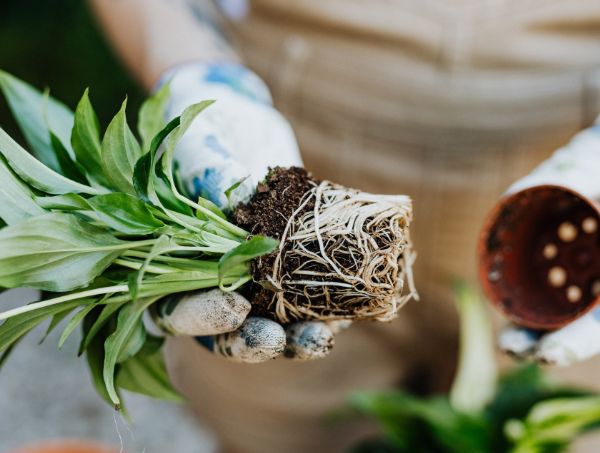
Roots are one of the most important parts of the plant as they allow nutrients absorption along with bigger yields by improving crop’s development. That’s why transplanting is a very delicate stage indoors and outdoors. This post will help to know how to transplant cannabis plants with the least possible stress.
Reasons to transplant cannabis plants
Plants that grow outdoors usually do so without any restrictions, stretching out in all directions and freely. Growing in a pot, however, restricts this available space for the roots; this will require one or more changes as they grow.
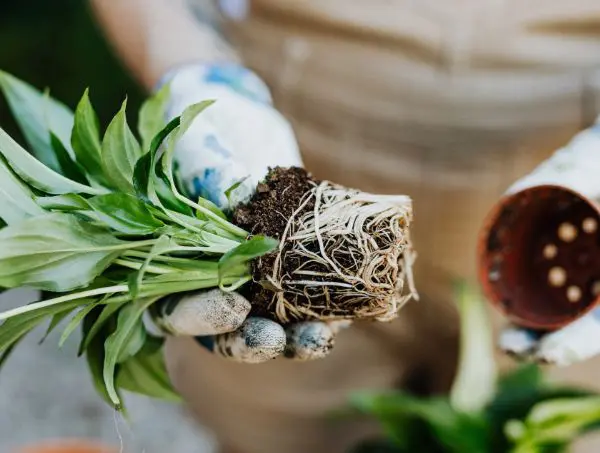
Similarly, when transplanting, you find out more about how the crop is developing by monitoring the size of the roots and observing the rooting of the roots at that time. As the plant grows, it will seek to fill the available space, until it demands a new change. When the roots have filled the entire volume of the pot, they will circle around inside until they start to tangle, slowing down the harvest.
Transplanting cannabis plants benefits
These are some benefits of growing in pots:
- Space, nutrients and substrate savings: when you start growing big pots or huge amounts of soil will be needed, so big big savings are possible.
- Development speed: growing in a small pot allows more risks to be applied than in larger pots, repeating the dry/wet cycle more times and increasing the growth rate. To do this, it is a matter of making this period as short as possible.
- Better yield: transplanting at the right time using the right pot and size will maximise production.
When to transplant cannabis plants?
Generally, 2 to 3 transplants are done during their lifetime. This is usually done during the growth phase, so that the plant can finish developing its root system. For this reason, several transplants may be necessary before the plant enters the flowering phase. In order to know when to transplant, it is necessary to pay attention to possible symptoms of stagnation, such as the following:
- Leaves becoming yellower or wilting.
- Development of the root system. If it is observed that it is growing with tangled roots, this means that it will need to be transplanted. If, on the other hand, it occupies the entire pot without curling up or has not created a wall on the sides of the pot, then it is growing well.
In growth, when the size of the plant is twice the size of the pot. - Speed of development. If the plant’s growing fast in a small pot, it is recommended to transplant it before it slows down or stops growing.
Which pot to choose
There are many types, although many people use white plastic pots outdoors because they keep the soil cooler. Another option are air pots or fabric pots, which allow the roots to be pruned aerially in a natural way.

Large White Flower Pot with Handles
In the case of seedlings, it is advisable to use individual plastic containers or germination pots designed for this purpose.
Pot’s size indoors and outdoors
For indoor plants, it should be taken into account that the size should be adapted to the growing space available, as well as the number of specimens or the chosen growing technique. Some examples are:
- SOG cultivation: usually start with a 0.5 L pot, followed by a 1.65 L pot, and finish with a 3.25 L pot.
- SCROG cultivation: this method allows you to start with larger pots of 1.65 L, followed by 3.4 L and finally choose a 10 to 20 L pot.
- Standard cultivation: with a mixed technique between the two, you can choose 1L pots, then a 2.5L pot and finally a 4 to 7L pot.
Nevertheless, the choice of size will depend on the characteristics of the type of plant and the growing area.
Outdoors, on the other hand, there are fewer limitations. However, if you grow outdoors, you should make sure that they are not too large, as this will waste fertilisers, as well as making it difficult to move them. In the case of the last transplant to the ground, this should be done as soon as possible.
How to transplant a cannabis plant
The change of pot should be done as quickly and cleanly as possible so that the plant suffers less stress. It is advisable to wear gloves when doing so. These are the steps to follow to carry out a good transplant:
- Before transplanting the seedlings: water 1-2 days beforehand, as the soil should be moist and compact, but not soaked.
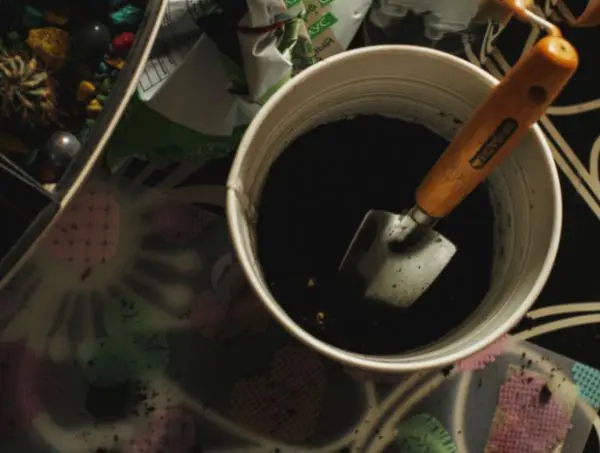
- Choose a quality substrate with which to fill the plant’s new home. It should not be filled to the top, and the soil should not be excessively compacted. The right substrate should be free of pathogens and provide the roots with the necessary nutrients for the crop.
- Place your hand on the soil and turn the pot upside down. Then carefully slide the root ball out of the pot. If the root ball does not come out, you can gently squeeze the pot and tap the sides. In the event that the pot is still resisting, cut it carefully with a knife.
- Once extracted, keep your hand under the root-ball and transfer it to the new container with a hole on it. Holes are covered with a bit of soil.
- Water slightly in order to help plants to get used to Its new home.
Knowing how to transplant a cannabis plant in a good way is required to achieve a poweful high, giving the plants enough space for the roots. If its done at the right moment and correctly, yields will enlarge.