 Personalized Attention +44 151 947 0713
 SHIPPING TO ALL


 9/10 Rating
 SALE TO MINORS PROHIBITED

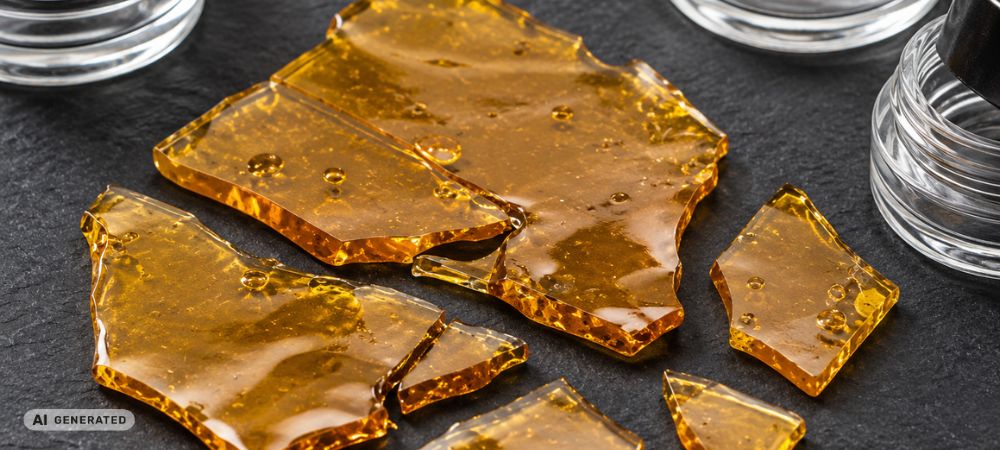
Shatter BHO is a cannabis concentrate obtained through hydrocarbon extraction, characterized by a rigid, brittle, and glass-like texture when processed correctly. Its name comes precisely from this texture: shatter refers to breaking or shattering into pieces.
This type of extraction allows for the concentration of cannabinoids and aromatic compounds present in the plant material, meaning the result can have concentrations considerably higher than those of the flower used as raw material.
BHO can be made from flowers or certain resin-rich plant trimmings, although the quality of the starting material directly influences the final result.
Before continuing, it is essential to keep one fundamental thing in mind: butane is an extremely flammable gas. Its vapors can accumulate rapidly and form explosive mixtures with air, in addition to displacing oxygen in certain concentrations.
For this reason, professional hydrocarbon extractions are performed using equipment specifically designed for this process, closed systems, and appropriate safety measures.
How to make Shatter: necessary materials
Before we begin with the explanation of Shatter and get to work, it is important to keep in mind that to achieve a quality BHO extraction, we need a list of necessary materials and tools.
Furthermore, we must not forget that the key to a good extraction is high-quality plant material (if it is fresh, even better).
Among the materials commonly associated with the process are:
- Hydrocarbon extraction system (BHO Roller Extractor)
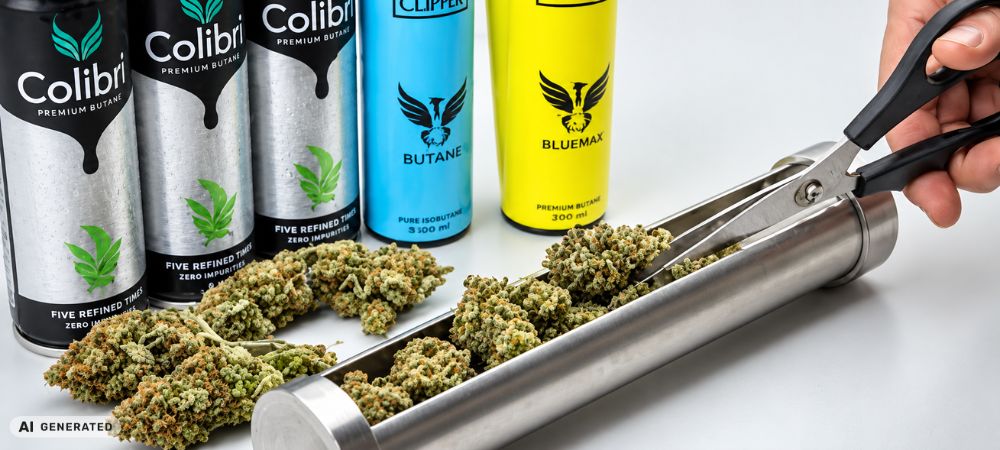
- Refined butane gas, such as Clipper or Colibrí (Clipper has fewer impurities)
- Non-stick surface compatible with concentrates.
- Blunt-edged blades.
- Glass tray.
- Heating plate.
- Vacuum pump.
- Desiccator or something that serves as one, such as a pot with a methacrylate lid, which is the most common.
- Small jars for storing the extraction.
- Fresh buds and/or leaves.
- Balcony, terrace, or an open, well-ventilated area.
In our BHO and extractions category, you can find various accessories related to these necessary materials.
How to make Quality BHO Shatter step by step
Step 1: Prepare the plant material
The first thing we must do is choose the plant material we want to use to make our Shatter. As mentioned earlier, it is best to choose a good quality, non-dried product.
Fill the Roller Extractor tube well, breaking up the buds slightly with scissors while packing them down with a stick so there are no gaps. Once filled to the top, it must be placed in the freezer for 24 hours along with the gas canisters.
To know the amount of gas needed, we will indicate below some relative measurements according to the existing Roller Extractor models, as this is fundamental for making quality BHO.
- M Roller Extractor: 1 canister of gas
- L Roller Extractor: 1.5 canisters of gas
- XL Roller Extractor: 2 canisters of gas
Step 2: Perform the extraction
Once the material is prepared, the extraction phase begins.
The goal is for the solvent to pass through the plant material and drag along part of the cannabinoids, terpenes, and other soluble compounds present in the resin.
After 24 hours of freezing, prepare the space where the extraction will take place.
This process must be done in a completely open and well-ventilated area, away from flames, sparks, electrical appliances capable of producing ignition, and any uncontrolled heat source, as butane is extremely flammable.
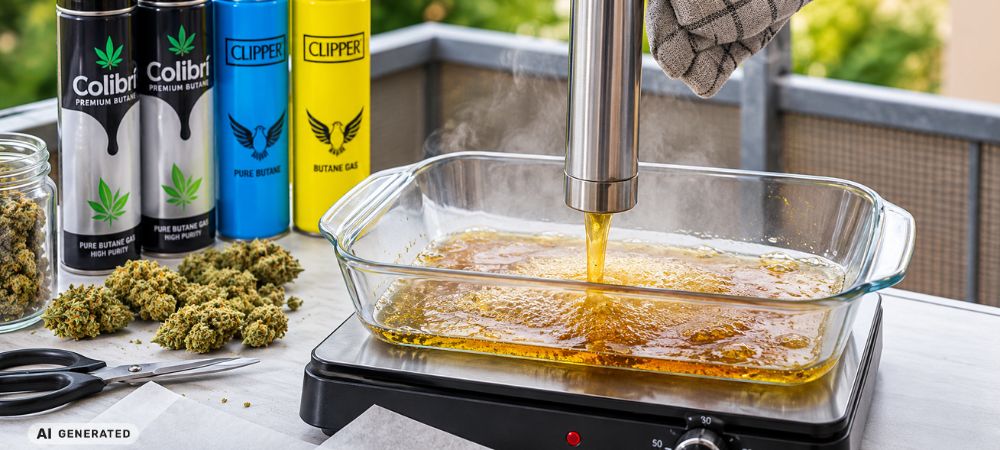
Place the glass tray on the heating plate set to 60 °C. Once it is hot, take the tube and the canisters out of the freezer, place them on the plate with the Roller Extractor in a vertical position, and empty the two gas canisters into the tray at once.
Next, the gas passes through the plant material inside the tube and falls onto the tray, carrying the extracted compounds with it.
During this process, you can observe the mixture bubbling as part of the gas evaporates.
Wait until a significant amount of liquid is no longer visible and a thin layer of extraction, usually gold-colored, remains on the bottom of the tray.
Tips for achieving higher quality Shatter
At this point, solvent may still be trapped in the extraction, so the gas removal process continues later through purging.
We can let the mixture rest on the plate for 15–20 minutes at about 40 °C, as it still contains some gas inside.
It is also important to prevent water from entering the mixture. When working with very low temperatures, the metal body of the extractor can accumulate condensation or frost.
Therefore, you can use a clean, dry cloth to handle the Roller Extractor, preventing condensation drops from falling onto the extraction.
Step 3: Collect the extraction from the tray
When no more liquid is seen accumulating in the tray, it is time to collect the concentrate.
For this, use blunt-edged blades, moving from one end of the tray to the other to progressively lift the extraction layer.
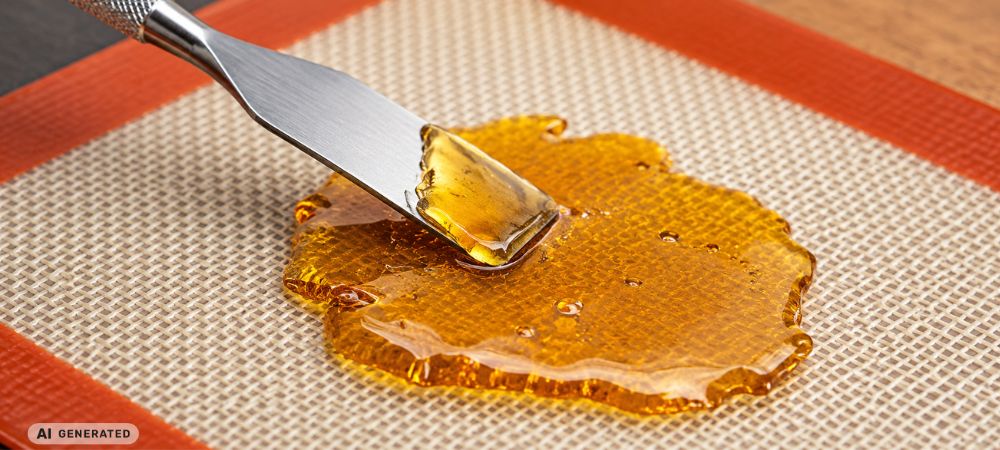
After each pass, the material accumulated on the blade is removed with the help of another tool and deposited onto a silicone mat or paper suitable for extractions.
The operation is repeated until all the extraction adhering to the tray is recovered.
Step 4: Gather all the concentrate
Once all the extraction is deposited on the silicone mat (or rosin/parchment paper), it must be gathered into a single piece before introducing it into the vacuum system.
If the material is too sticky, we can put it in the fridge for a few seconds to cool it down and thus facilitate its handling.
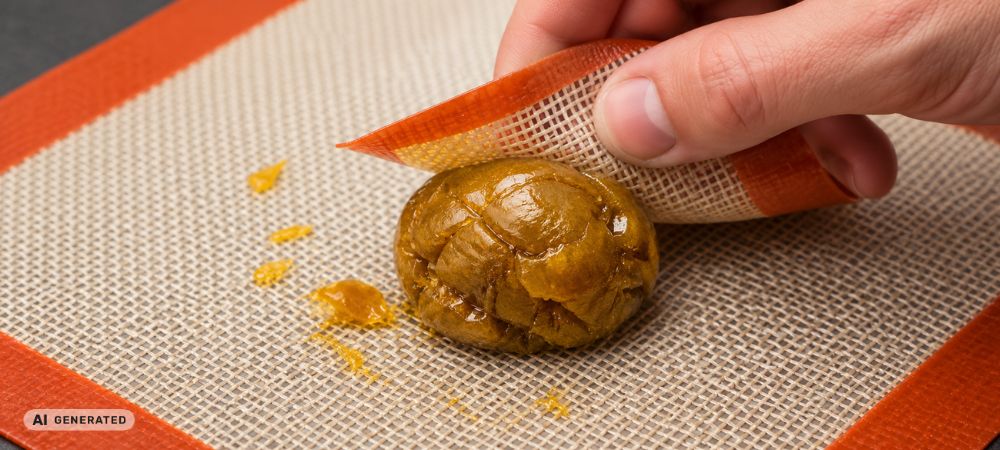
We must gather the remains little by little by folding the mat and using the concentrate itself to pick up the small bits adhering to it by giving small tugs.
In this way, we aim to gather all the extraction without handling it directly with our hands.
In case the extraction is very sticky, we must put the silicone mat back in the fridge or freezer and repeat this operation until we unify everything.




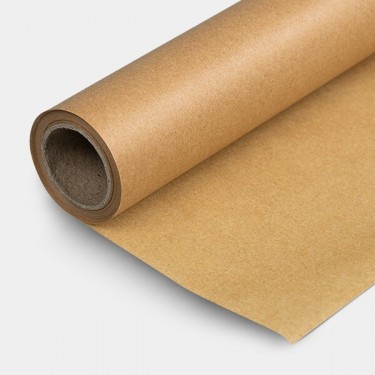
Step 5: Flatten the extraction and begin purging
Once we have unified it, we must flatten it as much as possible. To do this, fold the mat and press with the palm of your hand until you achieve, more or less, the shape of a coin. With this shape, it is much easier to remove the gas remains it still contains. This step is important to achieve the best quality shatter possible.
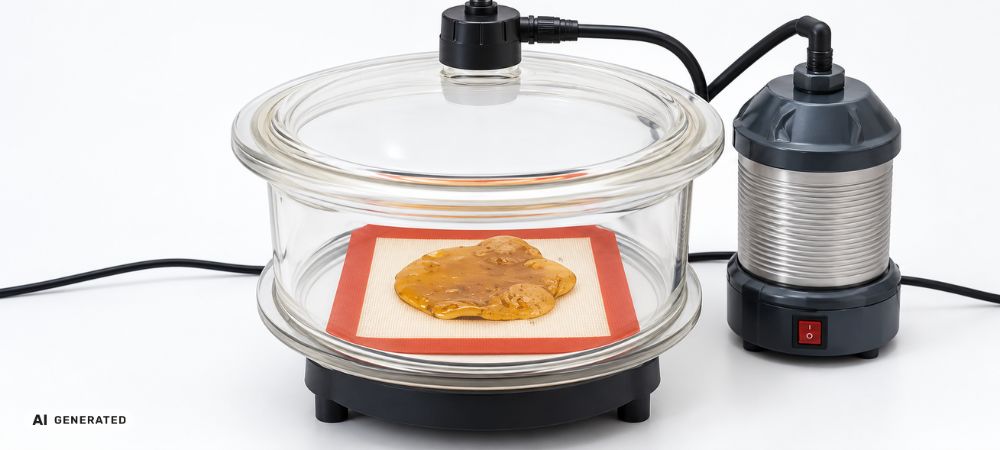
Once the coin is ready, it is time to place it in the desiccator with the mat included, place the desiccator itself on the plate at 40 °C, and connect the vacuum pump. After several seconds, you can see the coin swell up like a cupcake. Do not worry; wait for the coin to remain completely flat and not show any further reaction.
Step 6: Complete the Shatter purging
Once everything is stabilized (1 or 2 hours), we must open the vacuum chamber little by little so that the air does not enter all at once, avoiding a sudden rush of air that could alter or disperse our concentrate.
Once this is done correctly, turn off the plate, remove the extraction, and ball it all up again without fear. If it remains soft and malleable, we can cool it again as before.


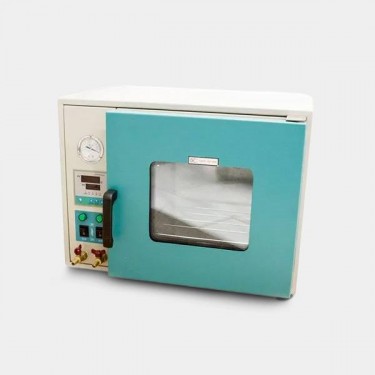
What is achieved by molding it this way is to break the tension between the gas and the resin, aiding the purging. After working it for a while, we must put it back into the vacuum pump; this operation must be performed until we are sure that no gas remains in the BHO extraction. This operation can take up to 3 days.
How to make Shatter: the final result
The final result of the Shatter should be a thick, hard paste, which does not need to be put in the fridge to form a ball, as in the previous steps.
To achieve that coveted glass texture, there is only one thing left to do. It will be necessary to apply cold to our sheet of malleable paste, so it is recommended to put it in the fridge until it acquires the desired appearance.
From here, you choose whether you want to break it into pieces and store it in the fridge in silicone containers so that it is preserved in the best possible way.
Remember that when you expose it to room temperature, it will regain a soft and malleable texture. Now, prepare your BHO pipe and enjoy Shatter of unparalleled quality!
Frequently asked questions about BHO Shatter
What is BHO Shatter?
Why is purging so important in Shatter?
How do you know if Shatter is of good quality?
Why can Shatter become soft or sticky?
How is Shatter stored correctly?
Products in this article



 Add as preferred source in Google


