 Personalized Attention +44 151 947 0713
 SHIPPING TO ALL


 9/10 Rating
 SALE TO MINORS PROHIBITED


Increasing marijuana production is not just about placing more plants, using more fertilizer, or increasing light intensity. To achieve the maximum possible yield in a given space, you must find a balance between genetics, nutrition, irrigation, lighting, and environmental conditions.
Every grower may have different reasons for seeking higher production: making better use of the energy spent on the grow, obtaining enough reserves between harvests, or simply getting the most out of the available space.
In this article, we will review some of the factors and techniques that can help improve yield while trying to maintain good final quality at the same time.
Before we begin, we will clarify that:
- More plants do not necessarily mean more production.
- More fertilizer does not mean more yield either.
- An excess of water, light, temperature, or nutrients can cause stress.
- Maximum production will always depend on genetics and growing conditions.
- Making proper use of space is usually more important than filling it with plants.
The goal, therefore, is not to grow over a larger area, but to make more efficient use of the available surface area.
What does marijuana production depend on?
Although there are many factors, we can group the most important ones into three large blocks:
- Plant genetics.
- Nutrition and irrigation.
- Environmental conditions and lighting.
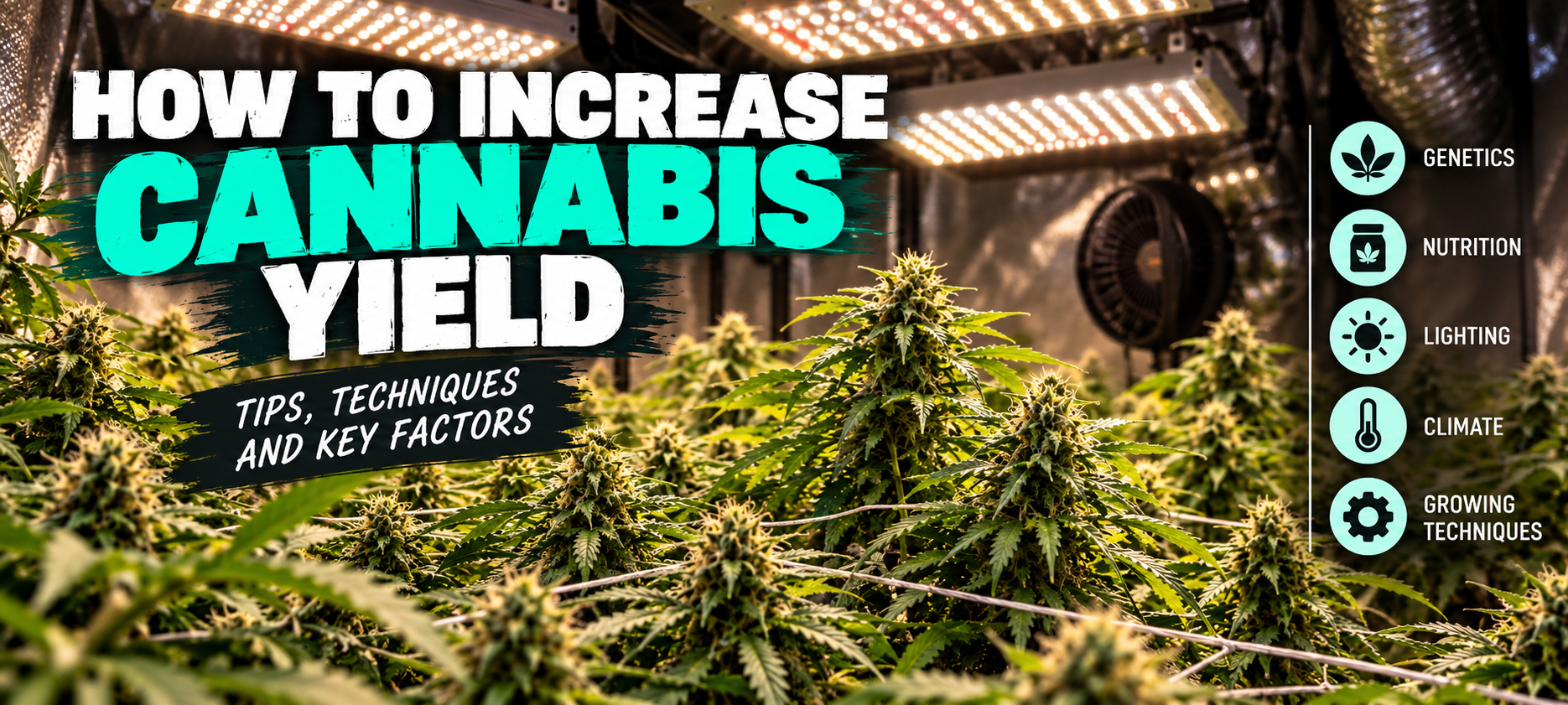
Based on these three pillars, different cultivation techniques can be applied to improve the use of the crop along with the climate.
Genetics: choosing productive varieties
Not all varieties produce the same or have the same structure. Some develop large side branches, others concentrate much of the production on the main tip, and others have a greater capacity to quickly fill the available space.
Therefore, if our main goal is to maximize the harvest, it is interesting to choose genetics known for their good productivity and adaptation to the cultivation system we are going to use.
It is not correct to simply state that indicas produce more than sativas. Currently, there are hybrids with very different characteristics and varieties of both types capable of reaching high yields.
There are also important differences between:
- Feminized seeds.
- Autoflowering seeds.
- Regular seeds.
- Modern hybrids.
- Traditional or landrace varieties.
Each one can behave differently depending on the space, climate, lighting, and management used.
Autoflowering varieties, for example, have a limited vegetative period, while a photoperiod-dependent variety allows the grower to decide how long to keep it in growth before starting flowering.
For this reason, the choice of genetics should be made taking into account the cultivation system, not just the maximum production indicated by the seed bank.
Some of the varieties most famous for their high productivity are Big Bud (Sensi Seeds), Critical +, and Monster (Eva Seeds).

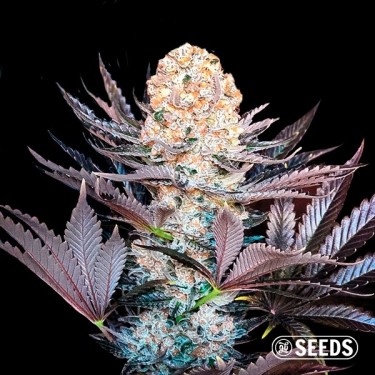

Following these are Critical Kush (Barney’s Farm), King Kong marijuana (Dr. Underground), White Rhino (Green House), or Blue Rhino or Somango 47 (Positronics), among others.


In this regard, we invite you to consult our experts to determine more varieties that are potentially productive.
Nutrients:
One thing is certain. Under normal and not overly adverse conditions, the plant would thrive. There are many places where cannabis grows wild without any kind of care.
That said, using a good substrate, providing the necessary nutrients in each phase, and maintaining balanced irrigation can make a big difference in the final development of the plant.
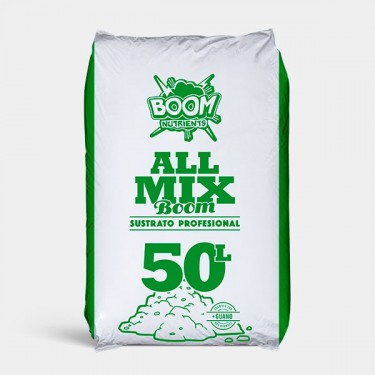
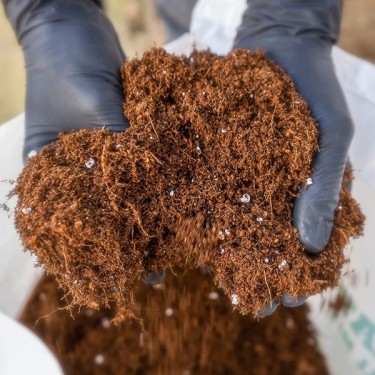
Using a suitable substrate
The substrate must provide an adequate balance between:
- Water retention.
- Aeration.
- Drainage.
- Nutrient availability.
An overly compact substrate can hinder root oxygenation, while one that drains too quickly may force us to water more frequently.
How often should you water?
There is no universal frequency.
The need for water will depend on factors such as:
- Pot size.
- Type of substrate.
- Temperature.
- Ambient humidity.
- Plant size.
- Ventilation.
- Cultivation stage.
A good reference is to observe the moisture of the substrate and the weight of the pot before watering again.
Keeping the substrate constantly saturated can reduce the amount of oxygen available to the roots and promote root problems.
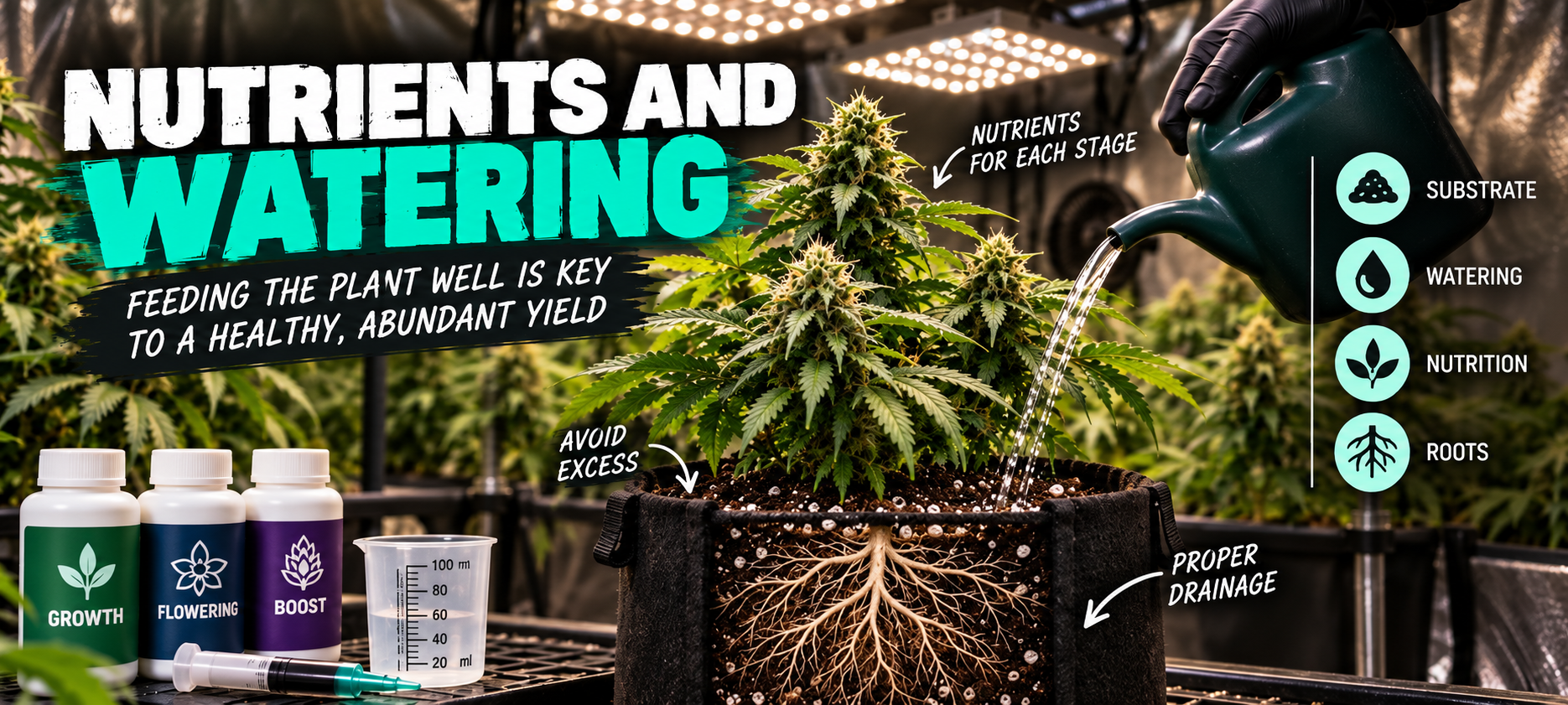
Fertilizers during cultivation
Nutritional needs change as the cycle progresses.
Usually, products intended for the following can be used:
- Root development.
- Growth.
- Flowering.
- Flowering stimulation.
- Enzymes.
- Correctors or nutritional supplements.
The goal should not be to use as many products as possible, but to provide what the plant needs at each moment.

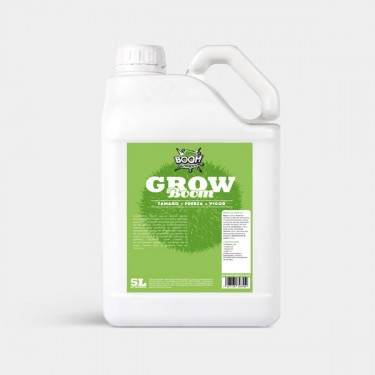
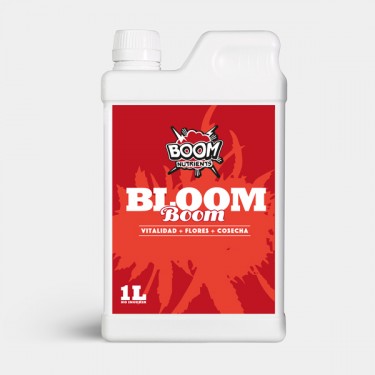
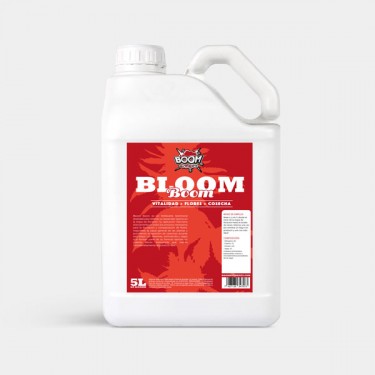
Excessive fertilization can cause salt accumulation, nutritional blockages, or root damage.
Nor can it be stated in a general way that mineral fertilizers produce more than organic ones. Both systems can offer good results when used correctly; the main difference is in the way the nutrients become available to the plant.
Climate and environmental conditions
Environmental conditions have a direct influence on crop development. At this point, there is an important difference between indoor and outdoor.
Climate and environmental conditions
Environmental conditions have a direct influence on crop development.
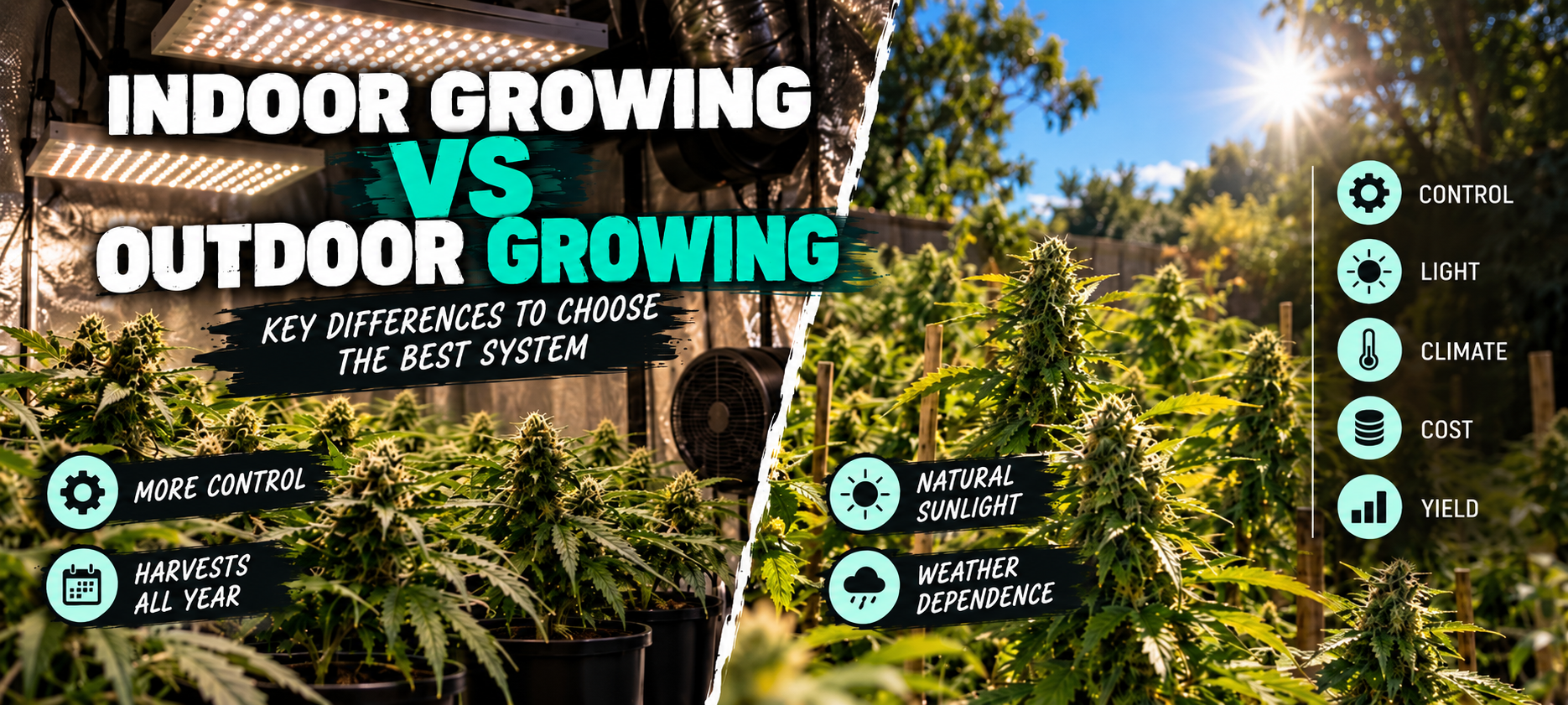
At this point, there is an important difference between indoor and outdoor. The original article already distinguished both systems by the ability to control the environment.
Outdoor cultivation
Outdoors, we depend to a large extent on natural factors such as:
- Temperature.
- Hours of light.
- Rainfall.
- Humidity.
- Wind.
The advantage is having an extremely powerful and free light source: the sun.
Therefore, a well-located outdoor crop can reach very high yields.
Indoor cultivation
Indoors, we can control many more parameters.
By means of extractors, fans, climate control systems, humidifiers, or dehumidifiers, we can modify the conditions of the space to keep them within appropriate values.
A thermo-hygrometer allows you to easily control temperature and humidity.
The main advantage of indoor cultivation is not necessarily obtaining more production than outdoors, but having greater control over the environment.
The importance of humidity
Relative humidity must be adapted to the stage of the crop. During the first stages, plants tolerate relatively high humidity levels, while during flowering it is usually convenient to reduce them to decrease the risk of fungal appearance.
Therefore, increasing humidity by spraying water inside the grow space is not always recommended.
When there is excess humidity, you can resort to:
- Greater air renewal.
- Better internal circulation.
- Dehumidification.
Lighting and production
Light is one of the most important factors for plant development.
During photosynthesis, plants use light energy to produce the compounds they need to grow.
Lumens are not the best unit for evaluating the light a plant receives.
Lumens are designed to measure the perception of light by the human eye.
In horticulture, it is much more useful to work with concepts such as:
- PAR, photosynthetically active radiation.
- PPFD, amount of photons reaching a surface every second.
- DLI, total amount of light received during a day.
Therefore, increasing the amount of light can improve production only up to a certain point. If the plant is already receiving enough lighting, continuing to increase the intensity can cause stress, excessive temperatures, or photoinhibition problems.
How to increase marijuana production?
Once the main factors are controlled, there are different techniques that can help to make better use of space and lighting.
Perform progressive transplants
In photoperiod-dependent varieties, it may be interesting to perform one or more transplants before reaching the final pot.
The goal is to promote progressive development of the root system and make better use of the available substrate.



The important thing is to perform the transplants during the vegetative phase and avoid doing so when the plant is advanced in flowering.
Use CO₂ in advanced crops
CO₂ enrichment can increase the photosynthetic capacity of plants when high levels of lighting are used.
However, adding CO₂ does not automatically increase production.
To take advantage of it correctly, other factors must be adjusted beforehand, such as:
- Lighting.
- Temperature.
- Nutrition.
- Irrigation.
- Ventilation.
- CO₂ concentration.
For this reason, it is usually reserved for advanced facilities or highly controlled crops.
We would not include ozone generators as a system intended to increase production.
Pruning and plant training
Pruning and training techniques can modify the plant’s structure to better distribute production.
Among the most used are:
- Apical pruning.
- FIM pruning.
- LST.
- Selective defoliation.
- Removal of lower branches.
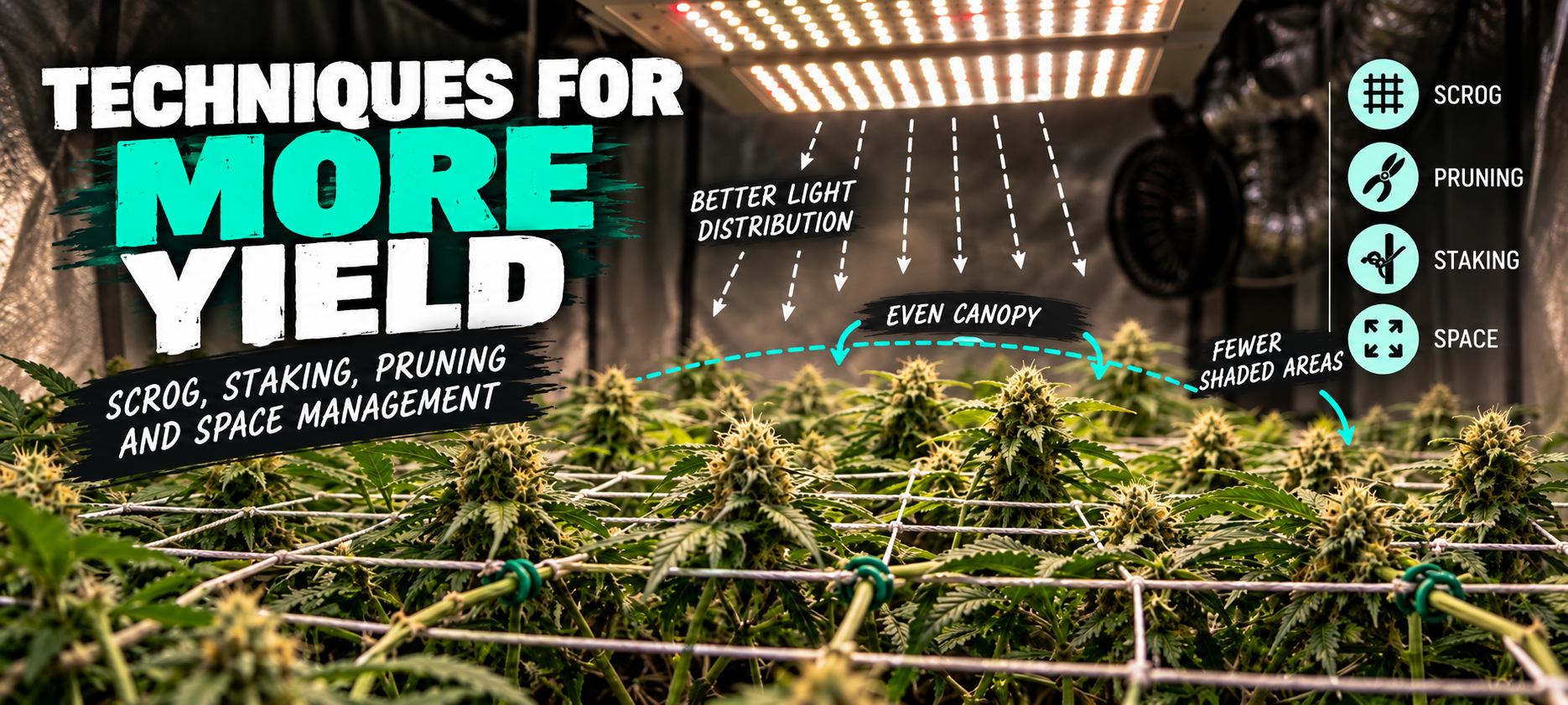
The goal is usually to create a more uniform canopy and allow lighting to reach the different productive areas more homogeneously.
In autoflowering varieties, one must be more careful with high-stress techniques, as they have less time to recover before entering flowering.
Staking the plants
Staking can be especially useful when branches begin to support a lot of weight.
Stakes, nets, or supports allow you to:
- Prevent branches from bending or breaking.
- Better distribute the canopy.
- Keep flowers correctly positioned.
- Facilitate air circulation.
- Make better use of lighting.
It is not about the plant stopping the use of energy to strengthen its branches and automatically allocating it to produce flowers, but about providing physical support and maintaining an efficient structure.
Use SCROG or SOG
SCROG and SOG systems seek to make better use of the cultivation surface, although they work differently.
SCROG
The Screen of Green uses a mesh to distribute the branches horizontally.
It allows covering a large surface with relatively few plants and achieving a uniform canopy.
SOG
The Sea of Green normally uses a larger number of small plants with little growth time.
The goal is to quickly form a uniform surface of main tips.
Therefore, although both systems seek to improve space efficiency, SOG is not exactly characterized by using few plants, unlike SCROG.
Avoid stress during flowering
During flowering, it is advisable to maintain conditions as stable as possible.
In this phase, it is recommended to avoid:
- Transplants.
- Aggressive pruning.
- Sudden temperature changes.
- Excessive fertilization.
- Excessive watering.
- Significant lighting changes.
Strong interventions performed too late can force the plant to dedicate resources to recovery instead of continuing to develop flowering.
Does more production mean less quality?
Not necessarily. Production and quality are not opposite concepts, although certain decisions aimed exclusively at maximizing weight can affect other aspects of the final result.
Genetics, environmental conditions, nutrition, lighting, and the time of harvest influence both quantity and quality.
Therefore, the goal should be to find the balance between yield and quality, instead of trying to maximize only one of the two factors.
There is no trick capable of dramatically increasing production on its own.
Different cultivation techniques can help us improve the result, but none replaces correct plant management.
In the end, achieving good production depends above all on knowing how the genetics we are growing respond, correctly adjusting each parameter, and letting the plant complete its development without subjecting it to unnecessary stress.
Frequently asked questions about how to increase marijuana production
How to increase marijuana production?
What influences the production of a marijuana plant the most?
Does more fertilizer mean more production?
What techniques can help increase production indoors?
Is it better to grow more plants to achieve higher production?
Products in this article



 Add as preferred source in Google


