Personalized Attention +44 151 947 0713
 SHIPPING TO ALL

 9/10 Rating
 SALE TO MINORS PROHIBITED

CBD is attracting increasing interest in neuroscience due to its relationship with neuroinflammation, oxidative stress, and brain function. In this article, we analyze how CBD affects the brain, how it differs from THC, and what current scientific evidence really says about its potential neuroprotective role.
Interest in knowing how CBD affects the brain has not stopped growing in recent years. What was once associated almost exclusively with relaxation or well-being is now also part of research into brain inflammation, neuronal function, and neuroprotection. This does not mean that everything has been proven, but there is sufficient scientific basis to look at the subject with more detail and fewer clichés.
How CBD affects the brain
When talking about how CBD affects the brain, the first thing to be clear about is that cannabidiol does interact with nervous system processes, but it does not do so in the same way as THC. This difference is important because many people lump both compounds together when, in reality, their behavior is not the same.
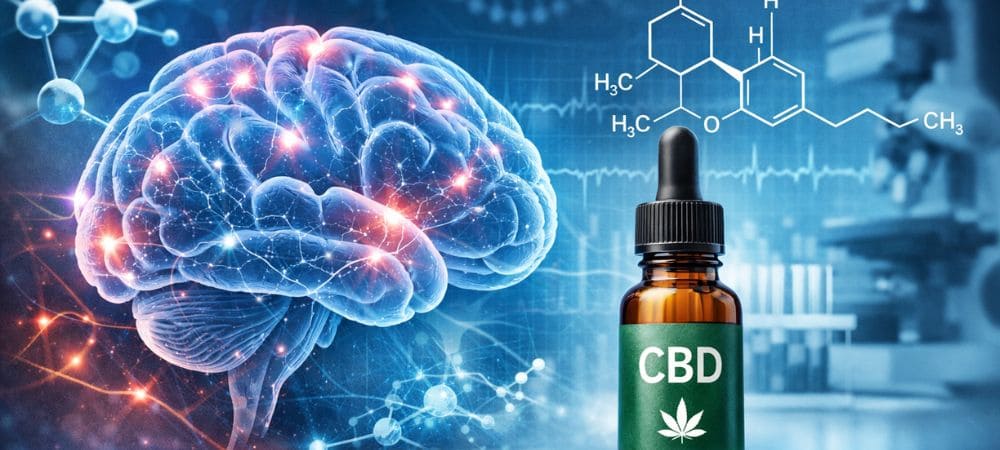
CBD is not associated with the “high” typical of high-THC cannabis. It does not alter perception in the same way, nor does it usually produce the psychoactive effect that so many people associate with marijuana. That does not mean it does not act on the brain, but rather that it does so in a different way.
A good part of the scientific interest in CBD has to do with its relationship with the endocannabinoid system, a network that participates in functions such as internal balance, stress response, sleep, pain, memory, or mood. In addition, its interaction with other mechanisms involved in inflammation, brain signaling, and cellular protection is also being studied.
Simply put: CBD does not seem to act as a switch that turns a single function on or off, but rather as a compound that can influence several processes at the same time. That is why it arouses so much interest in neuroscience.
Differences between CBD and THC in the brain
Before continuing, it is worth clarifying a very common question. Although both come from cannabis, CBD and THC do not produce the same effect on the brain.
| Aspect | CBD | THC |
|---|---|---|
| Intoxicating effect | No | Yes |
| Relationship with CB1 | Does not strongly activate it | Yes, it has a much more direct action |
| Subjective perception | Does not produce the typical “high” | Can alter perception, attention, and cognition |
| Main scientific interest | Neuroinflammation, anxiety, epilepsy, neuroprotection | Pain, appetite, nausea, spasticity, and psychoactive effects |
This difference explains why so many people ask if CBD affects the brain “like cannabis.” The answer is no. It can influence brain processes, but not in the same way or with the same effects as THC.
Why is there so much talk about neuroprotection?
One of the reasons why CBD appears more and more in scientific articles is its possible relationship with neuroprotection. That is, its potential capacity to help protect neurons against certain processes that can damage them.
Two important concepts usually appear here: neuroinflammation and oxidative stress. There is no need to overcomplicate it. The basic idea is that when inflammatory processes or cellular damage are maintained in the brain for a long time, it can affect the proper functioning of the nervous system. That is why researchers have been observing for years which compounds could help modulate that environment.
In this context, CBD is interesting because in laboratory studies it has shown promising signs related to brain inflammation, antioxidant response, and the protection of nerve cells. This is what has led to research in areas such as epilepsy, anxiety, neurodegenerative diseases, or neuronal damage.
However, it is advisable to keep our feet on the ground here. Just because a compound shows potential in the laboratory does not automatically mean that this effect is proven in people. That leap is important, and it is often exactly what is oversimplified when talking about the subject.
What does science say about how CBD affects the brain?
Science is not starting from scratch with CBD, but it does not allow for exaggerated conclusions either. As of today, the most sensible thing to say is that cannabidiol has real interest in the neurological field, although the level of evidence is not the same in all cases.
Where there is clearer support is in very specific uses related to certain types of epilepsy. Outside of that, the landscape is more uneven. There are interesting studies on anxiety, neuroinflammation, cognitive decline, and neurodegenerative diseases, but they cannot always be translated into general statements.
Often the results are promising, yes, but more human trials, more homogeneity in doses, more long-term follow-up, and more clarity on the specific contexts in which it makes sense to talk about real benefit are still needed.
| Area studied | Current situation |
|---|---|
| Epilepsy | This is where there is the most support for specific uses |
| Neuroinflammation | There are promising results, especially in the laboratory |
| Oxidative stress | Of great interest at an experimental level |
| Neurodegenerative diseases | Open field, but still in development |
| General brain improvement | Cannot be stated broadly |
Therefore, when someone asks how CBD affects the brain, the most honest answer is not a resounding yes or no, but something more nuanced: it does interact with relevant nervous system processes, it does have real scientific interest, but not everything is proven to the same level.
How CBD affects the brain and recent science: the case of neuroinflammation
Part of the recent interest in knowing how CBD affects the brain comes from studies published in the International Journal of Molecular Sciences, which analyze the role of CBD together with certain common drugs in neuroinflammation models. One of the most discussed cases is the combination with telmisartan, where researchers observed very striking results in the laboratory when comparing the effect of CBD alone, the drug alone, and both together.
This type of work has attracted attention because it points to a possible complementary action in inflammatory processes of the nervous system. Similar research has also been published with compounds such as dimethyl fumarate, another name that appears in this field when studying mechanisms related to inflammation and neuronal protection.
The important thing here is to understand well what this means. It does not mean that mixing CBD with medication is automatically a good idea, nor that there is a general recommendation to do so on your own. What it does indicate is that research continues to explore cannabidiol as a molecule of interest within broader strategies related to neuroinflammation.
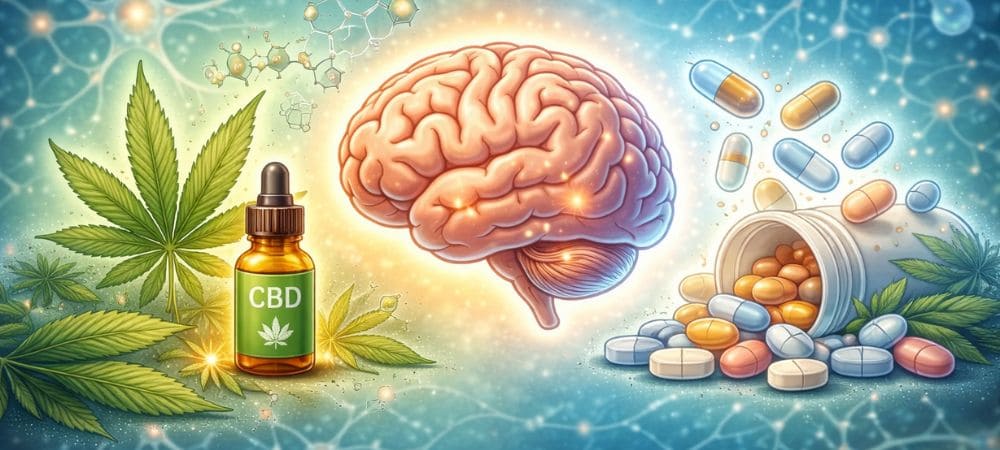
So, does CBD protect the brain?
The short answer would be: it could have an interesting role, but it should not be stated as a closed truth in all contexts.
What exists today is a scientific basis that justifies the interest. There are studies that point to possible effects related to brain inflammation, cellular damage, neuronal balance, and protection against certain biological processes. This makes CBD increasingly researched.
But it is one thing for there to be potential and another for it to be presented as a confirmed solution to protect the brain. In areas such as Alzheimer’s, Parkinson’s, cognitive decline, or neurological aging, research remains open. There are signs, yes, but not yet a definitive conclusion that allows us to speak of a proven benefit in a general way.
Does CBD get you high or affect memory, mood, or the mind?
This is another of the big questions. Many people want to know if CBD changes the mind, if it influences memory, or if it alters the way of thinking.
Here, too, nuances are needed. CBD can be related to processes that affect mood, stress response, or certain subjective sensations, but that does not mean it produces a mental alteration comparable to that of THC. It does not usually cause intoxication, perceptual distortion, or the type of psychoactive experience that most people associate with recreational cannabis.
Regarding memory or concentration, a universal answer cannot be given. The effect can vary greatly depending on the context, the product, the dose, and the person. In addition, studies on cognition are still too heterogeneous to launch blunt messages.
Safety and interactions: a key point
If we talk about CBD and brain effects, we must also talk about caution. Although cannabidiol is usually presented as a well-tolerated compound, not everyone responds the same way. Some people may notice drowsiness, digestive discomfort, dizziness, or changes in energy levels, especially depending on the dose or the type of product.
It is also important to remember that CBD can interact with some medications. And this makes even more sense when talking about studies that combine it with drugs, because a controlled investigation is one thing and translating that into daily use without supervision is quite another.
Therefore, any responsible reading of the subject should avoid two extremes: selling CBD as if it were a magic solution or dismissing it as if it had no interest. Reality, as often happens, is somewhere in between.
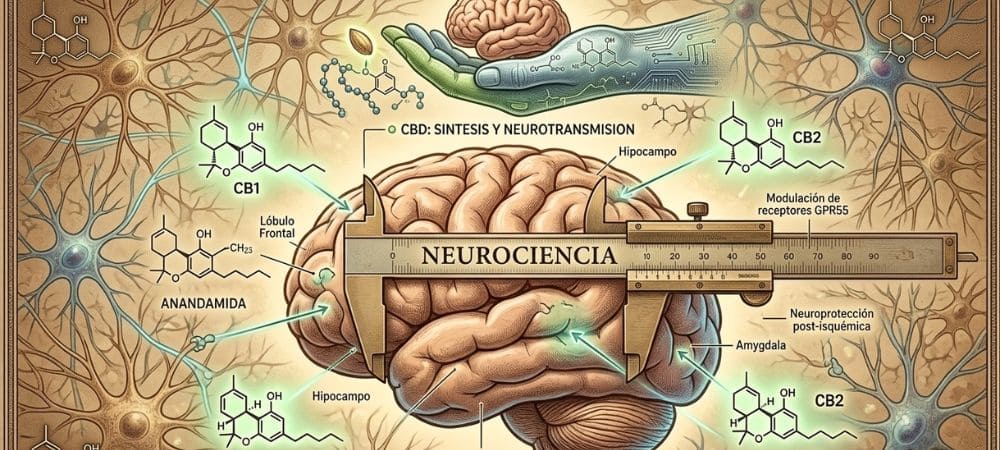
Today, it can be said that CBD affects the brain, but not in the simplistic sense with which that phrase is sometimes used. Its relationship with the endocannabinoid system, inflammation, oxidative stress, and other signaling pathways make it a very interesting molecule for neuroscience. It can also be said that there are promising results in neuroinflammation and neuroprotection, especially at the preclinical level.
What cannot yet be stated in a general way is that CBD protects the brain in humans in any context or that it serves as a validated treatment for all neurological diseases. The strongest evidence is in specific uses, while other applications remain under investigation. The best approach today is this: real scientific interest, hopeful results, and caution when translating them into practice.



 Add as preferred source in Google