Personalized Attention +44 151 947 0713
 SHIPPING TO ALL

 9/10 Rating
 SALE TO MINORS PROHIBITED

Cannabis cream for pain has established itself as one of the most sought-after topical options for people looking to relieve muscle discomfort, joint pain, or localized tension without resorting to oral painkillers. Its popularity has grown especially among athletes, users with physical overexertion, and people who prefer direct-application solutions without psychoactive effects.
However, not all creams are the same nor do they offer the same results. In this article, we rigorously analyze whether cannabis cream for pain is truly effective, how it acts on the body, what science says, and what factors you should consider before buying one.
What is a cannabis cream for pain?
Before evaluating its efficacy, it is important to clarify what is meant by cannabis cream for pain, as this term is used broadly in the market.
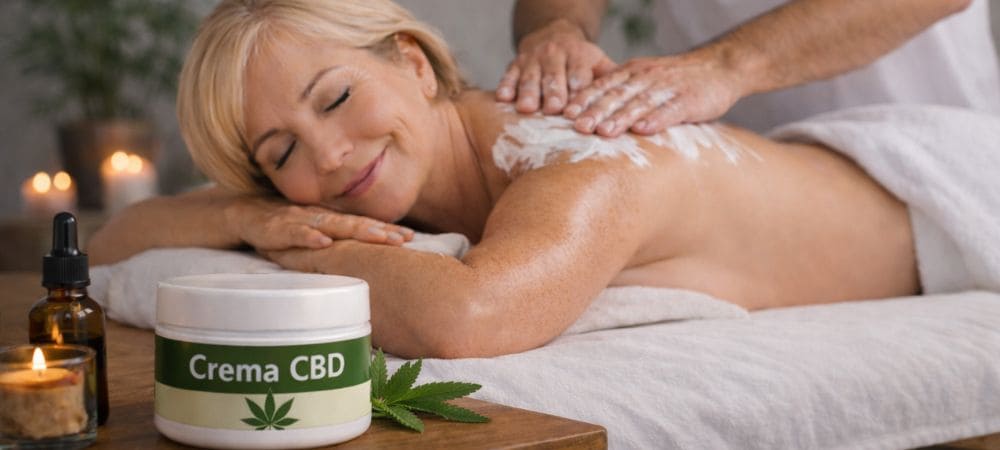
In most cases, it is a topical cosmetic product that incorporates non-psychoactive cannabinoids, mainly CBD (cannabidiol), along with other soothing or anti-inflammatory ingredients of plant origin. Its purpose is to provide localized relief when applied directly to the skin.
Difference between cannabis cream, CBD cream, and hemp oil
It is essential to distinguish between hemp seed oil, which is a moisturizing ingredient, and cannabidiol (CBD), which is the molecule with the potential to influence pain and inflammation receptors in the skin. Quality formulas combine CBD with other active ingredients (menthol, arnica, rosemary) to maximize comfort.
Based on this distinction:
- Hemp seed oil: a nourishing and moisturizing cosmetic ingredient, contains no active cannabinoids.
- CBD cream: contains cannabidiol extracted from industrial hemp flowers, responsible for the potential soothing effect.
- Cannabis cream for pain (commercial use): usually refers to creams with CBD, although they do not contain THC in relevant amounts.
Many misunderstandings come from products sold as “cannabis” but that do not contain active CBD. This does not mean they are bad creams, but rather that their main function is cosmetic, not analgesic.
Does cannabis cream for pain contain THC?
One of the most common questions is whether this type of cream can produce psychoactive effects.
In legal products sold in grow shops and specialized stores:
- THC is absent or present in insignificant traces
- It does not produce a “high”
- It does not enter the bloodstream in relevant amounts
This makes cannabis cream for pain an attractive option for people who want relief without altering their mental state or their daily routine.
Does cannabis cream for pain really work?
To answer with judgment, it is essential to review what the available scientific evidence says and in what contexts its use may make sense.
Available scientific evidence
Although research is still limited, there are well-designed studies that support the potential benefit of topical CBD in certain situations:
- A clinical trial showed that a CBD cream significantly improved pain and disability in arthritis at the base of the thumb compared to a placebo.
- Other studies and scientific reviews indicate that topical CBD is well-tolerated and can reduce local inflammation and pain in some contexts.
The general evidence for chronic and musculoskeletal pain is still mixed or insufficient to state that CBD works in all cases. Some analyses point out that the improvement may be small or variable depending on each person.
How does a CBD cream act on pain?
Cannabidiol creams do not act like conventional medication, but rather function locally by engaging multiple mechanisms:
- Interaction with the skin’s endocannabinoid system, which modulates the response to pain and inflammation
- Local reduction of inflammation markers
- Additional sensory effect, such as a cooling or warming sensation provided by menthol or capsicum, which can temporarily distract from the pain.
This approach makes the cream act on the perception of pain and local inflammation, but it does not replace medical treatments when there is a significant injury or underlying condition.
Many creams, in addition to CBD, often incorporate menthol or camphor for a cooling effect, capsaicin for a warming effect, or arnica, rosemary, or devil’s claw as traditional botanicals. In many cases, part of the perceived relief comes from this synergy, not exclusively from the cannabidiol. For those looking for a more liquid and fast-absorbing alternative, there is also cannabis alcohol, widely used in muscle massages and localized applications.
How to choose a good cannabis cream for pain?
Choosing a quality product can make the difference between something that “isn’t noticeable” and one that really helps. Here is a quick buying guide:
| What to check when choosing a CBD product | ||
|---|---|---|
| What to check | Positive sign | Warning sign |
| CBD clearly stated in formula | Precise and verifiable mg | “Hemp extract” without CBD amount |
| Published laboratory analysis (COA) | Third-party certificate | No documents available |
| Additional soothing ingredients | Menthol, arnica, rosemary | Perfumes or harsh chemicals |
| Customer reviews | Objective ratings | Miracle promises |
Remember that CBD should not be confused with THC (tetrahydrocannabinol), the psychoactive component of the plant that is not present in well-formulated and legal creams.
Not differentiating cosmetics from a medical treatment can be a common mistake when choosing a good cannabis cream for pain. Never choose a product based solely on its price. Exaggerated brand promises are also usually unreliable. Just because a product has more CBD does not always mean it will be better.
For what types of pain might it make the most sense?
Usage experience, along with available evidence, allows us to establish some scenarios where these creams are used most frequently.
| Topical CBD: use by type of discomfort | ||
|---|---|---|
| Type of discomfort | Common use | Realistic assessment |
| Muscle pain | Post-workout, overexertion | Can provide local relief |
| Stiff joints | Daily use, massages | Variable results |
| Cervical / lumbar tension | Stress, poor posture | Feeling of comfort |
| Serious injuries | Sprains, tears | Does not replace treatment |
A large part of the perceived benefit also comes from the massage, the heat/cold, and the application routine, not just the CBD.
How to correctly use your CBD cream?
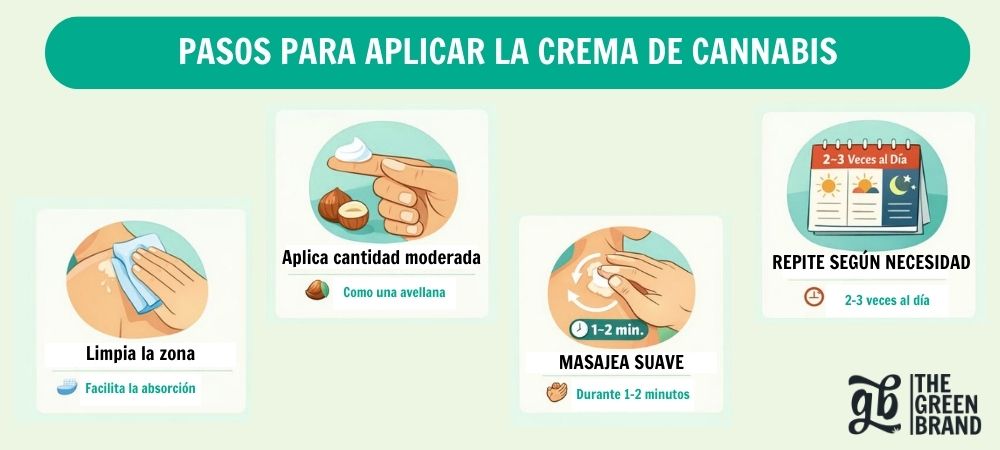
To get the most out of it:
- Clean the area before applying to facilitate absorption.
- Use a moderate amount (about the size of a hazelnut).
- Massage gently for 1–2 minutes.
- Repeat 2–3 times a day according to need and tolerance.
Consistency is key: many people notice improvements after several days of regular use, not necessarily immediately.
Safety and precautions
CBD creams are usually well-tolerated, but there may be cases of irritation on very sensitive skin or interaction with other topical treatments. Consulting a dermatologist/doctor is always prudent if you have doubts or special skin conditions.
Furthermore, although CBD is perceived as safe, it does not replace a medical evaluation if there is persistent pain, significant inflammation, or neurological symptoms.
Cannabis cream for pain can be a useful tool to relieve muscle or joint discomfort in a localized way, especially when combined with massage and healthy recovery habits. Clinical evidence is still modest, but several studies support benefits in specific conditions such as arthritis and localized pain.
At GB The Green Brand you can find options formulated with a good balance of CBD and soothing co-ingredients (menthol, arnica, rosemary), perfect for use after sports, long trips, or simply to feel relief without systemic side effects.