Personalized Attention +44 151 947 0713
 SHIPPING TO ALL

 9/10 Rating
 SALE TO MINORS PROHIBITED

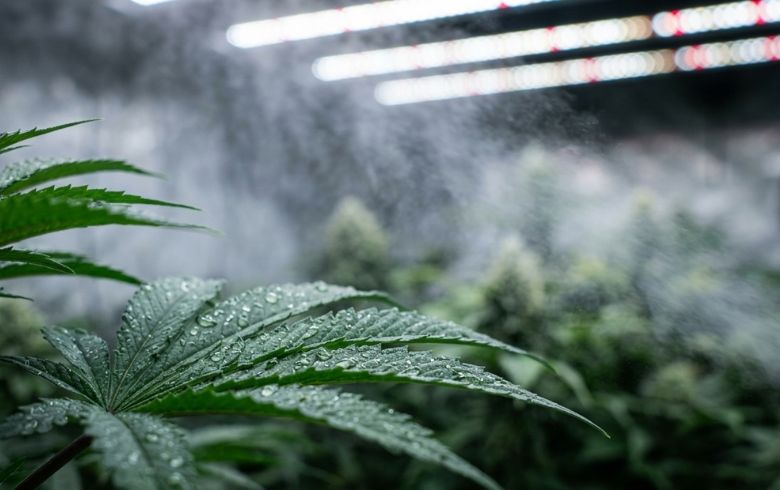
When growing cannabis indoors, environmental control is a fundamental part of the process. We are not just talking about temperature, humidity, ventilation, or lighting, but also air quality and odor management.
At this point, two devices that often cause confusion appear: the ozone generator and the ionizer. Both are used to improve air in enclosed spaces, but they do not work the same way, they do not have the same effectiveness, and, above all, they do not present the same level of safety.
Therefore, before choosing between an ozone generator or an ionizer for an indoor grow, it is important to fully understand what each one does, when it can be useful, and what precautions must be taken.
What is an ozone generator?
An ozone generator is a device that produces ozone, a molecule made up of three oxygen atoms: O₃. Ozone exists naturally in the atmosphere and, in the upper layers, helps protect the Earth from part of the solar radiation. However, in enclosed spaces and in high concentrations, it can be harmful to people, animals, and plants.
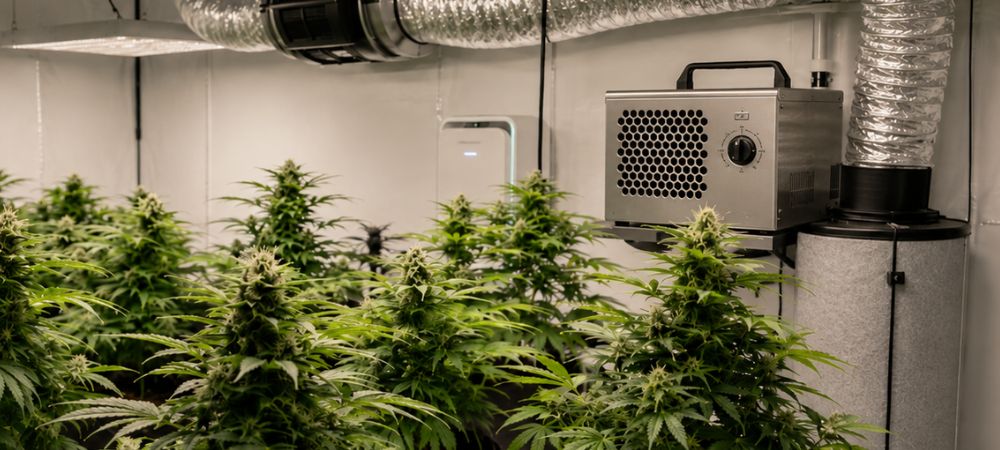
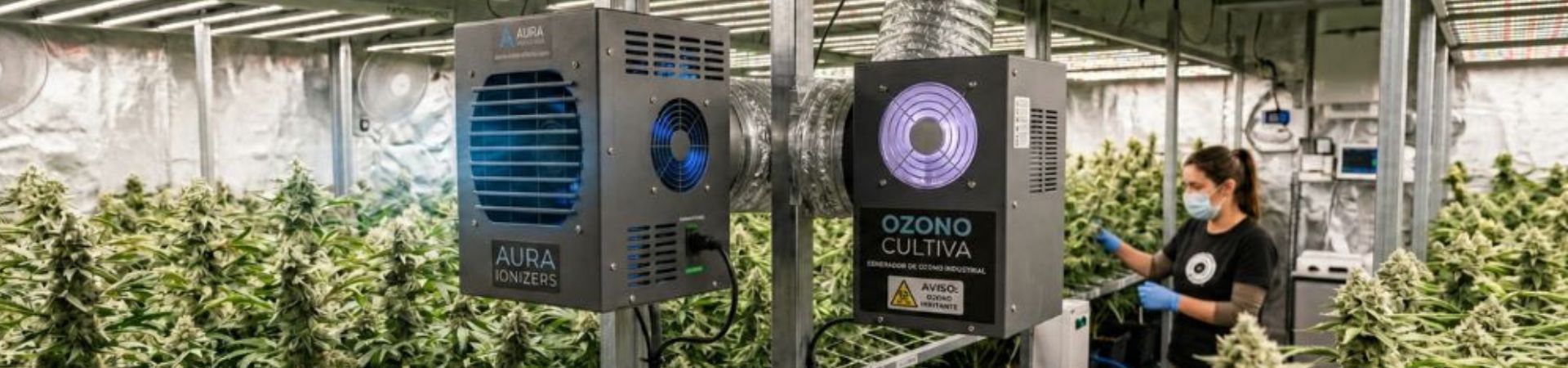
In cannabis cultivation, ozone generators are mainly used to reduce intense odors and help disinfect the environment, as ozone has a high oxidizing capacity. It can act on microorganisms, organic particles, and compounds responsible for bad odors.
However, that same oxidizing capacity is what makes it necessary to use it with great caution.
How does an ozone generator work?
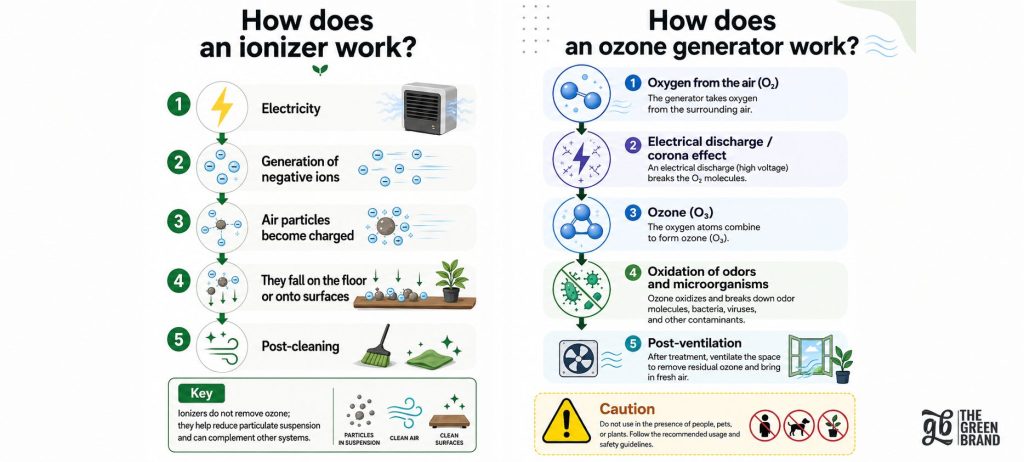
Ozone generators usually produce this gas through an electrical discharge, known as the corona effect. This process transforms part of the oxygen in the air into ozone.
Ozone reacts with the molecules present in the environment, oxidizing them. This is why it can help neutralize strong odors, such as those generated in cannabis crops during flowering, especially in very aromatic varieties.
However, its use should not be confused with that of a simple air freshener or household purifier.
And precisely for that reason, it can also affect the respiratory tract, eyes, mucous membranes, certain materials, and even plants if used incorrectly.
Risks of an ozone generator in an indoor grow
Ozone can be useful in certain contexts, but it is not a device to be used without control. A high concentration in a closed room can cause eye irritation, respiratory discomfort, coughing, sore throat, or more serious problems if exposure is prolonged or intense.
Furthermore, due to its oxidizing power, it can deteriorate some cultivation materials, such as rubber, plastics, textiles, seals, flexible ducts, or rubber elements. It can also negatively affect plants if applied directly to them or if a high concentration is maintained inside the grow tent or grow room.
For this reason, an ozone generator should not be used haphazardly in a cannabis grow. Nor should it be used as a substitute for good ventilation, an activated carbon filter, or a correctly sized extraction system.
When does it make sense to use an ozone generator?
In the world of indoor cultivation, an ozone generator can make sense as a temporary support to treat odors in extraction ducts, empty areas, or spaces that can be ventilated after use.
It can also be used at specific times for cleaning or disinfection. As long as there are no people, animals, or plants directly exposed to the ozone and the area is well ventilated afterward.
It is highly recommended to avoid placing it inside the grow tent while it is in operation or in a room where plants are continuously exposed. If used, it must be done with a timer, ventilation control, and always following the manufacturer’s instructions.
What is an ionizer?
An ionizer is a device that releases negative ions into the air. These ions attach to airborne particles, such as dust, pollen, organic debris, or certain particles responsible for odors. By attaching to them, it makes them heavier, causing them to fall to the floor or settle on surfaces.
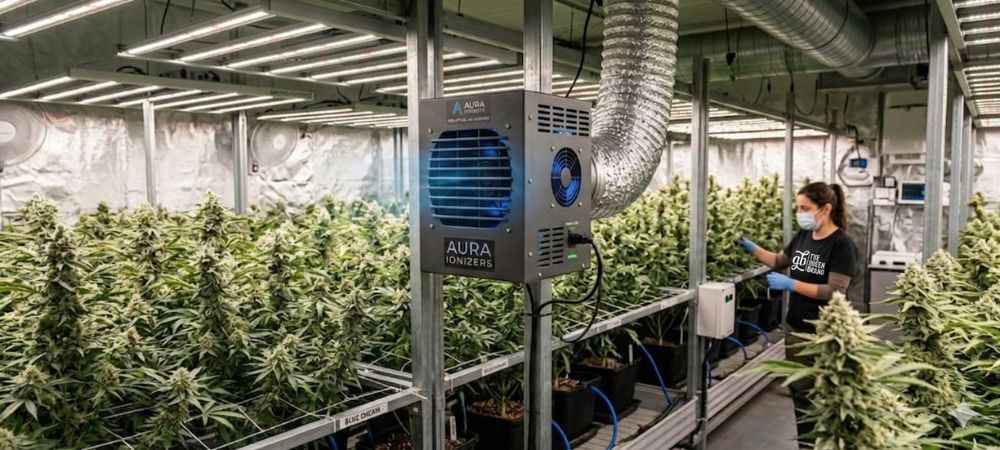
In other words, the ionizer does not destroy the odor in the same way as ozone, but rather helps reduce particles present in the air. That is why it is usually considered a milder option and, if the device is well designed, safer for spaces where there are people, animals, or plants.
In cannabis cultivation, it can help improve the feeling of cleanliness in the environment, reduce airborne particles, and complement other filtering systems, but it should not be seen as the main solution for intense odors.
How does an ionizer work?
The ionizer uses electricity to negatively charge particles in the air. These charged particles bind to other positively charged particles and end up falling onto the floor, walls, trays, or nearby surfaces.
Therefore, after using an ionizer, it may be necessary to clean the area more frequently, as some of that dirt does not disappear but rather settles in the environment.
This phenomenon is also found naturally in places like waterfalls, mountain areas, near the sea, or after certain storms, where many people perceive the air as cleaner or fresher.
Advantages of the ionizer in cannabis cultivation
The main advantage of the ionizer is that it can operate continuously in some spaces, provided it is a safe model designed not to generate ozone as a byproduct.
It can also help reduce dust, airborne particles, and a certain environmental load within auxiliary rooms, work areas, or spaces near the grow.
However, its ability to eliminate strong cannabis odors is limited. It can help, but it does not replace an activated carbon filter or a good extraction system.
Disadvantages of the ionizer
The ionizer does not completely eliminate intense odors. In cannabis crops during flowering, where terpenes can be very pronounced, its effect may fall short if used as the only solution.
Additionally, some low-quality ionizers can generate small amounts of ozone. That is why it is important to choose suitable equipment and always check the manufacturer’s specifications.
They also require some cleaning or maintenance, especially in small models, as the ionization needles or plates can accumulate dirt or oxidize over time.
Ozone generator or ionizer: which one to choose for a cannabis grow?
The choice between an ozone generator or an ionizer depends on the goal. If the aim is to neutralize very intense odors at specific times, the ozone generator can be more powerful, but it also requires more caution. It is not recommended to use it without control or in the presence of people, animals, or plants.
If the goal is to improve air quality, reduce airborne particles, and maintain a cleaner environment, the ionizer can be a safer option, although less effective against strong odors.
For an indoor cannabis grow, the ideal approach is usually to combine good extraction, activated carbon filters, air renewal, and regular cleaning. The ozone generator or ionizer can be supplements, but they should not replace the basic elements of ventilation and filtration.
| Aspect | Ozone Generator | Ionizer |
|---|---|---|
| Main function | Oxidizes odors and microorganisms | Charges particles so they fall to the floor |
| Effectiveness against intense odors | High | Medium or low |
| Use in grow with plants | Not recommended directly | Safer if it does not generate ozone |
| Health risk | High if used incorrectly | Low if the equipment is of quality |
| Maintenance | Medium | Low or medium |
| Recommended use | Specific moments, empty areas, or ducts | Environmental improvement and particle reduction |
| Replaces carbon filter | No | No |
Recommendation for indoor grows
In cannabis crops, odor control should start with a well-planned installation: an adequate extractor or, better yet, the best extractor for your grow, an activated carbon filter, good air circulation, and constant cleaning.
The ozone generator can be useful in specific cases, but it must be used with great caution. It is not advisable to apply it directly to plants or use it in occupied spaces without subsequent ventilation.
The ionizer, on the other hand, can be interesting as support to keep the environment cleaner, although it will not be enough if the main objective is to eliminate the intense odor of a flowering room.
In summary, if the priority is safety and air maintenance, the ionizer is a milder option. If the priority is to treat very strong odors on a one-off basis, the ozone generator can be more effective, but it requires much more controlled use.
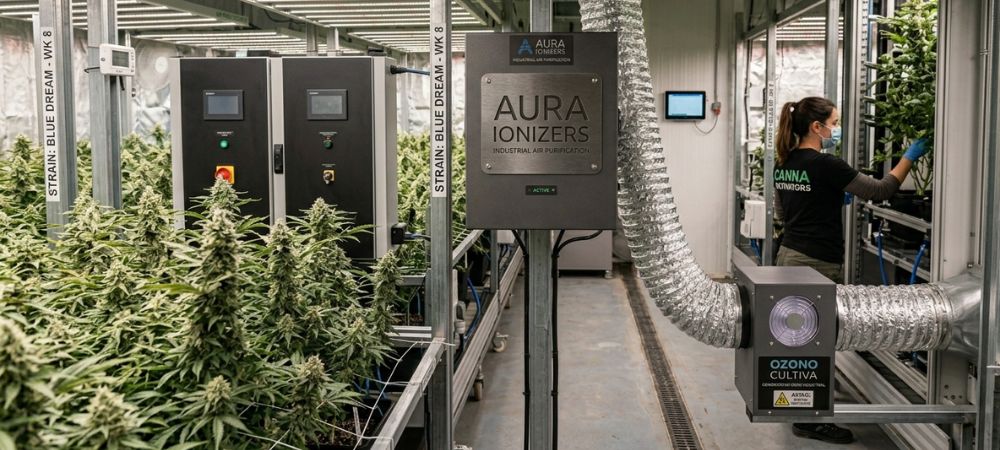
Ozone generator or ionizer are not the same, even though both are related to improving air in enclosed spaces. In a cannabis grow, this difference is especially important, as a poor choice or misuse can affect both the grower and the plants.
The ozone generator stands out for its power against odors, but also for its risks. The ionizer is safer under normal conditions, but less effective when the odor is very intense.
Therefore, before choosing between an ozone generator or an ionizer, it is worth assessing the size of the grow, the intensity of the odor, the available ventilation, and the level of safety required. In most cases, these devices should be understood as a complement, not as the basis of the odor control system.