Personalized Attention +44 151 947 0713
 SHIPPING TO ALL

 9/10 Rating
 SALE TO MINORS PROHIBITED
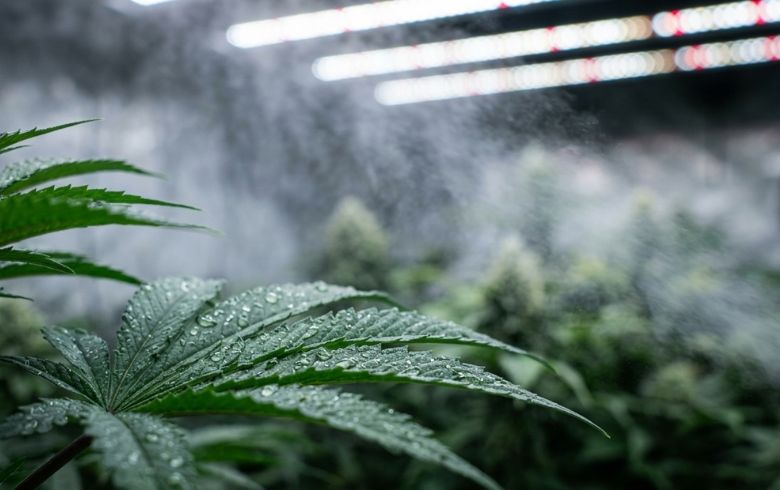
Controlling humidity is one of the most important aspects of indoor cultivation. Although more attention is often paid to lighting, ventilation, or fertilizers, the relative humidity level can directly influence plant development. It can also affect their ability to absorb water and nutrients and play a role in preventing issues such as fungi or environmental stress.
That is why knowing what a plant humidifier is used for in cannabis cultivation can make all the difference. Especially in enclosed spaces where the environment depends almost entirely on the installed equipment. This type of air humidifier allows you to increase air humidity when the environment is too dry, helping to create more stable conditions for the plants.
Below, we explain how a humidifier can help in each stage of cultivation, how to use it correctly, and what aspects should be taken into account to get the most out of it.
What is a humidifier for indoor plants used for?
A plant humidifier is used to raise the relative humidity of the air within the grow space. This is especially useful when the environment is too dry, which can happen in indoor grow tents with high ventilation, powerful lights, or in areas where ambient humidity is low.
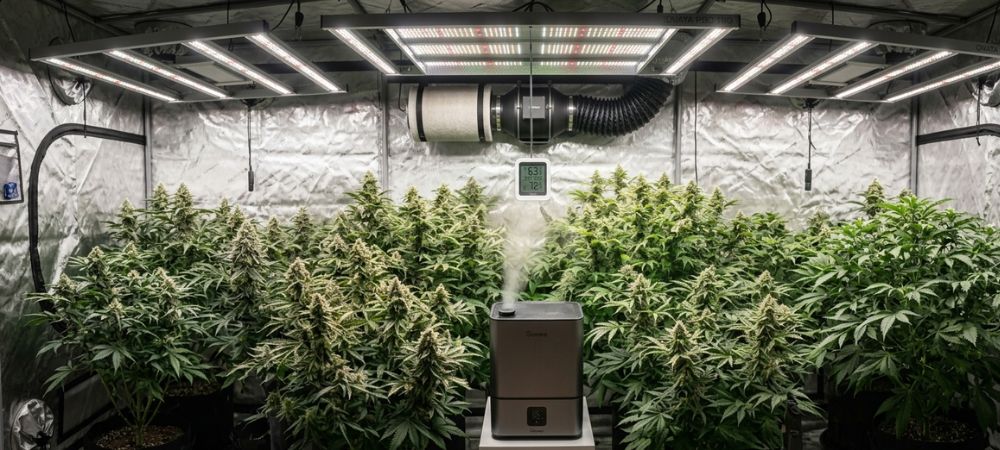
Cannabis plants need different humidity levels depending on the phase they are in. They do not require the same conditions during germination as they do during flowering, so controlling this parameter helps maintain a more balanced environment. Humidity influences plant transpiration and how they move water and nutrients from the roots to the leaves.
In general terms, a plant humidifier can help to:
- Promote a more stable environment during the early stages of cultivation.
- Reduce stress caused by overly dry environments.
- Improve development conditions in young plants.
- Maintain a more appropriate relative humidity according to the cultivation stage.
- Avoid sudden humidity fluctuations within the indoor space.
However, it is not about adding humidity without control. Excess humidity can also be harmful, especially during flowering, where it increases the risk of fungal growth.
What a humidifier is used for according to the cultivation stage
The usefulness of an air humidifier changes depending on the stage the plant is in. In the early stages, it is usually more important to increase humidity, while in flowering, the main goal is to keep it controlled and avoid excesses.
Humidifier for plants in germination and the first few days
During germination and the first few days of life, plants are very sensitive to environmental changes. At this stage, adequate humidity can help make the environment more favorable for initial development.
An environment with stable humidity can promote the activation of the seed’s biological processes and help the seedling avoid stress from environmental dryness. It can also be useful for rooting cuttings, as they do not yet have a developed root system and depend heavily on environmental conditions.
In this phase, the humidifier can help to:
- Maintain a more humid and stable environment.
- Reduce stress in seedlings and cuttings.
- Promote an environment suitable for the start of root development.
- Prevent the substrate and the environment from drying out too quickly.
Even so, it is important to prevent the vapor from falling directly onto the plants or the space from becoming excessively humid for many hours.
Humidifier for plants in the growth phase
During the vegetative phase, plants develop stems, branches, and leaves. At this time, an appropriate relative humidity can promote more balanced growth and help the plant maintain good metabolic activity.
If the environment is too dry, plants can transpire excessively, which can cause stress and affect the growth rate. In these cases, the humidifier allows you to raise the air humidity and soften the environmental conditions.
In growth, a humidifier can be used to:
- Maintain a more appropriate relative humidity.
- Reduce environmental stress in young plants.
- Promote the development of leaves and branches.
- Prevent the environment from becoming too dry due to ventilation or heat from lighting.
In this phase, the ideal is to control humidity regularly and adjust the humidifier according to the temperature, the size of the plants, and the ventilation of the space.
Humidifier for plants in flowering
In flowering, you have to be more careful. Although an environment that is too dry can also affect plants, excess humidity at this stage can promote the appearance of fungi, especially when the flowers begin to compact.
That is why, in flowering, an air humidifier will not always be necessary. Its use will depend on the actual conditions of the crop. If the humidity is too low, it can help correct it, but it should always be used in a timely and controlled manner.
During this stage, the goal is not to increase humidity constantly, but to avoid extremes. A humidifier can be useful if the environment is excessively dry, but it should never cause condensation, droplets on the flowers, or high humidity maintained for too long.
In flowering, it is advisable to pay attention to:
- Not placing the humidifier near the buds.
- Preventing the vapor from directly wetting the flowers.
- Maintaining good ventilation.
- Controlling humidity with a hygrometer.
- Reducing the use of the humidifier if the humidity is already high.
This phase requires more precision, as poor humidity control can affect the final result of the harvest.
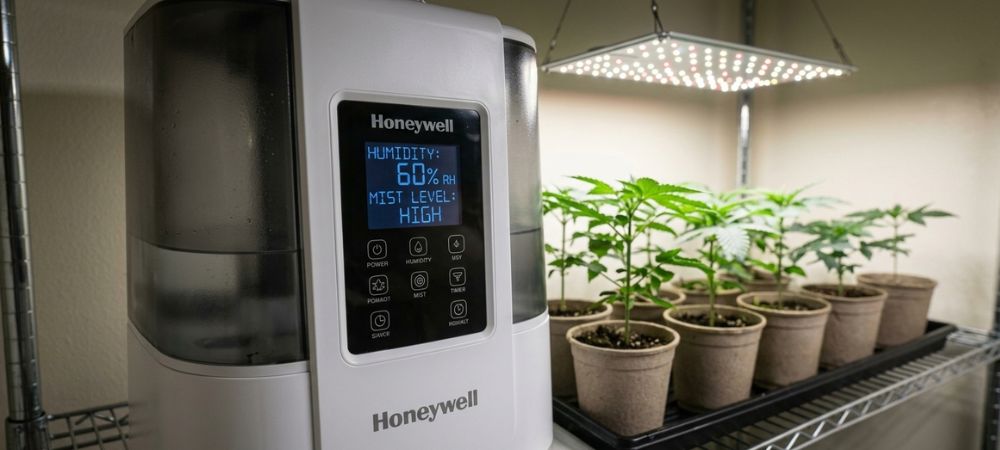
How a cultivation humidifier works
A plant humidifier works by releasing vapor or a fine water mist into the environment to increase the relative humidity of the air. There are different types of humidifiers, although in indoor cultivation, models capable of working continuously and adapting to the size of the space are usually used.
Some indoor plant humidifiers are simpler and work manually, while others allow you to regulate intensity, program operation, or connect to humidity controllers. The latter are especially practical when looking to maintain a more stable climate.
A humidifier can help improve the cultivation environment because it allows you to:
- Adjust humidity when the air is too dry.
- Compensate for the loss of humidity caused by extractors or fans.
- Create a more stable climate in enclosed spaces.
- Adapt environmental conditions to each stage of cultivation.
For it to work correctly, you must choose a model with sufficient capacity for the size of the grow tent or room. A humidifier that is too small may fall short, while one that is too powerful can raise humidity excessively if not regulated well.
How to use a humidifier in cannabis cultivation
Using humidifiers for indoor plants is simple, but it should be done with control. It is not enough to just turn it on and leave it running for hours, as humidity must be adjusted according to the actual needs of the crop.
Measure humidity before using it
Before turning on the humidifier, it is important to measure the relative humidity of the space. For this, you can use a hygrometer or a climate station. Without this measurement, it is very difficult to know if it is really necessary to add humidity or if the problem lies elsewhere in the crop.
It is recommended to check the humidity at different times of the day, as it can change when the lights are on, when they are off, or when ventilation increases.
Place it in a strategic area
The air humidifier should be placed in a spot where the vapor is well distributed throughout the space, but without directing it directly at the plants. If the vapor falls on leaves or flowers, it can generate localized excess humidity and increase the risk of problems.
The ideal is to place it in an area with good air circulation, so that the humidity is distributed uniformly throughout the crop.
Adjust intensity according to the stage
Not all phases need the same humidity. In germination and growth, it may be more useful to raise it, while in flowering, it must be controlled with special care.
If the humidifier allows you to regulate the intensity, it is better to start with a low or medium level and check how the humidity evolves. If used with a controller, the equipment will be able to turn on or off automatically according to the configured value.
Avoid excess humidity
A plant humidifier used incorrectly can cause the opposite effect to the one desired. If it is kept on for too long or if there is not enough ventilation, the humidity can rise too much and promote the appearance of fungi.
Therefore, it should always be combined with good air renewal, indoor fans, and constant measurement of relative humidity.
Humidifier maintenance
Humidifier maintenance is fundamental for it to work correctly and to prevent it from becoming a source of dirt or microorganisms. By working with water, the tank and internal parts can accumulate mineral deposits, biofilm, or impurities if they are not cleaned frequently.
To keep it in good condition, it is advisable to:
- Change the water regularly.
- Clean the tank frequently.
- Avoid leaving stagnant water for days.
- Disinfect the equipment according to the manufacturer’s instructions.
- Use appropriate water if the model requires it.
- Check filters or membranes if included.
A clean humidifier helps maintain a safer environment for plants and extends the useful life of the equipment.
Common mistakes when using a humidifier for plants in indoor cultivation
Although it is a very useful tool, it can also cause problems if used without control. Some frequent mistakes are:
- Turning it on without measuring humidity first.
- Placing it too close to the plants.
- Using it in flowering when humidity is already high.
- Not cleaning the tank frequently.
- Not combining it with adequate ventilation.
- Using a model that is too small for the space.
- Thinking that more humidity always means better results.
The humidifier should be understood as a climate adjustment tool, not as equipment that should always be running.
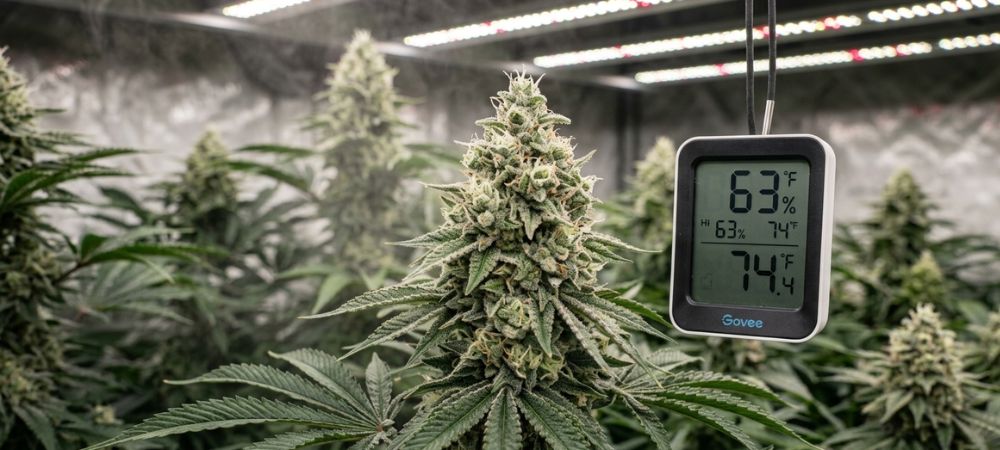
A humidifier is used to increase the relative humidity of the air and help maintain a more stable climate dinside the indoor grow. It can be especially useful during germination, rooting of cuttings, and the growth phase, when plants usually appreciate a less dry environment.
In flowering, however, it should be used with more caution, as excess humidity can promote the appearance of fungi and affect the final quality of the flowers. Therefore, the most important thing is to always measure humidity, adapt the use of the humidifier to each stage, and maintain good ventilation.
Used well, a humidifier can become a great ally to improve cultivation environmental control and help plants develop in more balanced conditions.



 Add as preferred source in Google