Personalized Attention +44 151 947 0713
 SHIPPING TO ALL

 9/10 Rating
 SALE TO MINORS PROHIBITED

Multiple sclerosis (MS) is a chronic disease that affects the nervous system and currently impacts more than two million people worldwide. Although each patient experiences it differently, there is a common denominator: the presence of symptoms that can profoundly affect quality of life, such as spasticity, neuropathic pain, fatigue, tremors, mobility difficulties, and sleep disorders. Each individual’s journey is unique, but they all share the same goal: improving daily well-being.
In this context, interest in analyzing the role of cannabis as a potential therapeutic support has grown in recent years. That is why today we are discussing cannabis and multiple sclerosis, a combination that has generated both significant attention and ongoing debate.
What is multiple sclerosis?
Multiple sclerosis is an autoimmune disease, meaning the immune system mistakenly attacks the body’s own tissues. In this case, it targets myelin, the protective layer that surrounds and insulates nerve fibers. Without myelin, electrical impulses traveling through the nerves slow down or become blocked, which leads to a wide range of symptoms.
While the condition manifests differently in every person, the most common symptoms include:
- Spasticity or muscle stiffness
- Neuropathic pain
- Tingling sensations or loss of sensitivity
- Balance problems
- Severe fatigue
- Vision problems
- Mood or sleep disturbances
At present, there is no cure for multiple sclerosis, but there are treatments aimed at slowing disease progression and relieving symptoms. Even so, many patients continue to seek complementary alternatives to enhance their quality of life. This is where interest in cannabis and multiple sclerosis comes into play.

Why is cannabis of interest in multiple sclerosis?
Cannabis contains more than 100 cannabinoids, with THC and CBD being the most well known. Both interact with the endocannabinoid system, a biological system involved in key functions such as pain regulation, muscle movement, sleep, and inflammatory responses.
This interaction has captured the attention of the medical community, as many of these processes are disrupted in multiple sclerosis. That is why studying the relationship between cannabis and multiple sclerosis has a strong scientific basis.
The endocannabinoid system acts as a “balance regulator.” When something becomes dysregulated, as occurs with inflammation or neuropathic pain, cannabinoids may function as modulators. THC binds directly to CB1 and CB2 receptors, while CBD modulates their activity without producing strong psychoactive effects.
Because of these mechanisms, researchers believe cannabis may help with:
- Pain management
- Reduction of spasticity
- Muscle relaxation
- Improved sleep quality
- Reduced inflammation
- Emotional well-being
It is not a cure, but it may serve as a complementary support. But what does the evidence actually say?
What we know: Current scientific studies and conclusions
Over the past decade, numerous clinical studies, systematic reviews, and meta-analyses have evaluated the potential of cannabis for treating multiple sclerosis symptoms. While much research is still needed, several consistent conclusions have emerged.
1. Spasticity shows the strongest evidence of improvement
Spasticity, the sensation of muscle stiffness or tightness that restricts movement, is one of the most common and disabling symptoms of multiple sclerosis.
Multiple studies have shown that cannabinoids can help reduce spasticity. Both THC alone and THC+CBD combinations have demonstrated positive results, particularly in patients who do not respond well to conventional treatments.
In several countries, a cannabis-based medication has already been specifically approved for this purpose, reinforcing the available evidence. In Spain, the national medicines agency has approved the cannabis-derived medication Sativex (nabiximols) for adult patients with “moderate to severe spasticity due to multiple sclerosis.”
2. Reduction of Neuropathic Pain
Another symptom that significantly affects quality of life is neuropathic pain. Unlike typical physical pain, this type of pain originates from nerve damage. Patients often describe it as a burning or electric sensation.
Clinical research suggests that cannabis, particularly THC, may alter pain perception by interacting with CB1 receptors in the central nervous system. Many patients report reduced pain intensity, fewer flare-ups, and improved sleep when cannabis is used in a controlled manner.
3. Improved sleep and rest
Insomnia is a common issue in multiple sclerosis, especially when spasticity and pain worsen at night.
Cannabinoids, particularly low doses of THC, may help facilitate sleep onset and prolong deeper sleep phases. This not only improves mood but also enhances daytime energy levels and functional capacity.
4. Impact on quality of life
Several qualitative studies indicate that many patients perceive an overall improvement: less stiffness, better mobility, reduced anxiety, and a greater sense of control. While this does not replace medical treatments, it offers a promising perspective on how cannabis and multiple sclerosis may work together.
| Use of Cannabinoids in the Management of Neurological Symptoms | |
|---|---|
| Aspect | Key Information |
| Symptoms with the most benefit | Spasticity, neuropathic pain, insomnia |
| Mechanism of action | Interaction with the endocannabinoid system (CB1 and CB2) |
| Most studied cannabinoids | THC and CBD |
| Most commonly used formats | THC+CBD medications, oils, sublingual sprays |
| Observed benefits | Reduced stiffness, improved mobility, deeper sleep |
| Side effects | Drowsiness, dry mouth, dizziness, psychoactive effects (THC) |
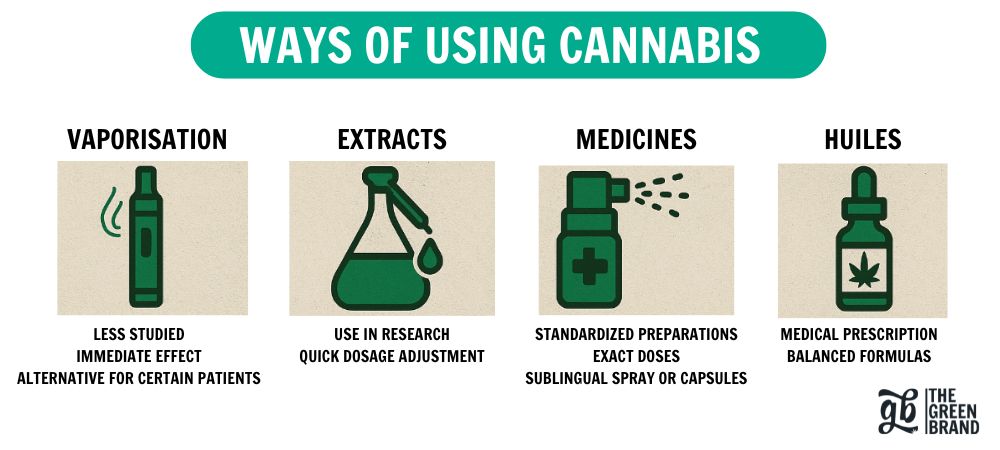
Forms of cannabis used in research
When we talk about therapeutic cannabis, we are not simply referring to “smoking.” In fact, most scientific studies rely on standardized extracts, controlled formulations, or medications approved by health authorities.
The main formats studied include:
1. THC and CBD–based medications: These are standardized preparations with precise dosing, typically administered as sublingual sprays or capsules.
2. Cannabis oils: In some countries, their use is permitted under medical prescription. They usually contain balanced cannabinoid profiles and are taken orally.
3. Extracts in the form of tinctures or solutions: Commonly used in research settings, they allow for rapid dose adjustment.
4. Vaporization: Less extensively studied, but used by some patients seeking faster symptom relief.
What truly matters is that products used for therapeutic purposes are always regulated and controlled, which is essential to minimize risks and adverse effects.
Is cannabis use ssafe for patients with multiple sclerosis?
Like any therapeutic approach, cannabis is not free from potential side effects. While many are mild, it is important to understand them:
- Drowsiness
- Dry mouth
- Changes in appetite
- Dizziness
- Short-term memory impairment
- Increased heart rate
| Side Effects of Cannabinoid Use and How to Reduce Them | |||
|---|---|---|---|
| Side Effect | What It Involves | Frequency | How to Reduce It |
| Drowsiness | Feeling sleepy or fatigued | Common | Lower the dose, use at night |
| Dry mouth | Sticky mouth or increased thirst | Common | Frequent hydration, sugar-free gum |
| Dizziness | Temporary feeling of instability | Moderate | Sit when dosing, avoid sudden movements |
| Increased appetite | Greater hunger, typical of THC | Dose-dependent | Adjust diet, prioritize CBD-dominant products |
| Short-term memory impairment | Difficulty recalling immediate details | Occasional (high doses) | Reduce THC, choose balanced THC+CBD |
| Anxiety or euphoria | Unwanted psychoactive reactions | Less common | Avoid high THC doses, increase CBD |
| Mild tachycardia | Moderate increase in heart rate | Rare | Medical supervision, avoid stimulants |
| Temporary disorientation | Brief feeling of being “out of it” | Occasional | Lower the dose, avoid rapid vaporization |
With THC in particular, unwanted psychoactive effects may also occur, such as a feeling of intoxication, excessive euphoria, or anxiety.
For this reason, when addressing cannabis and multiple sclerosis from a therapeutic perspective, the following guidelines are always recommended:
- Medical supervision
- Use of regulated products
- Gradual dosing (“start low, go slow”)
- Avoid mixing with alcohol or other depressants
- Do not drive under its effects
Additionally, not all patients respond in the same way. Some experience significant improvements, while others notice little to no change.
Legal status of cannabis in the therapeutic context
Legality varies by country. In many regions, medical cannabis use is regulated only for specific conditions, and multiple sclerosis is one of the most widely recognized in scientific and medical literature.
Overall, cannabis-based medications are permitted in several European countries, Canada, Israel, and the United States. In Spain, the regulatory framework remains very limited, but the debate surrounding medical cannabis regulation is more active than ever.
What patients say: Real testimonials and experiences
Beyond clinical studies, patient experience has also driven growing interest in cannabis and multiple sclerosis. Many individuals report that:
- Muscle stiffness decreases significantly.
- Muscle spasms are reduced.
- They are able to sleep better.
- They feel more capable of moving and performing daily activities.
- Mood improves, along with a greater sense of control over the condition.
While patient experience is subjective, it closely aligns with scientific findings in key areas such as spasticity and pain management.
What can we say today about cannabis and multiple sclerosis?
Cannabis does not cure multiple sclerosis, but it can be a valuable ally in managing some of its most complex symptoms. Scientific evidence particularly supports its role in reducing spasticity and neuropathic pain, as well as improving sleep quality and overall well-being.
It does not replace conventional medical treatments, but it may complement existing therapeutic protocols under professional supervision. Above all, it offers many patients a tangible improvement in their quality of life.

Interest in the relationship between cannabis and multiple sclerosis will continue to grow. As research advances and regulations become clearer, its therapeutic role is likely to become even more firmly established.



 Add as preferred source in Google