Personalized Attention +44 151 947 0713
 SHIPPING TO ALL

 9/10 Rating
 SALE TO MINORS PROHIBITED
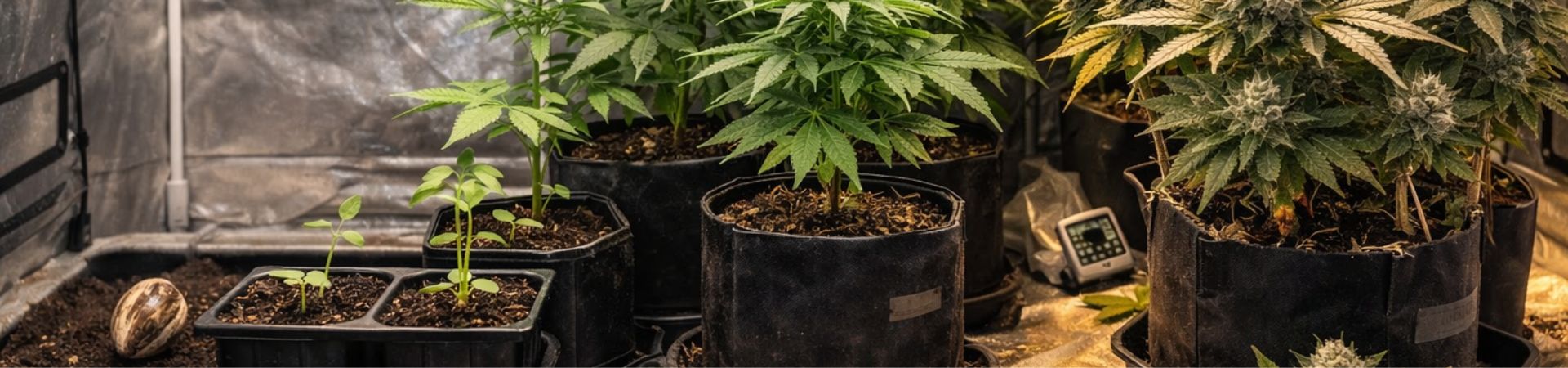
Setting up a continuous grow isn’t just about fast germination with autoflowering bulk seeds. Rather, it’s about planning several consecutive batches to maintain frequent harvests for much of the year. In this scenario, bulk autoflower seeds have several strengths:
- they allow you to work with more units
- organize staggered plantings
- maintain greater homogeneity among plants.
Unlike a guide on how to plant autoflowers, this approach is designed for those who want to repeat harvests in an organized manner. If the idea is to string together 6, 7, or 8 annual batches, buying a few loose seeds of different types usually complicates management. In contrast, when you start from a more uniform base, it’s easier to predict size, growth rate, and harvest time.
What is a continuous grow with bulk autoflower seeds
A continuous grow with bulk autoflower seeds consists of planting in phases. This means you’ll have plants at different stages: some freshly germinated, others growing, others flowering, and others ready for harvest. Instead of doing one large batch and waiting until the end of the cycle, a constant production wheel is created.
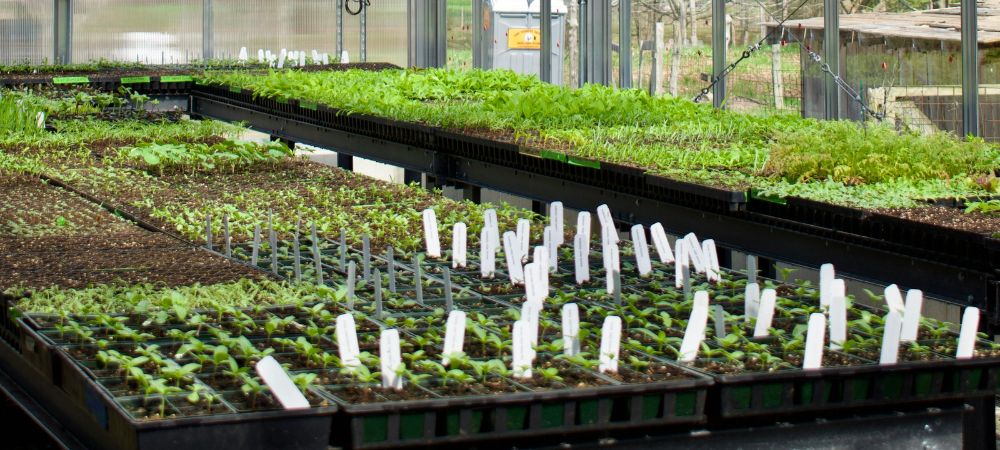
This system allows for better distribution of work, more logical use of space, and avoids relying on a single planting all year round. Furthermore, if a batch doesn’t turn out as expected, the impact is smaller because the grow continues with other plants at different stages. This system is similar to what is known in horticulture as succession planting, a technique based on staggered plantings. This way, you can maintain constant production over time.
Why bulk autoflower seeds are a better fit
When planning a perpetual grow, you don’t just need quantity. You also need regularity. Bulk autoflower seeds allow you to repeat the same grow line for several entries, which is very useful when you’re looking to maintain a stable system.
If each batch is different, the times, height, watering demand, and ripening time also change. This makes organization quite complicated. In contrast, when working with several units of the same line, everything is more predictable and the schedule can be adjusted better.
Among their advantages for this type of grow are:
- easier to plant in batches
- better space planning
- greater continuity between cycles
- less reliance on small packs
- better control of cost per seed



How many harvests can be obtained per year
With bulk autoflower seeds, it’s common to work in cycles of about 9 to 11 weeks from germination. This allows for a grow strategy with between 6 and 8 annual harvests, provided the environment is suitable and the planning is realistic.
This doesn’t mean that the entire space is emptied eight times a year. In a continuous grow, harvests usually come in phases. The key is not to finish one complete cycle to start another, but to keep the system always moving.
Staggered planting calendar with bulk autoflower seeds
A simple way to organize the year is to plant every 4 weeks. This rhythm allows for a constant productive wheel without all batches overlapping excessively.
| Week | Action | Grow status |
|---|---|---|
| 1 | Germination batch 1 | Start |
| 5 | Germination batch 2 | Batch 1 progressing |
| 9 | Germination batch 3 | Batch 1 in final phase |
| 13 | Harvest batch 1 + new planting | Rotation begins |
| 17 | Harvest batch 2 + new planting | Continuous flow |
| 21 | Harvest batch 3 + new planting | System stabilized |
This calendar can be adapted. Those seeking more convenience can space out planting every 5 or 6 weeks. Those wanting more continuity can tighten it up a bit, provided space, light, and daily routine allow.
How to organize 6-8 harvests per year without losing control of the grow
For the system to work, it’s not enough to just plant “when it’s time.” It’s best to always repeat a similar structure. Maintaining a fixed number of plants per batch greatly helps in calculating substrate, pots, watering, and workload.
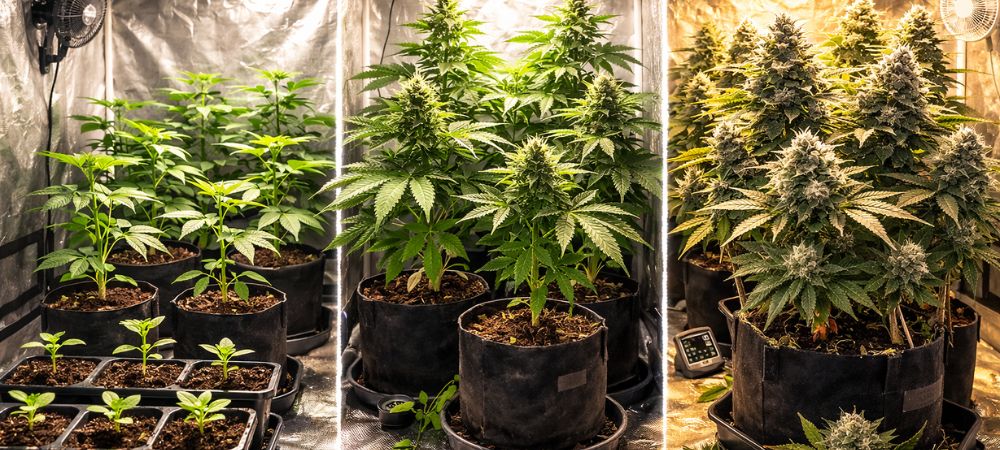
It’s also advisable to use similar pot sizes and not mix too many genetics at once. If each batch changes too much, the grow loses rhythm and comparing results becomes more difficult. In contrast, when you repeat a similar base, it’s much easier to correct errors and optimize each new entry.
Keeping a small record with planting dates, evolution, and estimated harvest time also makes a difference. You don’t need an overly complex table. With just a few notes, you can see if a batch is ahead, if another is slower, or if the calendar needs to be readjusted.
| Planting frequency | Estimated harvests per year | Workload level |
|---|---|---|
| Every 6 weeks | 6 | More comfortable |
| Every 5 weeks | 7 | Balanced |
| Every 4 weeks | 8 | More continuous |
This approach has an important advantage: the work is distributed. You turn growing into a more constant routine that is easier to integrate into daily life.
| Single cycle | Continuous grow |
|---|---|
| One planting date | Staggered plantings |
| One punctual harvest | Frequent harvests |
| Greater reliance on one batch | Distributed risk |
| Higher work peaks | More stable work |
| Less planning | More annual control |
Indoor and outdoor: how the strategy changes
Indoors, continuous growing is usually easier to maintain because conditions are stable. This allows for better maintenance of planting rhythm and more precise repetition of batches.
Outdoors, it can also be planned, but it depends more on the climate, hours of sunlight, and time of year. In favorable areas, the most common strategy is to stagger batches from spring to autumn to avoid concentrating all production at a single moment.
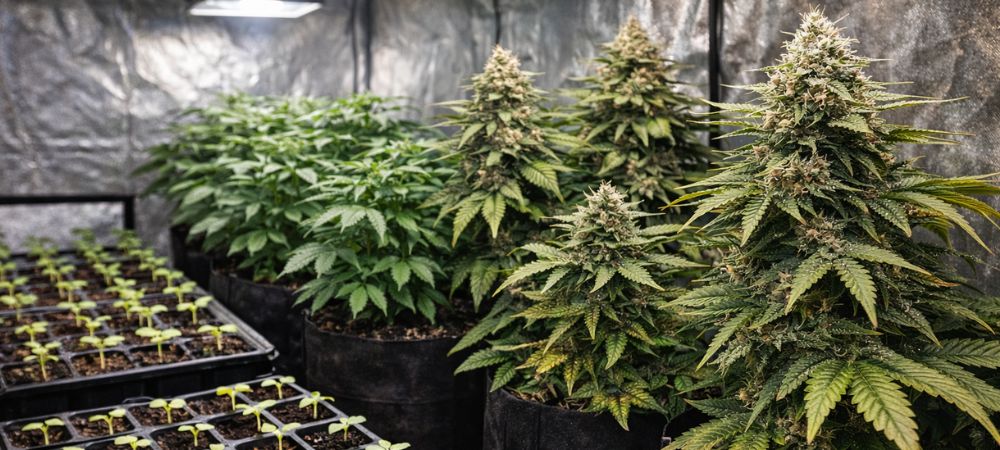
If you don’t want just one batch, bulk autoflower seeds are a particularly interesting option. They allow you to organize a continuous grow, plant in phases, and work with a more homogeneous base for several cycles.
That’s the difference from a basic grow guide: setting up a meaningful production wheel. When there’s planning, a calendar, and continuity, they fit naturally into a system designed to harvest for much of the year.





 Add as preferred source in Google