Personalized Attention +44 151 947 0713
 SHIPPING TO ALL

 9/10 Rating
 SALE TO MINORS PROHIBITED

In recent years, the cannabis and aromatherapy worlds have undergone a significant shift: the focus is no longer solely on classic cannabinoids such as THC or CBD, but increasingly on the complex universe of terpenes. Within this universe, certain compounds are beginning to stand out due to their rarity, unique aromatic profiles, and the nuances they add to the overall experience. Among them, two names have gained strong traction among both growers and consumers: ocimene and farnesene, particularly its most studied variant, alpha-farnesene.
Today, it is increasingly common for users to seek out flower, extracts, or aroma profiles that include these minor terpenes. The reason is simple: each brings a distinctive scent and potential effects that add complexity and personality to every strain. Moreover, they are part of a broader movement in which terpene profiles have become a hallmark of quality, differentiation, and sensory experience.
What are terpenes?
Terpenes are naturally occurring volatile aromatic compounds found in thousands of plants, including cannabis. They are responsible for the characteristic aromas and flavors—ranging from citrusy and floral to earthy—and can also influence the overall experience through the well-known “entourage effect,” where they interact with cannabinoids such as THC and CBD. Each terpene contributes unique nuances, which is why profiles rich in ocimene and farnesene are gaining popularity among U.S. consumers and cultivators alike.
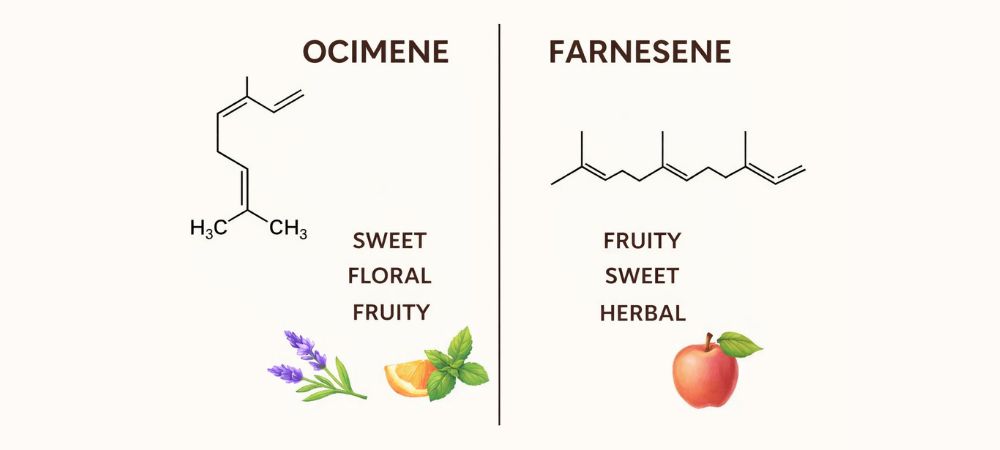
What is ocimene and why is It everywhere?
Ocimene is a sweet, floral, and slightly fruity terpene that appears in small amounts in certain cannabis strains, as well as in plants such as mint, basil, and orchids. Its fragrance is highly distinctive, with a fresh, green undertone that gives many modern strains that “clean” and refined character sought after by today’s consumers.
Although it has always been present in the plant, ocimene’s popularity has surged due to growing interest in complex aroma profiles. Breeders—those dedicated to developing new cannabis genetics—recognize that ocimene adds an aromatic layer that is difficult to achieve with more common terpenes such as myrcene or limonene. As a result, it is increasingly incorporated into breeding programs aimed at creating innovative cultivars.
From a sensory standpoint, ocimene-rich strains often feature floral notes reminiscent of a fresh bouquet, blended with subtle herbal nuances similar to natural balms. This makes them particularly appealing to consumers seeking a refined, elegant, and slightly exotic experience.
Ocimene is believed to have potential properties such as anti-inflammatory, antiviral, and expectorant effects, although research is still ongoing and conclusive evidence is limited. Even so, its presence in aromatic and cosmetic products continues to grow, largely due to the sensation of freshness and cleanliness it provides.
Farnesene: The terpene Setting the trend
While ocimene is prized for its sweet and floral profile, farnesene stands out for its distinctive fruity notes. This terpene occurs naturally in apple skins, hops, turmeric, and certain cannabis strains, where its presence is often associated with aromatic sophistication.
Within this group, the most notable variant is alpha-farnesene, as it is the most abundant and influential in terms of aroma. Alpha-farnesene delivers a gentle sweetness reminiscent of ripe fruit, with green and slightly earthy undertones. This balanced profile has won over both consumers and professional tasters, especially in markets where terpene analysis plays a central role.
One of the main reasons farnesene has gained attention is its ability to enhance a strain’s aromatic character without becoming overpowering. This makes it a highly valuable terpene in modern genetics, adding complexity while maintaining harmony between sweet, herbal, and fruity notes.
From an effects perspective, some studies suggest that certain oils containing farnesene alongside other terpenes may have calming and relaxing properties. As with most terpenes, scientific evidence is still emerging. Nevertheless, its popularity continues to rise, driven by demand for distinctive aromas and its presence in top-tier strains within the U.S. market.

Why now? The rise of rare terpenes
The answer lies in the maturation of the cannabis market and the growing interest in differentiated experiences. For many years, attention focused almost exclusively on THC levels or CBD. As consumers become more educated, however, aroma and flavor have emerged as decisive factors.
Profiles rich in ocimene and farnesene offer an aromatic palette distinct from what once dominated the market, when strains centered around more common terpenes such as pinene or limonene. Today, both producers and consumers are looking for something new, surprising, and capable of standing out in a saturated marketplace.
Another factor behind this rise is the growing availability of accessible terpene testing, which allows for fast and accurate identification of these compounds. This enables breeders and laboratories to select and stabilize genetics with higher levels of ocimene and farnesene, accelerating their presence in new commercial lines.
In addition, global cannabis culture has moved closer to gastronomy and sensory tasting. Dispensaries increasingly emphasize terpene profiles as a selection criterion, and rare terpenes have become a new symbol of quality.
Strains known for containing ocimene and farnesene
Although terpene concentration depends on multiple factors—genetics, cultivation, and curing—certain strains naturally stand out. Among those known for their ocimene content are:
- Strawberry Cough
- Amnesia Haze
- Golden Goat
- Agent Orange

Apple Fritter

Runtz

Gelatto
How ocimene and farnesene shape the final experience
The presence of these terpenes can dramatically transform how a strain is perceived. They do more than add aroma—they can influence flavor texture, mouthfeel, and the overall effect.
Aroma
- Ocimene contributes freshness, floral character, and sweet notes.
- Farnesene adds fruity sweetness, aromatic roundness, and a ripe-fruit sensation.
Flavor
Both terpenes contribute to a smooth, well-balanced profile. Ocimene softens greener notes, while farnesene introduces a fruity touch that pairs especially well with creamy and sweet profiles.
Effects
While not decisive on their own, these terpenes can modulate the overall experience. Ocimene is often associated with more uplifting and refreshing sensations, whereas farnesene—particularly alpha-farnesene—tends to promote a calmer, more relaxed feeling. This interaction is understood within the well-known “entourage effect,” where cannabinoids and terpenes work together to create a unique result.

The future of rare terpenes
All signs point to this being just the beginning. In the coming years, we will see increasing interest in even more complex and exotic terpene profiles. Modern genetics are evolving toward richer, more aromatic, and more surprising varieties, and ocimene and farnesene will play a key role in this transition.
Furthermore, as markets such as concentrates, cartridges, and extracts continue to expand, terpenes will take on an even more prominent role. Not only for flavor, but also for enabling formulations designed to deliver highly specific sensory experiences.



 Add as preferred source in Google