Personalized Attention +44 151 947 0713
 SHIPPING TO ALL

 9/10 Rating
 SALE TO MINORS PROHIBITED
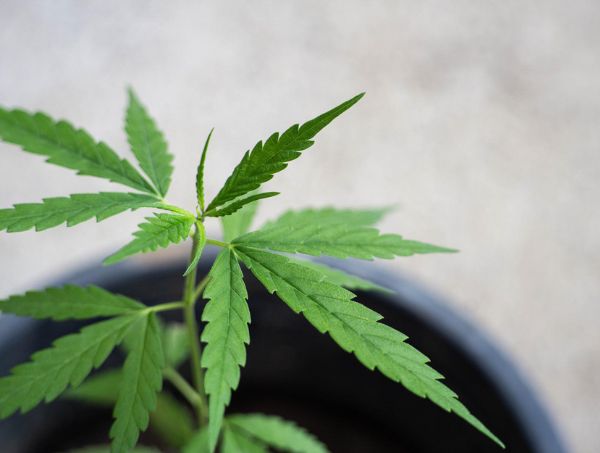
Cannabis plants possess a very characteristic structure, but diseases, pests or bad environmental conditions can make them look different. The same applies to DNA mutations that can also affect them such as Phyllotaxis; which usually affects the distribution of cannabis leaves.
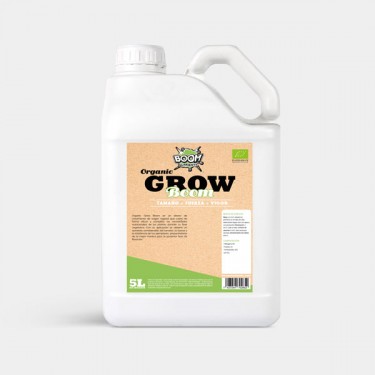
The leaves are the most recognizable part of cannabis plants. It is also important to remember the importance of leaves in cannabis in supporting growth and improving their overall health, as they absorb light and carbon dioxide while releasing water and oxygen, allowing photosynthesis to take place. In other words, plants carry out photosynthesis through their leaves, enabling them to grow healthier thanks to better nutrition. To promote proper vegetative development, specific products such as Boom Nutrients Organic Grow can be used, as it is designed to provide the nutrients needed during this stage.

What is phyllotaxis?
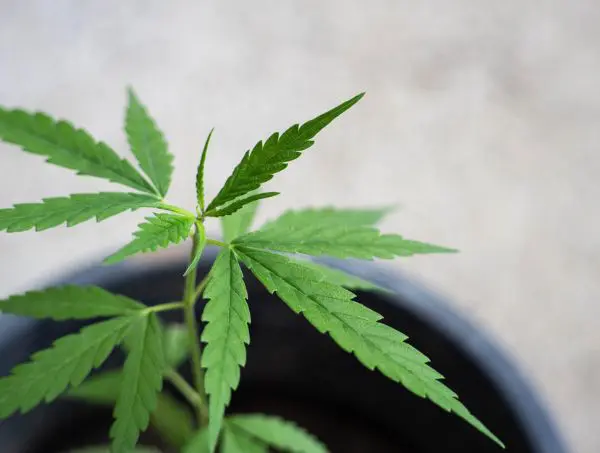
In bontany, Phyllotaxis refers to the order in which leaves, branches or flowers are distributed on the stem of plants. This structure is related to the primary configuration of the stem, as well as the number of vascular bundles it has. In this way, it is possible to observe the set of leaves inserted in each node of the stem. Within the phyllotaxis there are two main groups of leaf arrangement: opposite and alternate.
Different types of Phyllotaxis
Theese are the basic arrangements that can appear in crops:
Alternate phyllotaxy
This refers to plants in which each node has a leaf ; usually it arises from the root separately, interchanging sides as the vertical height increases. Within this group, there are two main types of variants:
Distic phyllotaxy
In this case, the leaves are inserted all along the stem. They always create two opposite lines in which they alternately emerge on one and the other at each node.
Helical phyllotaxy
In this respect the bracts spread along the stem in an orderly fashion, creating a spiral axis, called a generatrix spiral. All the leaves are located along this spiral.
Opposite phyllotaxy
In this type of arrangement, you’ll see two or more leaves per node. The opposite leaves arise in pairs on either side of the stem, with a vertical clearance between each pair. Thus, if the plant has two bracts per node, it is called a decussate arrangement.
Verticillate phyllotaxis
Within the opposite phyllotaxis, there is the verticillate phyllotaxis, which is characterised by three or more leaves on a node. This form of phyllotaxis is the most common in cannabis plants. Thus, if 2 successive nodes are studied, it can be seen that each leaf is inserted alternately in each of them.
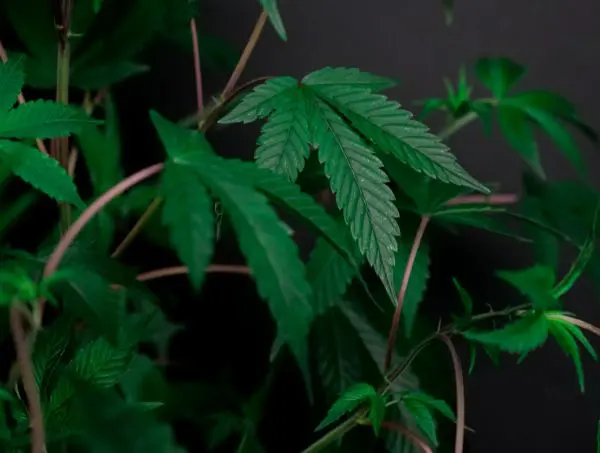
Verticillate phyllotaxis in cannabis plants
According to the standard phyllotaxis, these plants are compound, having multiple leaflets where a single leaf grows from the root ; although they can also be decussate and opposite, rather than alternate.
However, it is quite common to find this type of leaf phyllotaxy in cannabis. It is not uncommon to find a seed with three cotyledons, called trichotyledons. They are characterised by the presence of a trio of genes which alterates the structure. The result resulting in plants with 3 or more leaves per node.
Normally, these plants are more in demand by growers because they beleieve that these leaves can perform super photosynthesis, improving production ; so if the gene can be isolated and stabilised, incredible superplants could be created. However, for the moment it has not yet been possible to obtain this type of plant. Despite it could provide more production, it’s not possible to reproduce this gene.
This situation usually occurs in male plants, generating bushier plants by creating an additional branch per node. In young ones, there is usually an opposite phyllotaxis that will become alternating as the plant approaches sexual maturity.
To ensure that the plant has suitable growing conditions, it is also important to monitor parameters such as the pH of the irrigation water. For this purpose, you can use an Adwa pH Meter, which allows you to check this parameter and keep it within suitable levels for cultivation.

Cannabis plants can have multiple aspects and structures. Phyllotaxis in marijuana can occur in very specific cases such as whorled ; which will make the plant stand out from the rest of the garden.




 Add as preferred source in Google