Personalized Attention +44 151 947 0713
 SHIPPING TO ALL

 9/10 Rating
 SALE TO MINORS PROHIBITED
Cannabis leaves are much more than just a visible part of the plant. They act as solar panels, helping to transform light into energy, and they also function as a kind of “whistleblower” for the general state of the crop. For this reason, observing a cannabis leaf can provide many clues regarding nutrition, watering, root health, pests, environmental stress, or over-fertilization.
When a plant shows yellow leaves, spots, burnt tips, drooping leaves, or curled edges, it is usually warning that something is wrong. Learning to interpret these signs allows you to act before the problem affects the plant’s development or the final yield.
What is the function of leaves in marijuana plants?
Leaves are one of the most important organs in the life of any plant, as they allow it to perform photosynthesis. Through this process, the plant uses light to generate energy and continue growing. Without healthy leaves, the plant reduces its ability to feed itself, develop, and form flowers correctly.
One factor to emphasize is that you should not remove leaves from plants under any circumstances, as you are removing their light absorption area. Often, leaves that cover the buds are cut because it is believed that absorption will be greater. However, doing this will slow down development and you may end up losing yield, since the leaf’s job is to absorb energy to send it to the bud.
In addition to capturing light, leaves are also involved in other important processes:
- They regulate part of the plant’s transpiration.
- They help with gas exchange.
- They can show nutritional deficiencies, excesses, or lockouts.
- They reflect watering, temperature, humidity, or pest problems.
- They serve as a temporary reserve for certain mobile nutrients.
That is why it is not advisable to remove healthy leaves without a reason. Although in some cases pruning or defoliation can be useful, removing too many leaves can reduce the plant’s ability to produce energy.
Parts of the leaf
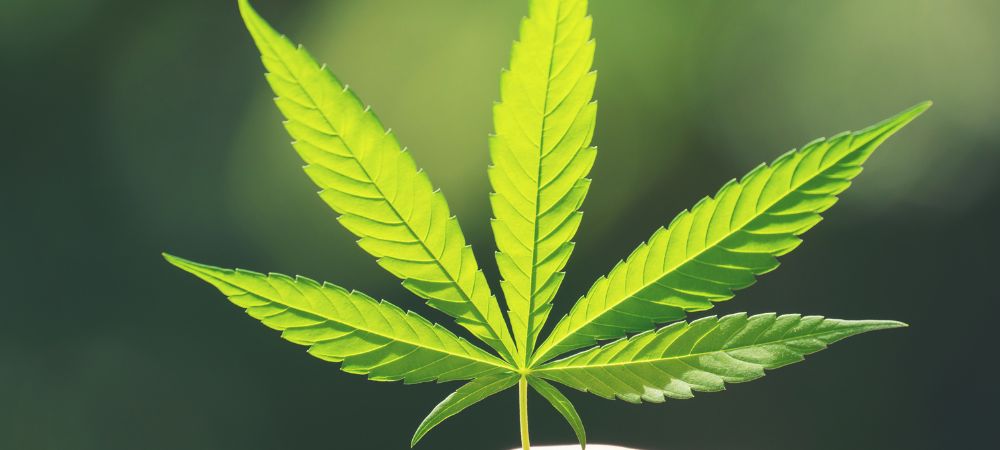
To better understand how a marijuana leaf works, it is useful to know its parts and how they function. These main parts are:
Petiole
This is the small stem that serves as a connection between the branch and the leaf. Its function is to hold the leaf to the stem and establish a bridge between the stem and the leaves, allowing for the entry and exit of information, as well as nutrients.
Adaxial surface (top)
This is the upper part of the leaves, which is responsible for absorbing light, so it is considered one of the most important parts of the leaf. It is really important that both the color and the state of the adaxial surface are correct, as it can be used to detect pests, deficiencies, or diseases.
Abaxial surface (underside)
This is the underside of the leaf. That is, it is on the opposite side of the adaxial surface, facing the plant. Thanks to the abaxial surface, it is known that many genetics (especially Indicas from very hot areas) can survive long periods of drought. They use the wide part to store a small amount of water in each leaf, which they then supply slowly, allowing them to survive in the most extreme conditions.
Apex
This is the name given to each of the tips of the leaf. The first leaves created on marijuana plants, called cotyledons, only have one apex, so they have an almost elongated oval shape. Later, leaves with 3 apices begin to appear, which are precursors to the characteristic 5-apex leaves.
When too much fertilizer is applied, it is usually in this part where the signs can be seen first, as it will begin to shrink and then yellow until it spreads throughout the entire leaf if the necessary measures are not taken.

Types of cannabis leaves
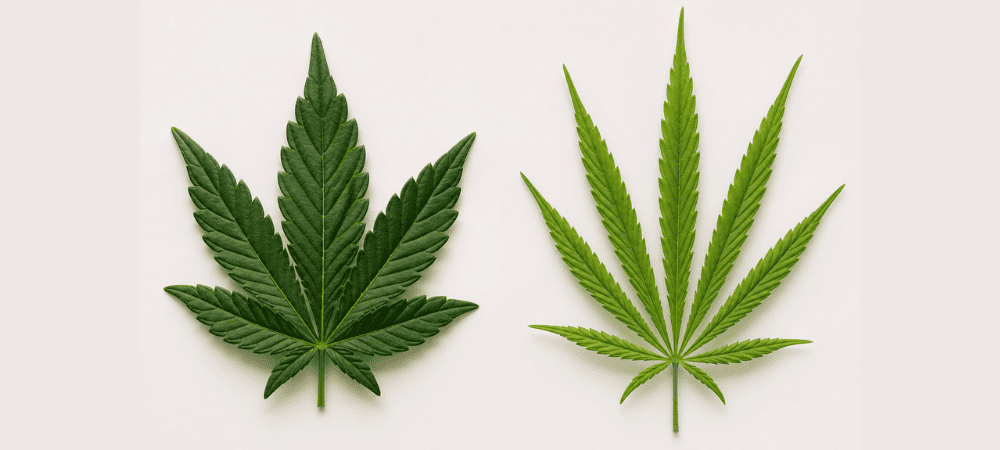
Not all cannabis leaves are the same. Their shape can vary depending on the genetics, the stage of development, and the location within the plant.
Cannabis leaves according to genetics
It is worth mentioning that the majority of cannabis varieties found on the current market are hybrids, resulting from the combination of two or three of these main groups. Thus, the cannabis leaves commonly observed in crops present a mixture of varied characteristics. These can have anywhere from three to 11 leaflets, and vary in shape, from thin and elongated to wide and rounded.
| Type of genetics | Usual appearance | What it usually indicates |
|---|---|---|
| Sativa | Thin, long, and more separated leaflets | More stylized plant and more open growth. |
| Indica | Wide, short, and darker green leaves | More compact and leafy plant |
| Hybrid | Intermediate or variable shape | Mixture of traits depending on the dominant genetics |
| Ruderalis | Smaller and simpler leaves | Traits associated with autoflowering |
Cannabis leaves according to their location on the plant
On the other hand, it is possible to distinguish between two types of leaves on the marijuana plant, based on their location: fan leaves and sugar leaves.
- Fan leaves are large, have the characteristic “finger” shape, acting as solar panels, capturing light to convert it into energy for the plant’s growth. These leaves can also store emergency nutrients, such as nitrogen. They contain minimal amounts of THC, CBD, and other cannabinoids.
- Sugar leaves, on the other hand, are small leaves that sprout directly from the buds and are covered in white trichomes, giving them a glazed or sugar-dusted appearance. Their main function is to provide structure to the buds. Although they are rich in trichomes and cannabinoids, their intense flavor when smoked means they are often trimmed during the manicuring process. However, they are ideal for making hash or cannabis butter.
They can also be differentiated by their function within the plant:
| Type of leaf | Where does it appear? | Main function |
|---|---|---|
| Fan | Main branches and outer areas | Capture light and generate energy |
| Sugar | Near the buds | Protect and accompany floral formation |
| Cotyledons | First days of life | Feed the seedling at the beginning |
| Young leaves | New shoots | Indicate vigor and active growth |
What does a cannabis leaf tell us about the plant?
A cannabis leaf usually has good color, firm texture, and a natural orientation toward the light. When something goes wrong, the plant can express it through visible changes. Not all symptoms mean the same thing. A yellow leaf at the bottom during advanced flowering can be normal, while rapid yellowing during growth can indicate a deficiency, overwatering, or nutrient lockout.
| Leaf signs and possible health problems | |
|---|---|
| Leaf sign | Possible health problems |
| Yellowing |
|
| Curled |
|
| Dry and brittle |
|
| Wilted |
|
| Colorful |
|
| Holes and discoloration |
|
| Strange spots |
There are different types of spots on marijuana that indicate various causes:
|
Leaf color and THC levels
The color and shape of the leaves provide valuable information, reflecting aspects such as the plant’s genetics, its sugar levels, hydration or nutritional state, and even the pests that have affected them. Likewise, cannabis leaves can also indicate the type of predominant cannabinoid that the plant produces. Therefore:
- A lighter green tone and thin leaflets signal high levels of CBD.
- Thick leaflets and dark green tones point to higher levels of THC.
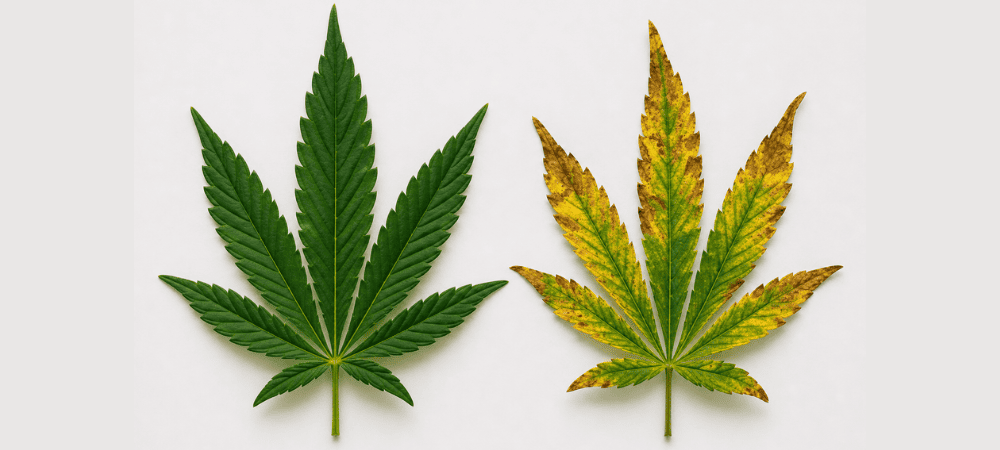
Different studies indicate that it is possible to infer the chemical compounds of cannabis through its leaves, according to an article in the journal HortScience, which analyzed the visual differences between 21 cannabis varieties, identifying thirty variations in stages such as vegetative, flowering, and harvest.
Through the classification of plants according to their appearance and a subsequent chemical analysis, a clear correlation was found between the appearance of the plants and their THC and CBD levels, allowing for a distinction between:
CBD-rich plants
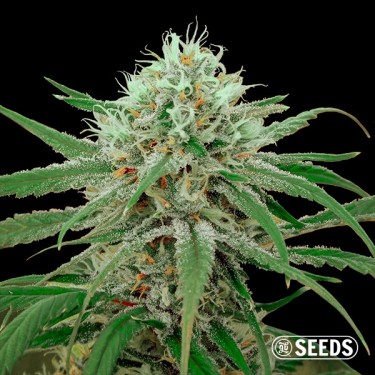
Plants from CBD seeds, available in our CBD Online category, present the following characteristics in their leaves:
- They have a light green color.
- Thin leaflets.
- Abundance of primary and secondary teeth on the edges of the leaflets.
- They possess dense and resinous trichomes.
Moderate levels of CBD and THC
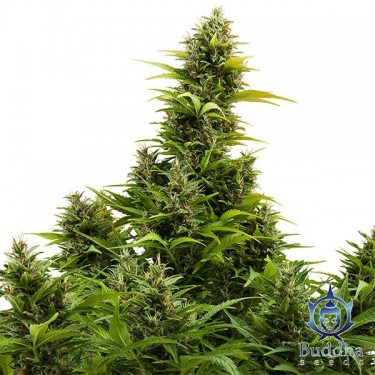
Plants with moderate levels of THC and CBD show distinctive characteristics such as:
- A more intense green color and medium-width leaflets.
- Unique tones and shapes.
- More primary and secondary teeth.
- Lower amount of trichomes and resin.
THC-rich plants
On the other hand, those genetics rich in THC show leaves that stand out for:
- Having dark green leaves.
- Wide leaflets.
- High density of resinous trichomes.
The authors of the study suggest the importance of marijuana leaves and how these visual markers could serve as a preliminary tool to differentiate the chemical varieties of cannabis before proceeding to a more detailed analysis.
How to properly care for marijuana leaves
To keep leaves healthy, the most important thing is to create a balanced environment. It is not very useful to correct a damaged leaf if the cause of the problem is still present, so it is advisable to check the crop as a whole before acting.
Good care starts with watering. Leaves tend to react quickly to both a lack and an excess of water, so it is recommended to check the state of the substrate before watering again. If it remains too wet for too long, the roots may have less oxygen and the plant will reflect this in drooping, soft, or yellowing leaves.
Nutrition also directly influences the appearance of the leaves. Excessive fertilization can burn tips and edges, while insufficient feeding can cause loss of color or weak growth. Therefore, it is better to apply fertilizers progressively and observe how the plant responds, especially after each change in dosage.
Nutrition also directly influences the appearance of the leaves. Excessive fertilization can burn tips and edges, while insufficient feeding can cause loss of color or weak growth. Therefore, it is better to apply fertilizers progressively and observe how the plant responds, especially after each change in dosage.
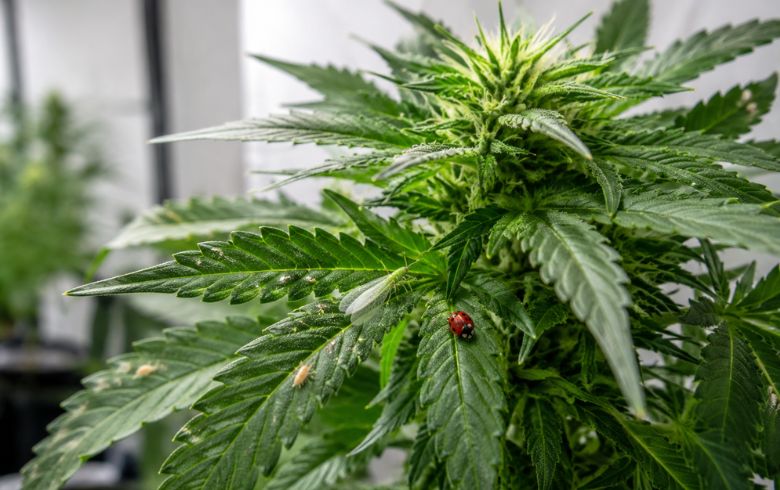
It is also important to maintain good ventilation and control temperature and humidity. An environment that is too dry, hot, or poorly ventilated can favor curled, dry leaves or make them more vulnerable to pests. Checking the underside of the leaves frequently helps to detect insects, eggs, or small spots before the problem spreads.
Basic good practices:
- Maintain adequate watering, avoiding waterlogging.
- Control pH and fertilization.
- Avoid sudden changes in temperature and humidity.
- Check the underside of the leaves frequently.
- Maintain good ventilation.
- Do not remove healthy leaves without reason.
- Remove very damaged leaves if they promote humidity, fungi, or pests.
- Observe the evolution of the symptom before making aggressive corrections.
Which leaves can be cut and which cannot
Not all leaves should be removed. Healthy fan leaves play an important role in light capture and energy production. Cutting them without reason can slow down the plant’s development.
It may make sense to remove leaves when:
- They are very damaged or dry.
- They touch the substrate and promote humidity.
- They completely block internal ventilation.
- They prevent light from reaching productive areas.
- They have localized pests and are removed to support treatment.
It is not advisable to remove many leaves at once, especially in young, weak, or stressed plants. The ideal is to perform progressive interventions and observe the plant’s response.
Differences between leaves in growth and flowering
During growth, leaves are usually a very clear sign of the plant’s vigor. A balanced green color, firm leaves, and healthy new shoots indicate that the plant is growing correctly.
During flowering, it is normal for some lower leaves to lose color over the weeks, especially if the plant mobilizes nutrients toward the flowers. Even so, very rapid yellowing, aggressive spots, or generalized leaf drop can indicate a problem that should be corrected.
FAQs about cannabis leaves
Why do some marijuana leaves come out with fewer tips?
Are very large leaves good or bad?
Do marijuana leaves smell the same as the buds?
Why do new leaves come out wrinkled?
What happens if I spray water on the leaves in direct light?
Products in this article



 Add as preferred source in Google