Personalized Attention +44 151 947 0713
 SHIPPING TO ALL

 9/10 Rating
 SALE TO MINORS PROHIBITED


Humid climates can be considerably detrimental to the proper development of cannabis plants if hygrometric levels exceed the appropriate parameters for each life cycle. First, it is advisable to differentiate the characteristics of the two most significant atmospheric scenarios to know how to grow marijuana in humid climates.
The humid tropical climate features high temperatures with little thermal oscillation and intense rainfall throughout the year, always exceeding 2,500 millimeters per year. It occurs in large parts of South America, Asia, Central Africa, as well as northern Australia and Central America. Furthermore, another of its main climatological characteristics is that it does not have a truly cold winter season.
On the other hand, the humid continental climate shows constant precipitation throughout the year. In summer, rains occur that can take the form of storms, and it is most common for snowfall to occur in winter. It is located in the Northern Hemisphere, approximately from 40º N to 70º N, with polar temperatures during the months of November, December, and January, whose climatic influence causes atmospheric regions such as storms.
Each cannabis variety requires specific weather conditions to ensure proper growth; however, they all agree that high levels of water vapor are not beneficial. It should be noted that the calyxes develop a special sensitivity to excessive humidity, which can cause flower rot or the appearance of Botrytis.
This disease is one of the most common and harmful to cannabis plants, especially in the vegetative phase, and it can affect their entire anatomy. It is mainly reflected in a dry texture and a brown or gray color with a dehydrated appearance. As it progresses, the foliage becomes necrotic and the fungus can develop on all surfaces of the specimen (stem, branches, leaves, and flowers), forming a grayish mycelium. Even after harvesting, trimming, and drying, this fungal disease can remain present in the buds. For its eradication, it is essential to prune all affected areas with scissors sterilized with alcohol.
There are amazingly resistant strains that are capable of withstanding adverse climatic conditions. Special attention should be paid to the amount and frequency of watering regarding these marijuana genetics in humid climates, since the water supplied does not evaporate at the same speed as in arid environments. This can cause waterlogging of the substrate, which becomes compacted, thus hindering its drainage and harming the root oxygenation process.
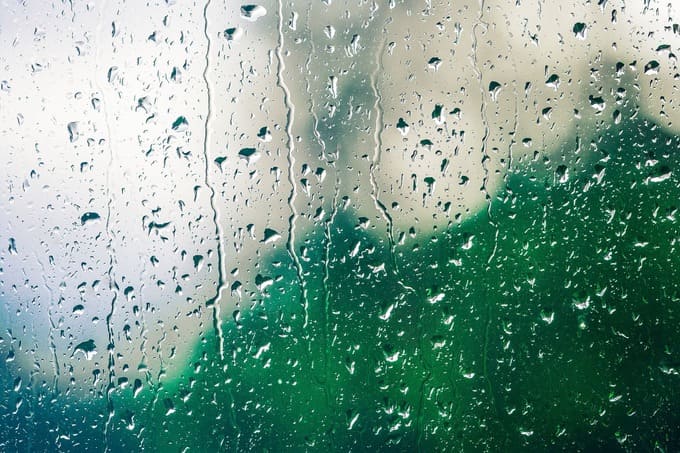
Recommended humidity levels according to the growth stage of marijuana in humid climates
- Seedlings and clones
Until seedlings and clones begin to develop a strong root system, they will demand high levels of humidity. Most growers maintain percentages of 60-70% water vapor. Conversely, values above 80% can also cause the appearance of mold and rot.
- Vegetative phase
During this stage, the specimen has already developed a root mass significant enough to extract nutrients and minerals from the substrate. It will need slightly lower humidity levels, approximately between 50-60%, with a temperature that should be maintained between 22-28 °C during the day and between 18-22 °C at night.
- Flowering phase
At the beginning of flowering, humidity levels must be set between 40 and 50% and a temperature of 20-26 °C maintained. However, in the second part of the flowering stage, it must be reduced to 40%, it being preferable to reduce these percentages in the last two weeks so that the water vapor does not settle on the buds, causing the formation of mold and mildew.
Drying and curing of marijuana in humid climates
When the flowering stage has finished, the buds will be ready for harvest and subsequent drying and trimming. It is of vital importance that this first process is carried out slowly and in a controlled manner with humidity levels of 50% at most.
One must take into account the difference between drying, which consists of eliminating all moisture from the bud, and curing, which involves storing it in closed containers to eliminate chlorophyll residues and enhance its flavor and aroma. In this step, it will be interesting to use Boveda bags, designed to maintain an optimal environment at all times, providing the appropriate humidity levels during the storage of the harvest.
After a drying period that can last up to 14 days, depending on the climatic conditions and the room where the process is carried out, they will be ready to be cured in an airtight glass jar, without them being too tightly packed inside and not occupying more than ¾ of its capacity. During this task, humidity levels of 50% must be maintained, without forgetting to air them out at least once a day for 15 minutes.
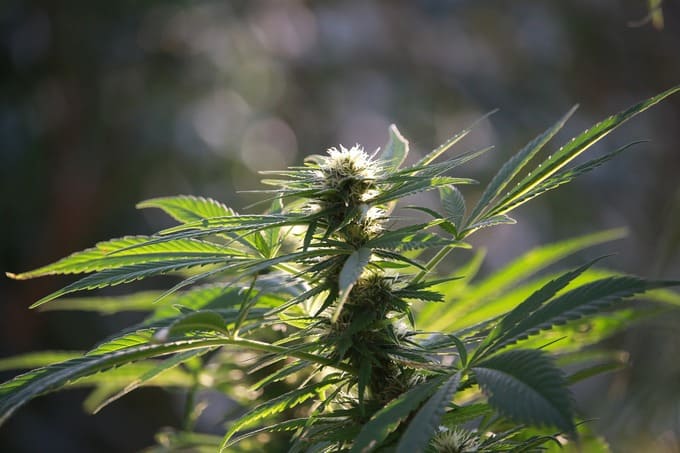
Humidity control in indoor crops
Controlling water vapor levels in crops under grow lights is possible thanks to a series of tools. Humidity and temperature measurement equipment, such as thermohygrometers, are basic utensils for carrying out good control of the environment inside a grow room.
To provide a correct and constant flow of air, it will never be enough to keep doors and windows open. A proper installation mainly includes extractors, intake fans, and dehumidifiers. The former are responsible for extracting the air from the room or grow tent, and it is of vital importance that constant maintenance of these is carried out.
On the other hand, the intake fan performs the opposite function, by introducing clean air from the outside, using a complex system with aluminum tubes. In addition, the use of dehumidifiers or humidifiers is also an interesting and effective alternative in these cases, since they regulate the humidity parameters occurring in the room. Finally, fans placed strategically will provide a current of air, preventing it from accumulating in the environment.
If, on the other hand, the goal is to increase water vapor levels in the air, it must be taken into account that sprayers are only short-term solutions. Opting for systems that keep the soil moist automatically and in a controlled manner is a good option. In this case, it is recommended to use methods such as automatic drip irrigation, micro-sprinkling, and flood irrigation.
Specimens provided with an optimal environment will focus all their energy on developing a stronger structure, with a powerful root system, and with a greater number of buds that will provide compact and dense flowers full of trichomes.
Humidity control in outdoor crops
Controlling that the different weather adversities do not harm the crop is a complex task; therefore, taking the appropriate precautions to avoid future setbacks will be the wisest option.
To keep track of marijuana in excessively humid climates, it is of vital importance that the strains grown have great resistance and adaptability. Another premise to follow is to select varieties with fast growth and early flowering, so they can be harvested before the characteristic heavy rains of October arrive.
A specimen that meets all these requirements is Durban Poison from the famous seed bank Dutch Passion. This genetics, originating from South Africa, specifically from the city of Durban, adapts to the extreme climates found in that region, where freezing night temperatures can even drop below 0 °C in mountainous areas. During the 70s, many European fans searched tirelessly for these varieties, since their cross with Dutch strains generated hybrids extremely resistant to the elements, also providing colors and aromas that were very striking for that time. After years of selection, Durban Poison has increasingly adapted to adverse weather conditions to create a potent and strong variant, perfect for humid climates.
The Jack Herer 100% feminized is another of the varieties recommended by Sensi Seeds, a polyhybrid born from the cross of Haze x Jack Herer x Skunk. From its parents, it has inherited its great resistance and its short flowering period. It is a balanced specimen (50% sativa genes and 50% indica) with potent and compact buds full of trichomes.
Finally, Moby Dick is a variety especially designed for humid climates given its high tolerance to mold and other pests. It is also known by growers for its high productivity and its eminent height, reaching up to 4 meters outdoors. For it to develop in full splendor, it needs a substrate rich in nutrients and minerals with the right amount of nitrogen, phosphorus, and potassium. A pH that does not exceed 6.5 must be maintained so that the plant does not suffer from iron deficiency and cause iron chlorosis, affecting its metabolism and chlorophyll synthesis.
In addition to choosing suitable genetics, it is advisable to protect plants from rain when intense precipitation or several consecutive days of humidity are expected.
If humidity increases uncontrollably, it is advisable to properly adjust the pH of the irrigation to avoid invasions of opportunistic fungi. Likewise, foliar preventives, natural fungicides such as horsetail, or other organic resources should be used. Another point to keep in mind is not to cover the plantation with plastics or other types of materials during rainy periods, as condensation can cause other problems such as unfavorable changes in the morphology of the specimens or the appearance of other pathogens.
Marijuana plants in humid climates are very sensitive. In each of their life cycles, they demand precise levels of humidity, light, water, or fertilization. Water vapor is necessary for proper growth; however, as has been verified, there are specific moments during cultivation where humidity must be precisely controlled to avoid the appearance of mold such as rust. Providing the specimen with an optimal environment at each growth stage will provide dense and strong structures, with plants full of compact calyxes with superior flavor and aroma.