Personalized Attention +44 151 947 0713
 SHIPPING TO ALL


 9/10 Rating
 SALE TO MINORS PROHIBITED


Have you ever seen a cannabis plant with strange leaves, two stems coming out of the same seed, or flowers that look like real crests?
Although marijuana usually has a recognizable structure, nature can surprise us with truly unusual shapes. Some are rare genetic alterations, others have been stabilized through selection, and certain supposed mutations are nothing more than legends.
We review some of the most surprising cases in the cannabis world.
Albino marijuana: white plants and buds
One of the most striking anomalies is albinism in cannabis, which causes total or partial absence of pigmentation in certain tissues.
Unlike animal albinism, which is mainly related to melanin, in plants the problem affects pigments fundamental to their functioning, especially chlorophyll.
Completely albino plants have great difficulty surviving independently because they cannot perform photosynthesis correctly.
However, leaves or parts of a plant with white areas can also appear due to pigmentation alterations, such as variegation.
If you want to delve deeper into this phenomenon, you can check our article on white marijuana, where we explain why some plants or buds have this coloration and how to distinguish a genetic alteration from other pigmentation problems.
Are all white buds a mutation?
No. Some cannabis flowers can acquire a whitish coloration due to excessive light exposure.
This phenomenon, known as photobleaching, is related to the degradation of photosynthetic pigments.
Therefore, a white bud does not in itself prove that the plant has a genetic mutation.

Creeping marijuana plants
Another curious anomaly appears when a plant develops a predominantly horizontal structure, with branches that extend to the sides instead of growing vertically.
This appearance may remind one of certain creeping ornamental species.
However, it is not always a hereditary mutation. Plant architecture also depends on factors such as genetics, branch development, and environmental conditions.
Therefore, finding a cannabis plant with an unusual shape does not necessarily mean we are looking at a new mutant variety.
Whorled phyllotaxy: three leaves at the same node
Phyllotaxy describes how leaves are distributed around the stem of a plant.
In cannabis, it is common to observe opposite leaves during the early stages of development and an alternate arrangement as the plant matures.
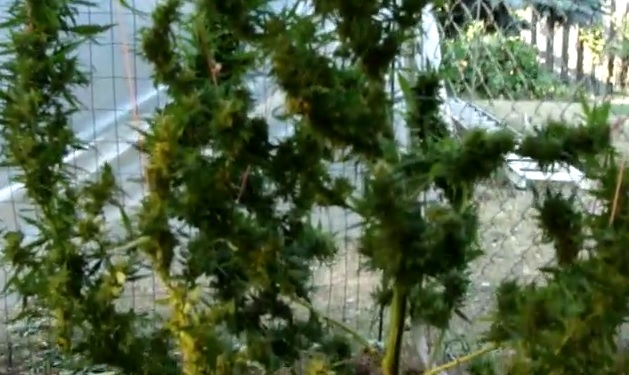
However, some specimens exhibit whorled phyllotaxy, an arrangement in which three or more leaves appear around the same node.
This anomaly can produce plants with a visually different structure, although it does not guarantee faster growth or higher production.
Furthermore, having three leaves per node does not mean the plant is triploid. These are distinct characteristics that should not be confused.
Buds that appear directly on the leaves
Among the most surprising cannabis mutations is the appearance of small floral structures on the leaves.
Normally, cannabis flowers develop in specific positions on stems and branches. However, in certain specimens, small inflorescences have been documented in unusual areas of the leaf.
These formations are very striking, but there is not enough evidence to claim that they significantly increase a plant’s production.
Polyploidy: cannabis with more sets of chromosomes
Polyploidy in cannabis is a genetic alteration related to the number of complete sets of chromosomes.
Usually, Cannabis sativa is a diploid species, with two sets of chromosomes. However, specimens with different levels of ploidy have also been identified:
- Diploids (2n): two sets of chromosomes.
- Triploids (3n): three sets of chromosomes.
- Tetraploids (4n): four sets of chromosomes.
Polyploidy can occur naturally or through genetic improvement techniques.
Some research has observed changes in the morphological and reproductive characteristics of these plants. However, being polyploid does not necessarily mean reaching a larger size, producing more flowers, or presenting a certain structure.
Furthermore, triploidy can considerably reduce fertility, although it should not be interpreted as an absolute guarantee of sterility.


Fasciation: buds with a crest shape
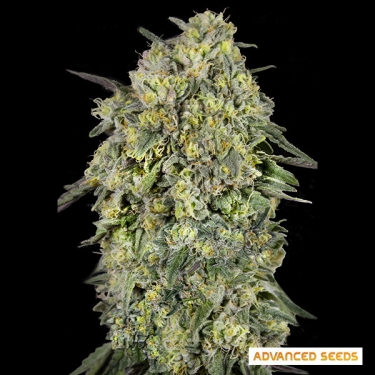
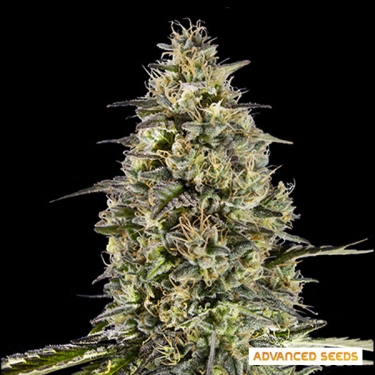
Have you ever seen an extremely wide and flattened cannabis flower, as if several flowers had fused together?
This phenomenon is known as fasciation and can affect both stems and inflorescences.
It occurs when the development of certain growth tissues is altered, causing flattened, widened, or deformed structures.
Fasciation can be related to different genetic, environmental, or biological causes, and does not constitute proof of polyploidy.
Although these flowers are visually surprising, their appearance does not necessarily imply greater production.
Twin seeds: two plants from a single seed
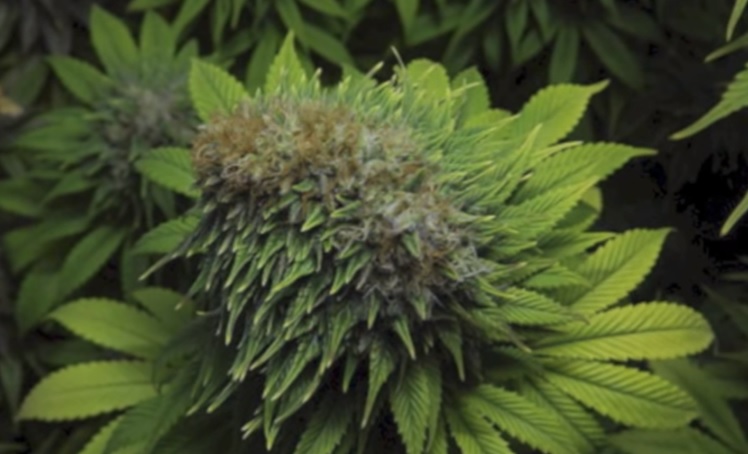
Another of the best-known curiosities is the appearance of two seedlings from a single seed.
This phenomenon can be related to polyembryony, that is, the presence of more than one embryo in a seed.
When it occurs, two shoots can appear that initially share a very small space.
However, two visible shoots do not allow us to determine their exact origin on their own, nor do they ensure that both plants are genetically identical.
It is a rare phenomenon that can also be observed in other plant species.
Australian Bastard Cannabis: a completely different appearance
The Australian Bastard Cannabis (ABC) is one of the most unique forms of cannabis ever documented.
Its main characteristic is the presence of small leaves with an atypical morphology, very different from the narrow, serrated leaflets that we usually associate with marijuana.
This peculiarity began to spread internationally in the late 90s thanks to specialized cannabis publications.
Although its appearance is surprising, it is still cannabis and not an independent botanical species.
The characteristic shape of its leaves has sparked interest in the field of genetic selection and ornamental varieties.
Ducksfoot: leaves that resemble duck feet
Another variety known for its peculiar appearance is Ducksfoot, whose name refers to the shape of its leaves.
Instead of having completely separated leaflets, these leaves show a partial union between them, creating a silhouette that resembles a duck’s foot.
This characteristic differentiates it from the Australian Bastard Cannabis, although both are known for having unusual foliage.
The Ducksfoot morphology has been preserved through genetic selection and represents one of the most recognizable examples of cannabis leaf variations.
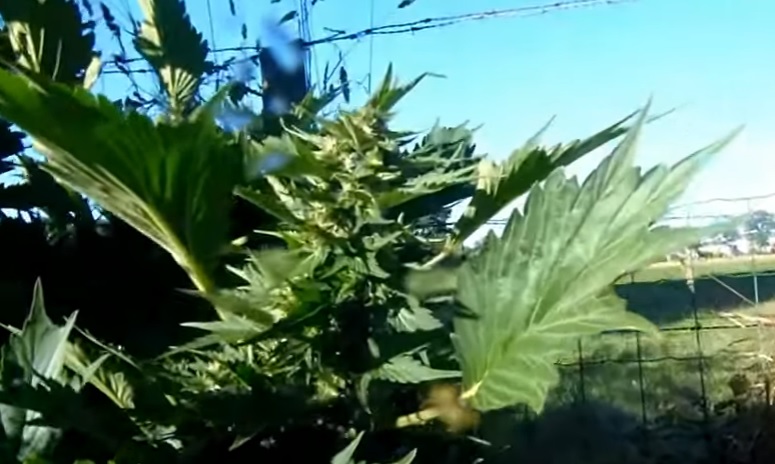
This characteristic differentiates it from the Australian Bastard Cannabis, although both are known for having unusual foliage. You can discover other shapes and variations in our guide on types of marijuana leaves.
Does underwater cannabis really exist?
Among the strangest stories about cannabis mutations circulates the existence of a supposed variety capable of growing completely submerged in saltwater.
According to this legend, there would be an underwater cannabis that looks like seaweed, capable of surviving thanks to a different photosynthesis system.
However, there is no reliable scientific evidence that a variety of Cannabis sativa adapted to live permanently under the sea has been discovered.
Therefore, the so-called underwater cannabis should be considered a myth, not a confirmed botanical mutation.
Are all marijuana mutations beneficial?
No. Some alterations can produce interesting visual characteristics, while others negatively affect plant development.
Furthermore, a visible anomaly can be due to environmental factors, diseases, or physiological problems, without there being a hereditary genetic mutation.
Marijuana mutations demonstrate the diversity that this species can present, from extraordinary leaves to changes in the number of chromosomes.
And although some of these characteristics have sparked scientific and genetic interest, others remain simple curiosities that remind us how unpredictable nature can be.




 Add as preferred source in Google