 Personalized Attention +44 151 947 0713
 SHIPPING TO ALL


 9/10 Rating
 SALE TO MINORS PROHIBITED

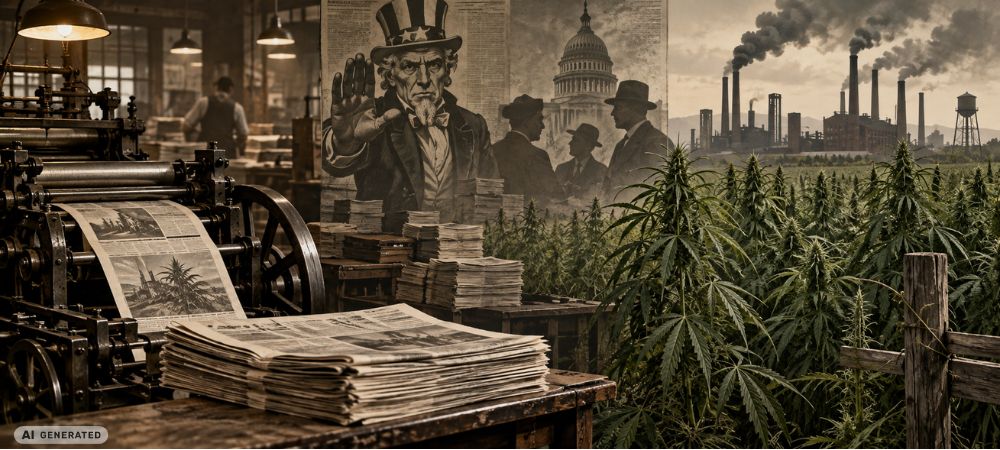
Cannabis has many more uses than just the consumption of its flowers. The Cannabis sativa species has been cultivated for centuries to obtain fibers, seeds, and other raw materials, in addition to having been traditionally used for various medicinal purposes.
About 200 years ago, it had hundreds of uses, as the hemp extracted from it was used to make paper, rope, all kinds of fabrics, and even the first pairs of jeans were made from hemp, which were much more durable than those we have today.
It was a highly productive plant that also helped the environment, as in a short time you had plants ready to produce materials again, thus avoiding the felling of immense forests of trees to obtain wood.
Throughout history, its regulation has been conditioned by political, social, health, and economic factors. This has led to the idea that certain large companies opposed to cannabis were pulling strings to protect their own interests. However, not all the stories that circulate on this subject have the same documentary support.
The industrial uses of hemp
Industrial hemp is a variety of Cannabis sativa grown for its fibers, seeds, and stalks. It has traditionally been used to manufacture:
- Ropes and canvas.
- Fabrics and clothing.
- Paper.
- Oils and food.
- Insulating materials.
- Biocomposites and construction products.

Currently, the European Commission recognizes hemp as a crop with various industrial applications and potential agronomic advantages. Its fiber continues to be used to produce paper, textiles, insulating materials, and bio-based components.
This does not mean that hemp once dominated the entire paper industry or that it could automatically replace wood, cotton, or synthetic fibers. The choice of a raw material also depends on its cost, availability, yield, and ease of processing.
William Randolph Hearst and the press against marijuana
William Randolph Hearst was one of the great American press magnates. He came to control numerous newspapers and also served as a member of the House of Representatives between 1903 and 1907.
During the 1920s and 1930s, numerous American media outlets published sensationalist news stories that linked marijuana to crime, violence, and certain social groups. Part of this coverage used racist prejudices and contributed to creating an alarmist image of the plant.
Hearst’s newspapers participated in this media climate. However, there is no conclusive historical evidence that he launched a campaign against cannabis solely to protect forestry investments or to prevent hemp from replacing wood-based paper.

There is a certain unverified theory about a possible business motivation, which says that Hearst did all this because he feared suffering huge losses if hemp gained momentum and American paper began to be manufactured with hemp. The theory states that Hearst was an investor in various lumber mills.
What was DuPont’s relationship with the prohibition?
Another widely circulated theory points to DuPont as one of the companies responsible for the prohibition because its synthetic fibers competed with hemp.
DuPont played an important role in the industrial development of materials such as nylon and other chemical products. Hemp, for its part, could be used in some of the same sectors, especially in the manufacture of fabrics, ropes, and paper.
This potential competition has led to the interpretation that the company had an interest in eliminating it from the market. However, it has not been proven that DuPont directly pushed for the 1937 law or that Hearst, DuPont, and Harry Anslinger developed a joint plan to ban cannabis.
Economic interests may have influenced the political context of the time, but presenting them as the sole cause of the prohibition would simplify a much broader historical process.
Harry Anslinger and the prohibitionist campaign
Harry Anslinger was the first head of the United States Federal Bureau of Narcotics and one of the most influential figures in the campaign against marijuana.
Anslinger used stories of crime, violence, and moral decay to advocate for stricter regulation. Many of his arguments lacked a solid scientific basis and relied on racial and social stereotypes prevalent during those years.
In 1937, the Marihuana Tax Act was passed, a tax law that subjected the possession and transfer of cannabis to registration, taxes, and obligations that were difficult to comply with. In practice, it greatly restricted its commercialization and cultivation, but technically it did not establish an absolute prohibition of the entire plant.
The regulation also affected industrial hemp. Even so, the United States temporarily encouraged its production again during World War II to obtain fiber for ropes and other materials.
Federal regulation changed again in 1970, when the Controlled Substances Act replaced the 1937 law and included marijuana among the substances subject to the strictest control.
Cannabis and the counterculture of the sixties
During the 1960s and 1970s, cannabis gained a significant presence in the countercultural movements of the United States and other countries.
The hippie movement incorporated it as part of a culture that defended individual freedom, pacifism, and the rejection of certain social norms. However, not everyone who participated in these movements consumed cannabis, nor were the protests of the time focused exclusively on its legalization.
This period contributed to the debate shifting from being solely a police or health issue to also being related to civil rights, personal freedoms, and the social consequences of prohibition.
The change initiated in Colorado and Washington
In 2012, Colorado and Washington became the first states in the United States to vote to regulate cannabis for recreational use among adults. Its commercialization remained prohibited by federal law, but those votes marked an important shift in international cannabis policy.




Since then, different territories have adopted models of legalization, decriminalization, or medicinal access. There is, however, no single global trend: legislation continues to vary considerably between countries and even between regions within the same state.
Cannabis, medical research, and the pharmaceutical industry
The development of cannabinoid-based medications has reopened the debate on the relationship between cannabis and the pharmaceutical industry. This relationship cannot be described solely as a confrontation, as some pharmaceutical companies also research, develop, and market treatments that contain cannabinoids.
Scientific evidence does not allow us to claim that cannabis cures diseases such as cancer. The available studies distinguish between the plant, its different compounds, and medications formulated with controlled doses.

The review by the U.S. National Academies of Sciences found relevant evidence for certain uses, such as:
- The treatment of chemotherapy-induced nausea and vomiting using oral cannabinoids.
- A modest reduction in certain types of chronic pain in adults.
- Short-term improvement of some spasticity symptoms associated with multiple sclerosis.
For many other diseases, the evidence is limited, insufficient, or still under investigation. Furthermore, cannabinoid products can cause adverse effects and interactions with other medications.
Are there companies against the legalization of cannabis?
Over time, there have been business sectors, associations, media outlets, and political groups both in favor of and opposed to changing cannabis laws.
Some organizations may act out of economic interests, but opposition can also be related to issues of public health, safety, labor regulation, or child protection. At the same time, the growth of the cannabis industry has created new commercial interests in favor of its legalization.
Therefore, the current debate does not simply pit cannabis against large corporations. It involves industries with different positions, public administrations, researchers, healthcare professionals, and social movements.
A history more complex than a corporate conspiracy
Sensationalist campaigns, social prejudices, and the actions of Harry Anslinger had a clear influence on the American prohibition. It is also reasonable to analyze the existing economic interests surrounding paper, wood, synthetic fibers, and medications.
However, it has not been proven that Hearst, DuPont, and Anslinger jointly organized the prohibition to eliminate hemp as a competitor. Presenting this theory as a fact undermines the credibility of historical criticisms that can actually be documented.
Knowledge about cannabis continues to evolve. Therefore, it is essential to differentiate between scientific evidence, proven historical facts, and interpretations that, although repeated for years, do not have sufficient evidence.




 Add as preferred source in Google


