Personalized Attention +44 151 947 0713
 SHIPPING TO ALL

 9/10 Rating
 SALE TO MINORS PROHIBITED

Growing indoor marijuana seeds has become the favorite option for those seeking discretion, total control over growing conditions, and consistent harvests throughout the year. Unlike outdoor growing, where the weather, pests, or even neighbors can work against you, indoor cultivation allows you to create a custom environment, from temperature to lighting.
In this guide, you will learn everything essential to get off to a good start: what materials you need, how to organize the space, which varieties work best indoors… If you have ever considered growing marijuana indoors, we have gathered everything you need to understand how indoor cultivation really works and how to set it up step by step, even if you are starting from scratch.
What is it and why grow indoor marijuana?
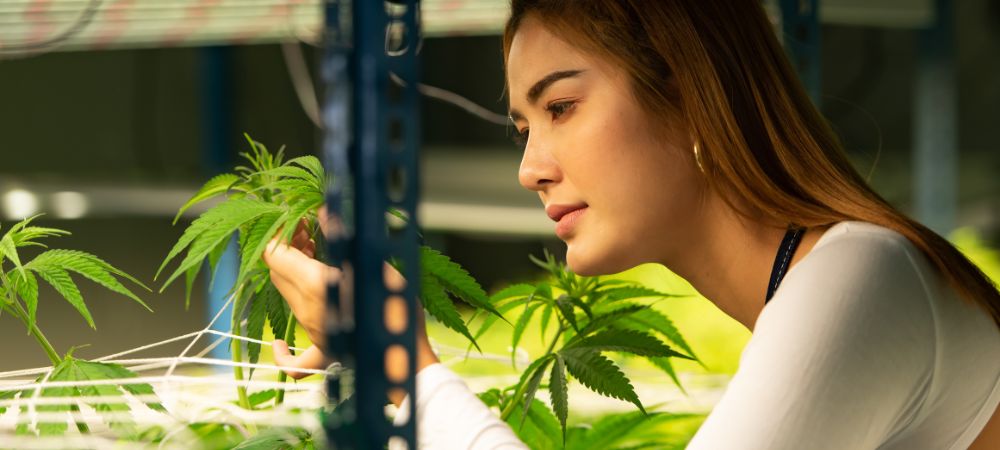
When we talk about indoor marijuana, we refer to growing plants in a completely controlled environment, usually inside a grow tent or an equipped room. In these types of crops, LED (or sodium) light replaces the sun, air is renewed through ventilation systems, and temperature and humidity are adjusted manually.
Choosing to grow indoor marijuana is not just a matter of convenience: it is a strategic decision that can make the difference between a mediocre harvest and a truly satisfying one.
- Indoor cultivation allows you to have total control over the environment in which your plants grow, something you simply cannot guarantee outdoors with the weather and seasons.
- You can regulate the temperature, humidity, light cycle, and even ventilation, which reduces the risk of diseases, mold, or pests like the dreaded two-spotted spider mite.
- By growing in enclosed spaces, such as a tent or a room, you can keep the crop out of sight and better control odors, which is essential if you live in an urban or shared environment.
- You do not depend on the time of year. With a good setup, you can harvest marijuana at any time, without waiting for good weather or worrying about rain or cold.

What do you need to grow indoor marijuana?
Starting an indoor marijuana crop may seem complicated at first, but with the right equipment and basic planning, you will have everything under control from day one. In indoor crops, starting with a well-assembled foundation avoids many of the most common mistakes of the first few weeks. Here are the essential elements you cannot miss.
Suitable space (tent, room, etc.)
The first thing is to decide where you are going to grow. It can be a large grow tent designed specifically for it, a small grow tent, or even a conditioned room. The important thing is that the space is enclosed, easy to ventilate, and free of light leaks from outside. If you are starting an indoor crop as a beginner, 80×80 cm or 1×1 m tents are an excellent option.
Artificial lighting (LED, HPS, etc.)
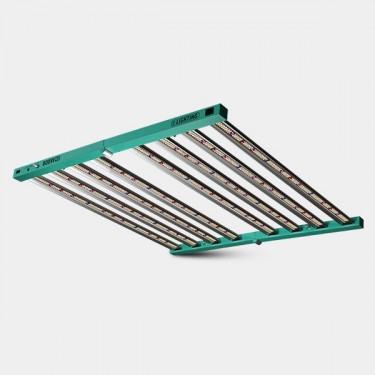
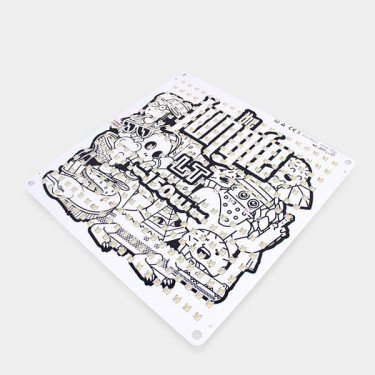
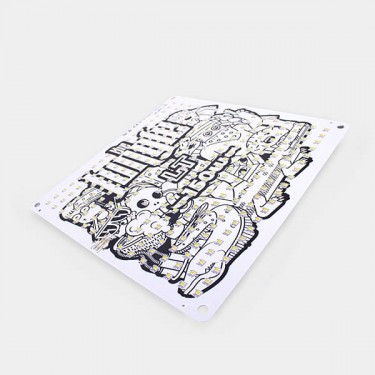
Cannabis plants need a lot of light to develop, and indoors, that means using lamps. The most common are HPS (high-pressure sodium) and full-spectrum LEDs. LEDs have gained ground due to their efficiency, lower consumption, and lower temperature, although their initial price may be somewhat higher. The choice of lighting for indoor crops will depend on your budget and the size of the crop.
| Type | Consumption | Heat | Recommended |
|---|---|---|---|
| LED | Low | Low | Beginners and efficiency |
| Sodium | High | High | Maximum production |

Ventilation and climate control
A good air extraction system is key to renewing oxygen, controlling odors, and avoiding fungus or pest problems in indoor marijuana plantations. Added to this is the need for an indoor fan to strengthen stems and simulate natural air movement. It is also advisable to have a hygrometer and thermometer (temperature: 20–28 °C), and if the environment requires it, a humidifier or dehumidifier to keep humidity at optimal levels (40–70%) depending on the stage of the crop.
Pots, substrates, and fertilizers
Choose pots with good drainage, preferably fabric or hard plastic, and use an aerated and nutritious substrate, such as light soil for cannabis (easier for beginners) or coco or hydro (more technical). Throughout the crop, your plants will need specific nutrients for each phase: growth and flowering fertilizers, as well as boosters if you want to maximize production.
Seeds: feminized, autoflowering, CBD…
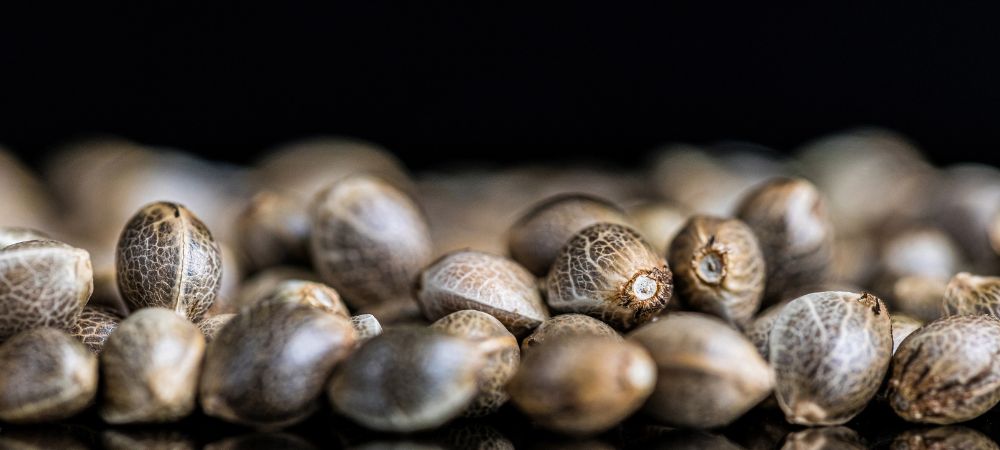
Depending on the type of seeds you choose, the duration, size, and effects of the crop will vary. If you use feminized strains, these will be ideal for making the most of the space, as they almost always produce female plants.
If you use autoflowering varieties, they will grow fast and will not depend on the photoperiod, which makes them perfect for small spaces or discreet crops. Finally, CBD seeds are recommended if you are looking for more therapeutic and less psychoactive effects.
How to grow indoor marijuana step by step?
If you are looking for a clear way to grow indoor marijuana, understanding each phase of the process will help you avoid mistakes from the beginning. Indoor marijuana cultivation follows a well-defined cycle. Each stage has its specific needs, and understanding them is key to obtaining healthy, aromatic, and productive plants. Here we explain the entire process step by step, from germination to final curing.
Germination and seedling
This is usually done in damp paper towels, in jiffys, or directly in the substrate, maintaining a constant temperature (22–25 °C) and a humid environment. In a few days, you will see the root emerge and, shortly after, the first cotyledons.
When the seedling pokes its head out, it is important to give it soft light and maintain humidity without waterlogging. In this phase, the plant is fragile, so avoid sudden changes in temperature or excessive watering.
Vegetative growth
Once the plant has developed its first real leaves, it enters the growth phase. Here it needs between 18 and 20 hours of light per day, a stable temperature (22–26 °C), and somewhat lower humidity than in germination (50–70%).
During this period, the plant develops the stem, branches, and foliage. In this phase, you also start feeding with growth fertilizers, rich in nitrogen.
Flowering
When you reduce the photoperiod to 12 hours of light and 12 hours of darkness, indoor marijuana plants interpret that autumn has arrived and begin to flower. This phase can last between 7 and 10 weeks, depending on the variety.
In flowering, it is essential to change the fertilizers to formulas rich in phosphorus and potassium. Humidity must be kept lower to avoid fungi, and ventilation must be constant. This is also when the aroma intensifies, so a good activated carbon filter becomes almost mandatory.
Harvest, drying, and curing
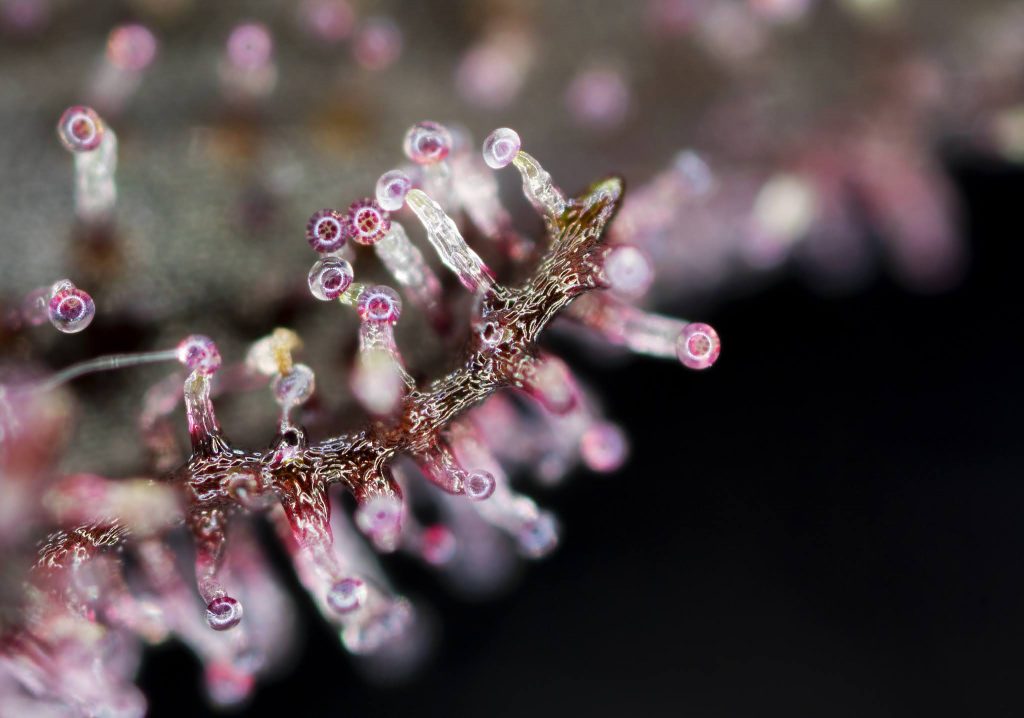
When the trichomes acquire a milky or amber color, the time has come to harvest. Cut the plants and hang them upside down in a dark, ventilated place with controlled temperature and humidity (18–22 °C and 50–60%).
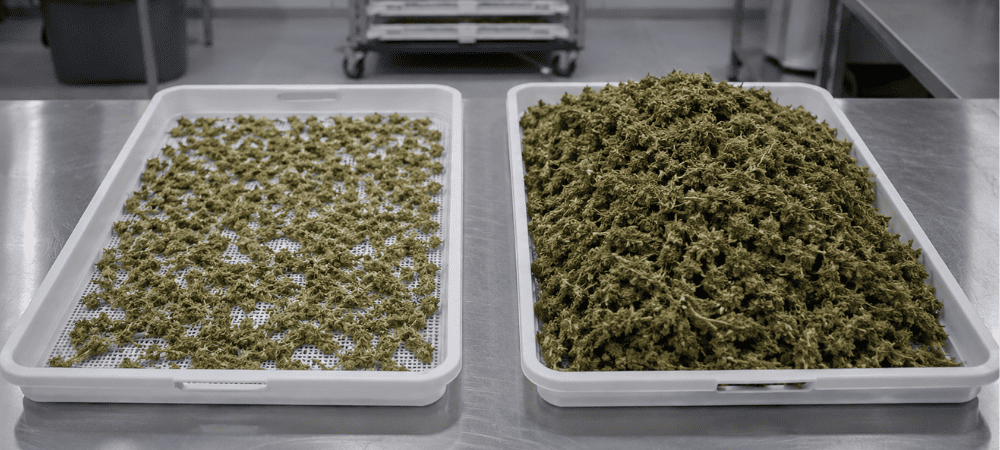
Drying usually lasts between 7 and 14 days. Afterward, it is time for curing, a slow but crucial process: store the buds in airtight jars, opening them daily during the first few weeks to air them out.
Indoor cultivation for beginners
If you are starting in the world of indoor cultivation, there are three keys you should know that make all the difference.
- Start with a complete kit. An indoor grow kit includes everything necessary and avoids compatibility errors.
- Do not overwater. This is one of the most common mistakes made in these types of crops and one that should be avoided.
- Control the temperature. Excessive heat reduces the yield of indoor marijuana plants.
| Option | Advantages | Disadvantages |
|---|---|---|
| Complete kit | Easy, fast, everything compatible | Less personalized |
| Self-assembly | Adapted to your space | More complex |
How much does it cost to grow marijuana indoors?
Before setting up indoor crops, one of the most common questions is how much it really costs to start. The investment can vary significantly depending on the type of setup, the quality of the equipment, and the size of the space, but having a clear reference helps to avoid unnecessary expenses and make better decisions from the beginning.
| Level | Investment | Monthly consumption | Production |
|---|---|---|---|
| Basic | €200–€300 | €10–€20 | 100–200 g |
| Medium | €400–€600 | €20–€40 | 300–500 g |
| Advanced | + €800 | + €50 | + 500 g |
Common problems in indoor marijuana crops and how to avoid them
Growing marijuana indoors has many advantages, but it can also present certain obstacles if you are not prepared. Knowing which problems are the most common and how to prevent them will save you time, money, and trouble.
- Frequent pests (two-spotted spider mite, thrips, powdery mildew). Even if you grow in an enclosed environment, pests do not disappear. In fact, if they get in, they can multiply faster than outdoors. To prevent them, maintain good ventilation, control humidity, and perform visual inspections daily. Use preventive products and, if there is an infestation, resort to biological insecticides or natural predators.
- Excess or lack of nutrients. An excess can cause tip burn, salt accumulation, or nutrient lockout. On the other hand, if there are deficiencies, the leaves yellow, deform, or fall prematurely.
- Light or heat stress. Poor placement of the light or uncontrolled temperature can cause stress in the plant, which slows down its development and can even lead to the appearance of hermaphroditism.
- Strong aromas. During the flowering of indoor marijuana, the plants give off a very intense odor that can give away your crop, even from outside the house. To avoid this, the most effective thing is to install an air filtration system with an activated carbon filter.
Is it legal to grow indoor marijuana in Spain?
Indoor marijuana cultivation in Spain moves in an ambiguous legal zone. Although it is not expressly permitted by law, self-cultivation for personal consumption in a private space is not penalized as long as certain requirements are met.
According to current legislation, consumption and cultivation of marijuana in the private sphere is not a crime, provided it is for personal use and is not publicly displayed. Of course, growing in a place visible from the public road, or with signs of trafficking (excessive number of plants, scales, large extraction systems), can lead to administrative fines or even criminal charges.
That is to say, the key is in the purpose of the crop. If you can prove that the plants are for your personal use, the legal risk decreases considerably. On the other hand, if the quantity is disproportionate, if there are signs of distribution, or if social alarm is generated, the consequences can be severe.
Warning about discretion and responsibility
Although many people grow marijuana indoors without problems, doing so entails a certain responsibility. It is essential to:
- Keep the crop hidden and without odor detectable from outside.
- Avoid disturbing neighbors (noise, aromas, suspicions).
- Do not talk about the crop publicly or on social media.



 Add as preferred source in Google