 Personalized Attention +44 151 947 0713
 SHIPPING TO ALL

 9/10 Rating
 SALE TO MINORS PROHIBITED

How to hide marijuana outdoors has become one of the most pressing issues for growers starting their journey in outdoor cannabis cultivation, and even for more experienced horticulturists who want to learn new techniques to maintain maximum discretion in their respective spaces. It is worth noting that the main intention of these individuals is to successfully harvest their plants without suffering any loss of their crop due to thieves, so they can enjoy the magnificent properties that marijuana offers, both recreationally and medicinally.
Along with the notable increase in outdoor cultivation over recent years, there has been a parallel increase in the number of thefts of these plants, which forces all growers who intend to work outdoors to be fully prepared against the theft of their prized specimens.
As a general rule, if you have an outdoor area visible to anyone, whether it is a balcony, garden, or terrace, it is not recommended to grow marijuana varieties that can grow into large plants. For this, it is also recommended to germinate seeds later so that the growth period is shorter, or even to grow autoflowering varieties, which usually do not exceed one meter in height.
In addition, it is also advisable to use different types of height control techniques that encourage lateral development rather than vertical, such as SCRoG or Supercropping. Below are various techniques for hiding marijuana outdoors in a discreet and effective way.
Concealment netting
The most commonly used element for hiding marijuana outdoors is concealment netting, as it can be used in different places such as villas, fields, balconies, etc., ensuring that the plants do not attract attention. These nets began to be used to separate fields and for other agricultural or gardening tasks, although their use gradually became popular for increasing privacy behind fences or other types of transparent walls, as they offer great privacy without blocking sunlight.
Currently, it is very common to find them in residential areas, villas, or any garden. Placed behind any wall covered with a small planter or shrub, it will camouflage all the plants in a single piece, giving the impression that it is the planter or shrub itself that is blocking the light.
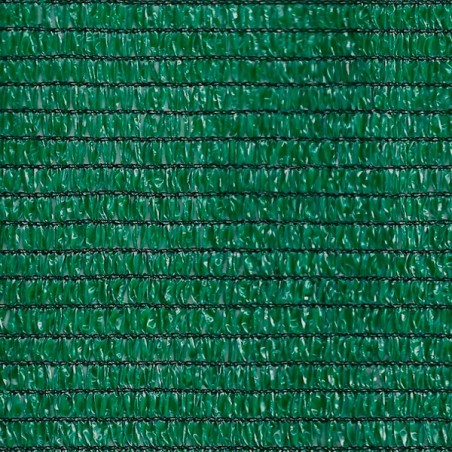
Green Camouflage Net
Another similar net, but used more for shading than for hiding, is the white one, as this color allows the plants to be seen rather than camouflaging them like the green color does. However, these nets are especially effective for typical terraces located inside estates, as they serve to block the view from upper floors.
The white color will allow light to pass through, which will not be very intense but sufficient to grow any genetics under the same net. Neighbors will see that there is some type of plant under the tarp, but they will not be able to discern which one it is, since the net will prevent them from seeing clearly and sharply.
Scrog to hide marijuana
If you have a balcony with a wall that receives proper lighting, perhaps the best option for you is to create a Scrog surrounding the entire wall, so that you will have huge and very productive plants, but not a single leaf will be seen from the street. All you need is a Scrog net and a little patience, as you will have to weave the branches along the net so that their growth does not stop but never exceeds the desired height.
For this type of cultivation, it is necessary to perform apical pruning, as this technique causes a sudden brake in the development of the plants, causing the trunk to stagnate and only increasing the size of its branches, which is perfect for the cultivation system we want to develop.
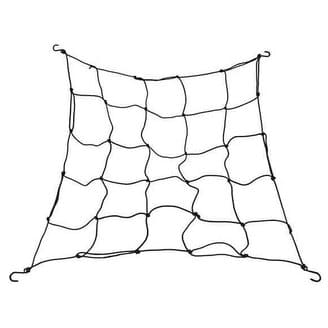
LST
If you do not have enough lateral space to perform apical pruning, you can also bend and tie your plants, achieving a more open structure that is favorable for light penetration. This cultivation system, known as LST, allows for the formation of very productive plants that occupy minimal space, so you can introduce a higher number of plants. By using this technique, different types of strains can be adapted to any growing area, making them form the structure we desire.
Guiding the branches by bending them in one direction with strings makes the plants more homogeneous and ensures that light penetration reaches all their internal parts, improving the production and compaction of the flowers.
Fabric pots to hide marijuana
At first glance, large fabric pots might not seem like they would help hide marijuana, but this is not entirely true. Thanks to their great breathability and the little resistance they offer to roots to develop, fabric pots allow you to bury them directly in the ground.
This fact makes it possible to reduce the size of the plants by more than 50 centimeters, so when added to the installation of shading nets and staking the branches, you can achieve a perfectly camouflaged crop from the outside.
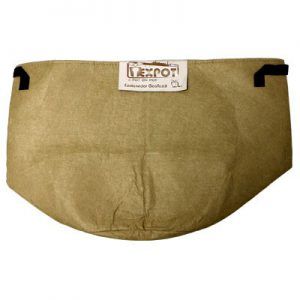
In the case of wanting to carry out a guerrilla grow, it is also a very good option, as they are designed with a color that makes them go unnoticed among the weeds. This allows us to grow initially on the surface until they reach a considerable height. Once they have acquired a notable height, the pot should be buried as much as possible, thus reducing the total height of the plant, as we mentioned earlier.
Other ways to hide outdoor crops
Beyond the techniques to control the size of the specimens, there are also other effective methods to hide marijuana crops in open spaces. One of the most common and popular is related to growing other types of plants that serve as natural camouflage. Using bamboo and decorative plants with leaves of different colors can be an excellent option to avoid the attention of prying eyes. Other examples of plants that can be grown alongside cannabis are tomato plants, corn, or ragweed.
Likewise, the odor emanating from marijuana plants is extremely characteristic, so it is also possible to avoid these aromas by camouflaging them with other fragrances from aromatic plants such as jasmine, lavender, basil, rosemary, peppermint, mint, or thyme, among many others. In addition, during flowering, you can use manure, the smell of which is quite unpleasant and, therefore, a deterrent.
Although it may seem logical, one of the most frequent reasons why marijuana plant thefts occur is “word of mouth.” Telling people publicly that you are going to grow or are growing cannabis outdoors can be a serious mistake, because even if you have maximum trust in your friends and acquaintances, one of them might tell someone else, and the person who hears it might do the same, and so on. Therefore, if you don’t tell anyone, there will be no risk of anyone finding out about your crop.
Finally, it is also advisable to maintain maximum hygiene and cleanliness of the growing area throughout the process, as plant remains such as leaves, roots, or other material resulting from pruning can become the perfect excuse to arouse the curiosity of thieves and prying neighbors.
The art of hiding marijuana outdoors
With a little imagination, any place with sufficient lighting is perfect for growing; we just have to think about how to prepare the area so that our strains are camouflaged. Sometimes we will have to cover them, other times we will have to blend them into the environment using all kinds of materials, or even just bending the plant and forcing it to create a specific structure will be enough.



 Add as preferred source in Google



2 replies on “How to hide marijuana outdoors”
An interesting read; you have spelt out measures that are not only easy to understand but also practicable enough to be adopted. I Practice Demand Pull Agriculture …. so am already gruppling with thoughts of where i will get contacts of the eventual processors of the various end products.
Hi. We are really glad that you liked the post. Kind regards.