Personalized Attention +44 151 947 0713
 SHIPPING TO ALL

 9/10 Rating
 SALE TO MINORS PROHIBITED

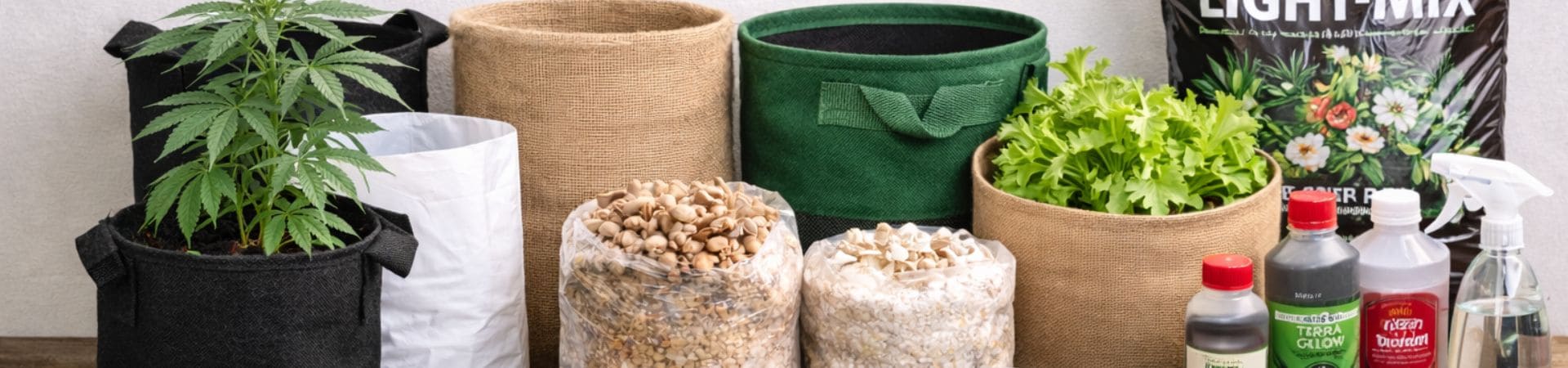
Grow bags are grow bags designed to create a more controlled and clean environment where the substrate better retains moisture and air exchange. In grow shops, there’s a lot of talk about grow bags, but it’s not always clear what that term includes and why they’ve become so popular. Broadly speaking, they simplify processes because they concentrate in one bag part of what was previously assembled with containers and accessories. Additionally, they help maintain order and reduce substrate handling, which is key when you’re looking for stability and repeatability.
What are grow bags and why have they become popular?
When someone says “grow bags,” they usually refer to a bag cultivation format that integrates (depending on the model) substrate, an air exchange system, and a closure designed to keep the inside more protected from the outside. To put it simply, it’s a cultivation bag designed for growing plants that, unlike rigid pots, allows air and water to flow, promoting better growth.
In the context of grow shops, grow bags have become popular for a very simple reason: they reduce steps and, with that, reduce typical assembly and handling errors.
In specialized stores, you’ll see that many grow bags are presented as “ready-to-use” or “all-in-one,” emphasizing convenience, ease, and reduced contamination thanks to bags with filters.
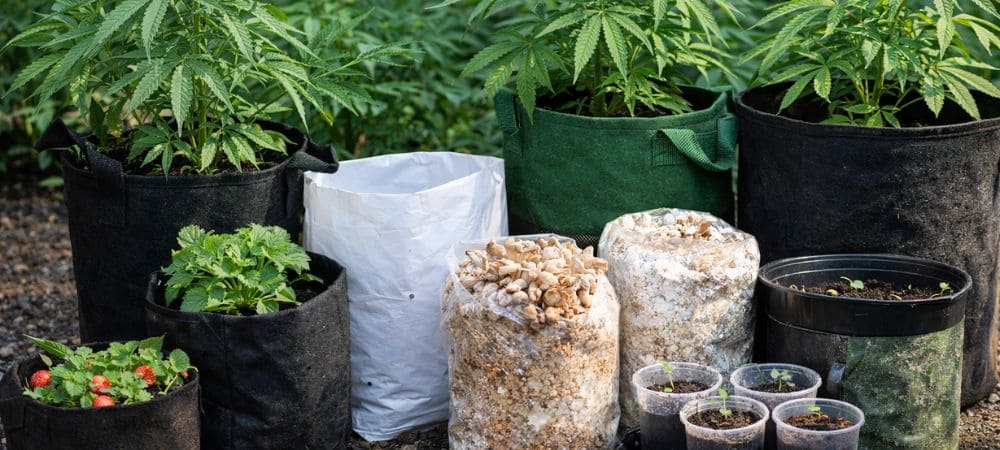
How a grow bag works in practice
Grow bags work by combining four ideas: (1) a container that retains moisture, (2) a material/closure that limits the entry of contaminants, (3) an air exchange point (filter), and (4) less handling of the contents. This combination makes the internal microenvironment more stable than “open” solutions and, in some cases, avoids extra accessories.
Within this “container + control” logic, there is a very small format that many growers know well: the jiffy. Although it is not usually called a grow bag, it shares the same objective on a smaller scale: to maintain moisture around the seed/cutting and facilitate a stable environment during startup. Therefore, it can be understood as a “micro-cultivation bag” designed to simplify the beginning and reduce handling in delicate phases.
The market frequently describes that the filter “maintains oxygen levels” and blocks contaminants, and that the bag should be kept sealed until the time indicated by the manufacturer.
Materials and design: why they matter
In grow bags designed for substrates and mycology, it is common to see resistant plastic bags (for example, sterilizable and reusable models in some formats) with an incorporated air filter. This filter is key: it allows the inside to “breathe” without needing to open it, which reduces exposure to the outside.
In textile grow bags for plants (those used as fabric pots), the concept changes: the breathable material promotes what is called “air pruning” because the root tips that reach the edge dehydrate, and the plant branches its root system instead of circling as in a rigid pot.
Air and moisture exchange: the balance that makes the difference
The key to many grow bags is to maintain sufficient moisture without “sealing everything in” to the point of stagnation. Therefore, when a manufacturer highlights “anti-contamination filter bag” or contamination filter, they are focusing on that balance: air yes, but without opening or exposing the inside.
In practical terms, much of the perceived “success” with grow bags doesn’t come from them being magical, but from them reducing human variability: less assembly, less handling, fewer improvised decisions.
Grow bags vs. traditional pots
At first glance, a grow bag and a pot do “the same thing”: contain substrate and plant. The real difference lies in how they behave day-to-day due to their structure and the type of material. This detail directly influences the air the roots receive, water management, and ease of use when you grow frequently or with several plants.
Aeration: Grow bags promote greater air circulation in the root zone. This helps prevent roots from becoming compacted or “circling” against the container walls, and usually results in a more branched and efficient root development.
Drainage: In general, grow bags easily drain excess water. By reducing the time the substrate remains excessively wet, the risk associated with overwatering and problems arising from lack of oxygen in the roots decreases.
Portability: By their very nature, bags are usually lighter and more flexible than a rigid pot. This makes them easier to move, and also more convenient to fold or store when not in use, which is very practical if you optimize space or work seasonally.
Eco-friendliness: Many grow bags are designed to be reusable and, depending on the manufacturer, there are options made with more sustainable materials (including biodegradable alternatives). It is advisable to always check the product sheet to know if the specific model is reusable and what type of material it uses.

Types of grow bags
Not all grow bags are the same. At the store level, they are usually grouped into three families: ready-to-use grow bags, sterile bags for preparation, and textile grow bags (more common in gardening and container cultivation).
“Ready-to-use” Grow Bags
This is the format that most appeals to those seeking convenience. Many commercial grow bags are presented as “pre-inoculated / protected / easy” kits, with filter bags designed to minimize the risk of contamination and simplify the experience.
Important (informational approach): some sites publish step-by-step instructions for these products. We will not reproduce them here; what is relevant for choosing well is to understand what the format promises (convenience and less handling) and what depends on the user’s actual environment.
Sterile or “preparation” bags (for those who want control)
Here the product is not “a ready kit,” but the bag as a tool. Bags with an incorporated air filter are sold. Also, bags with a specifically designed substrate that are sterilizable or intended for working with cakes/substrates, where the goal is to maintain a cleaner and more stable environment without having to constantly open them.
This type of grow bags appeals to more methodical users because they can standardize the format (size, filter, handling) even if the content changes.
Textile grow bags (fabric pots) for plants
In gardening and container cultivation, “grow bags” usually means fabric pots. Their typical advantages are based on breathability and the “air pruning” effect, which promotes a more branched root system. They are usually versatile (vegetables, ornamental plants, etc.) and, in general, offer a lightweight alternative to rigid pots. In indoor cultivation, this type of container can be combined very well with vigorous growth genetics and good response to management, such as La Bomba by Compound Genetics.
Real advantages and limitations
Grow bags have clear advantages, but also limitations. In an industry where people buy with high expectations, honesty sells: it reduces returns and improves trust.
Common advantages
- Less internal handling: several commercial offers emphasize not opening the bag and letting the filter do its job, which reduces exposure to the outside.
- Tidy and compact format: they occupy “their space” and do not require as many external elements (depending on the model).
- Gentler learning curve: “ready-to-grow” products are sold precisely as a simple way to get started.
Better root health: Thanks to air exposure in this type of cultivation, the roots reach the edge and promote branching instead of the roots circling as in a traditional pot.
How to choose grow bags: 60-second buying checklist
Choosing grow bags without getting confused is possible if you translate the technical sheet into simple questions.
What to check on the product sheet
- Type: Is it a ready-to-use grow bag or a sterile bag? This changes the level of control and the intended use.
- Filter / air exchange: if the product mentions a filter, it’s because it’s designed so you don’t open the bag unless strictly necessary.
- Volume or content: some products specify substrate quantities (for example, commercial formats with kilograms/liters). Use this to size space and expectations.
How the brand is presented: if it emphasizes “anti-contamination filter bag” or “keep sealed,” it is positioning the product towards stability and protection.
This table allows you to identify, in seconds, which type of grow bags best suits what you are looking for.
| Format | What it is | Main advantage | Typical limitation | Ideal for |
|---|---|---|---|---|
| Ready-to-use grow bags | Bag prepared and marketed as “ready” | Convenience and less handling | Less flexible | Beginners / quick purchase |
| Sterile bags with filter | Tool bag for cleaner work | More format control | Requires more judgment | Methodical users |
| Textile grow bags | Breathable fabric pot | Air pruning and more branched roots | Dries/waters differently than rigid pots | Gardening and container cultivation |
Who each type is for (beginner vs. advanced user)
- If you want simplicity: ready-to-use grow bags.
- If you want to standardize your “format” and control more variables: sterile bags with filters.
If your intention is to grow in plant containers: textile grow bags.
Typical mistakes when buying grow bags
- Confusing formats: buying a grow bag thinking it’s a fabric pot (or vice versa). Solution: check if it talks about filter/substrate or roots/air pruning.
- Choosing solely by price: the filter, sealing, and clarity of the product description usually make practical differences.
- Not sizing the space: some products are bulky (due to content) and require planning where they will go.
- Ignoring the manufacturer’s approach: if it emphasizes “keep the bag sealed,” its proposal depends on respecting the system’s design.
Purchase Checklist
If you’re only going to read one thing before buying grow bags, let it be this:
| Criterion | What to check | Why it matters |
|---|---|---|
| Type | Ready vs sterile bag vs textile | Changes usage and expectation |
| Filter/ventilation | If specified | Affects air exchange without opening |
| Size/content | Volume, weight, liters/kg | Tells you if it fits and what logistics it implies |
| Product description quality | Clarity, warnings, focus | Reduces misunderstandings and returns |
| Intended use | Realistic objective | Avoids buying the wrong format |
Grow bags have gained ground because they transform a process that previously required assembly and handling into a more stable, organized, and “plug-and-play” format (in the ready-to-use models). If you choose the right type of grow bags and align it with your objective—convenience, control, or container cultivation—it’s easy to understand why they have become a standard in many specialized stores.