 Personalized Attention +44 151 947 0713
 SHIPPING TO ALL


 9/10 Rating
 SALE TO MINORS PROHIBITED

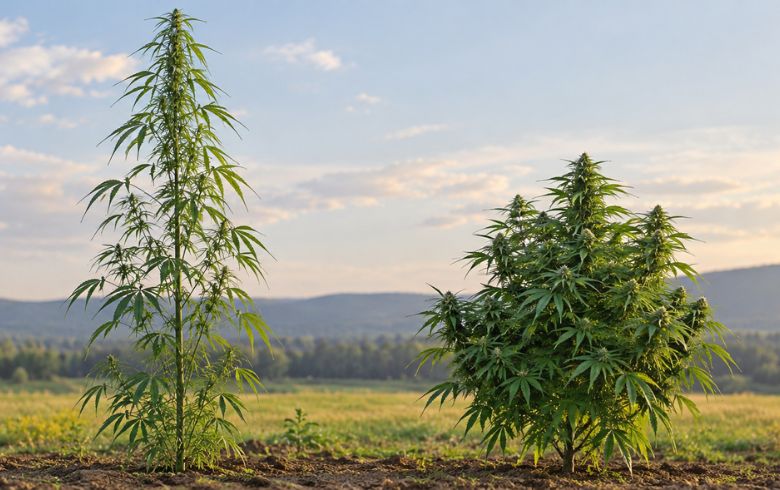
Although hemp and marijuana belong to the Cannabis genus and may look very similar to the naked eye, they are not the same. The main differences lie in their THC content, growth pattern, type of cultivation, and the uses for which they are selected.
Below, we will look at what differentiates hemp from marijuana, how to recognize them, and what each is used for.
Differences between hemp and marijuana
The simplest way to understand the difference between hemp and marijuana is by directly comparing their main characteristics.
| Differences between hemp and marijuana | ||
|---|---|---|
| Characteristic | Hemp | Marijuana |
| THC | Very low. In industrial hemp regulated in the EU, it must not exceed 0.3% | Can have much higher concentrations depending on genetics |
| Appearance | Generally tall and slender | Usually more compact and branched |
| Cultivation | Usually grown with higher density | Normally more space is left between plants |
| Uses | Fiber, seeds, food, construction, cosmetics, and other industrial uses | Mainly for obtaining flowers |
| Parts utilized | Stalks, fibers, seeds, and other parts of the plant | Mainly the flowers |
Therefore, talking about hemp and marijuana does not necessarily mean talking about two completely different plants. In both cases, we are talking about cannabis, but plants selected and cultivated with different objectives.
Morphological differences between hemp and marijuana
One of the easiest differences to observe is in their appearance.
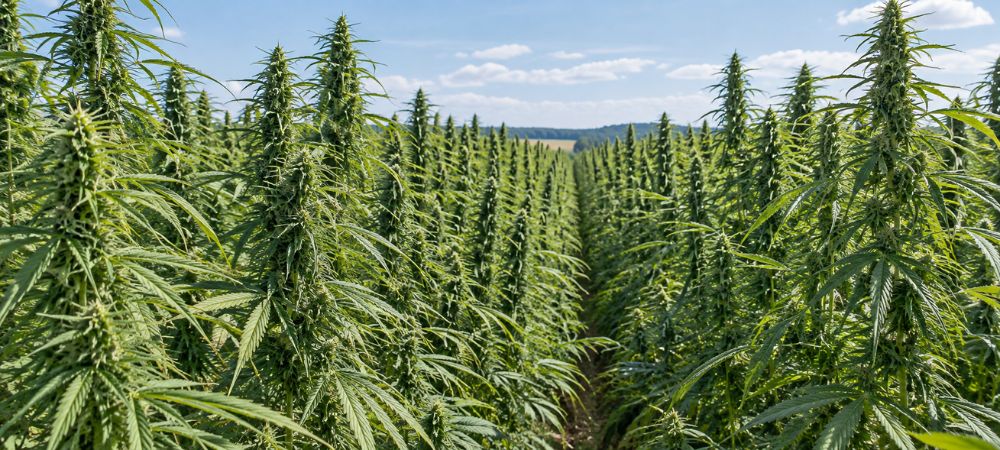
Hemp grown for fiber usually grows upward, developing long stalks and a relatively slender structure. Depending on the variety and growing conditions, it can reach several meters in height.
This type of growth is especially useful because one of the main objectives of its cultivation is precisely to obtain the greatest possible amount of fiber from the stalk.
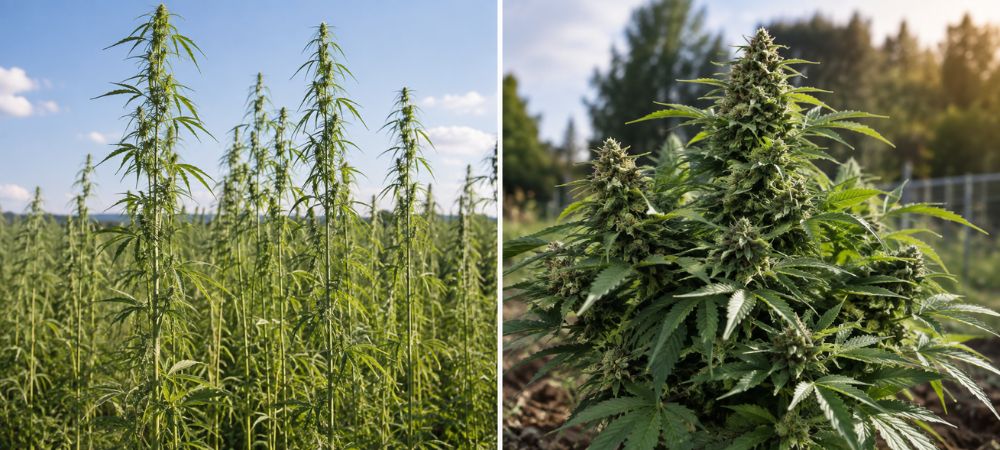
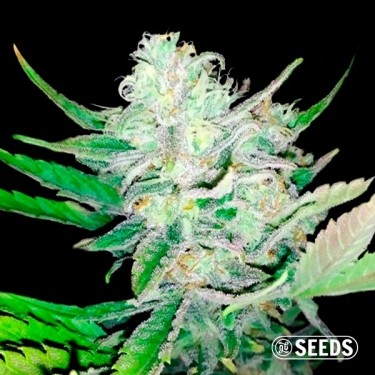
Marijuana intended for flower production usually has a different appearance. It typically shows greater lateral branching and a more compact structure, as plants capable of developing numerous flowering zones are selected.
There are also visible differences in the flowers. While in industrial hemp crops intended for fiber or seed these are usually not the main production objective, in marijuana varieties they generally represent the most prized part of the plant.
However, these characteristics serve as a guide and do not always allow for distinguishing a hemp plant from a marijuana plant solely by the naked eye.
Differences in the cultivation of hemp and marijuana
The way hemp and marijuana are cultivated also changes considerably depending on the objective being pursued.
Industrial hemp can be grown mainly to obtain:
- Fiber.
- Grain.
- Seeds.
When fiber is sought, plants are usually placed with high density to favor the development of long, straight stalks and limit branching.
In other cannabis crops intended for flower production, however, more space is usually left between plants to allow for greater branching and development of each specimen. Within this group, we find, for example, feminized seeds, selected to produce female plants and facilitate this type of cultivation.
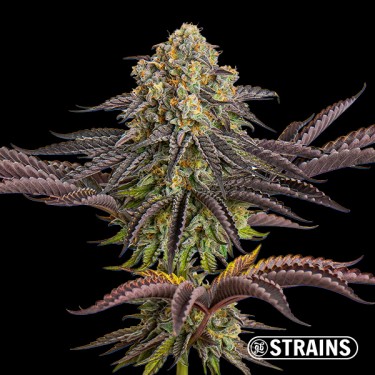


The way varieties are selected also changes. In industrial hemp, it is especially important to use authorized varieties with a very reduced THC content.
In Spain, the Ministry of Agriculture establishes that the cultivation of hemp intended for fiber, grain, or seed must be carried out with certified seeds of varieties included in the Common Catalogue of Varieties of Agricultural Plant Species of the European Union, or varieties with the corresponding provisional authorization, and with a THC content not exceeding 0.3%.
Differences in the use of hemp and marijuana
This is probably where one of the biggest differences between the two is found.
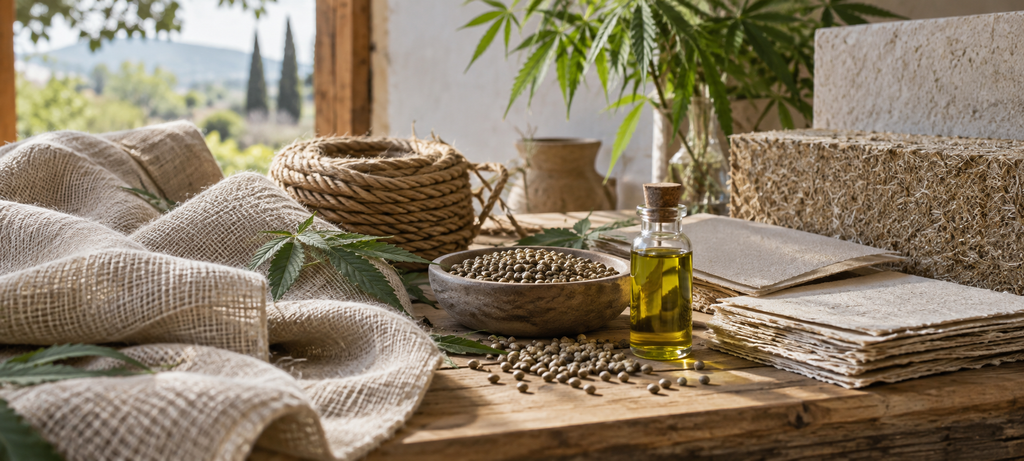
Hemp stands out for being a plant with numerous industrial applications. Depending on the part used and the transformation process, it can become raw material for very different sectors.
Products produced from hemp
Among its best-known applications are:
- Textiles: fabrics, clothing, ropes, and other products made with fiber.
- Construction: insulation, panels, and materials manufactured from plant fibers.
- Paper and cardboard.
- Seeds and hemp seed oil.
- Human and animal food.
- Cosmetics.
- Bioplastics and composite materials.
- Components used in different industrial processes.
For this reason, one of the great particularities of hemp is that different parts of the plant can be utilized.
The European Commission highlights precisely its applications in sectors such as textiles, food, construction, and other industrial uses.
Marijuana, on the contrary, is usually grown mainly for its flowers and its content of cannabinoids and terpenes. Therefore, the stalk fiber or seeds do not normally constitute the main objective of this type of cultivation.
Which has more THC, hemp or marijuana?
This is probably the best-known difference. THC or tetrahydrocannabinol is one of the cannabinoids present in cannabis and is the main one responsible for its psychoactive effects.
The varieties used as industrial hemp have very reduced amounts of this cannabinoid.


Currently, the European regulations used to regulate hemp within the Common Agricultural Policy establish a limit of 0.3% THC for the corresponding varieties.
Marijuana, on the contrary, can develop considerably higher concentrations. The specific percentage will depend on factors such as genetics, cultivation, and the characteristics of each variety.
Therefore, the THC content is one of the main references used to differentiate industrial hemp from other forms of cannabis.
The origin of hemp and marijuana
Although today we use different words to refer to them, hemp and marijuana share a common origin.
Both come from Cannabis sativa, a plant used by humans for thousands of years. Its area of origin is located in regions of Central Asia and nearby areas.
For centuries, human populations have been selecting different specimens according to the characteristics they were looking for.
Some plants were especially interesting for their stalks and fibers, while others stood out for their flowers and their production of cannabinoids.
This continuous selection was progressively creating plants with very different characteristics.
Thus, certain varieties ended up being used mainly to obtain:
- Fiber.
- Seeds.
- Food.
- Materials.
While others were selected mainly for their flowers.
Do hemp and marijuana belong to the same species?
From a botanical point of view, the separation is not as simple as is often thought. The Swedish botanist Carl Linnaeus described Cannabis sativa L. in 1753. Later, in 1785, the French naturalist Jean-Baptiste Lamarck described Cannabis indica.
However, currently, the international botanical database Plants of the World Online from Kew considers Cannabis indica as a synonym for Cannabis sativa.
Therefore, using the words hemp and marijuana is very useful to differentiate plants according to their characteristics and uses, but the botanical classification of cannabis is quite a bit more complex.
Legal status of hemp in Spain
Here it is important to distinguish between industrial hemp and other cannabis crops.
According to information published by the Ministry of Agriculture, Fisheries and Food, in Spain, the cultivation of hemp intended for the industrial production of fiber, grain, and seeds does not need prior authorization from the Spanish Agency for Medicines and Health Products, provided it complies with the corresponding requirements.
Among these requirements is the use of certified seeds of authorized varieties whose THC content is not higher than 0.3%.
In addition, the Ministry itself points out that this type of industrial crop must be intended for obtaining fiber, grain, or seeds.
This is important because the fact that a plant has less than 0.3% THC does not automatically mean that any use of all its parts is permitted.
In particular, the regulations affecting cannabis flowers or tops are different and may be subject to other restrictions.
Therefore, when talking about legal hemp in Spain, it is not enough to just look at its THC percentage: one must also take into account the variety used and the purpose of the cultivation.
Hemp and marijuana: two different uses of the same plant
The difference between hemp and marijuana is understood much better if we stop thinking of them simply as two totally different plants.
Both come from cannabis, but for generations, they have been selected to achieve different characteristics.
Hemp stands out mainly for its ability to produce fiber, seeds, and raw materials, while marijuana has been selected mainly for the development of its flowers and cannabinoids.
This selection explains why they currently present such clear differences in their growth pattern, THC content, cultivation, and applications.
Frequently asked questions about the difference between hemp and marijuana
Are hemp and marijuana the same plant?
What is the difference between hemp and marijuana?
Does hemp contain THC?
Can you distinguish hemp from marijuana with the naked eye?
What is hemp used for?
Products in this article



 Add as preferred source in Google


