Personalized Attention +44 151 947 0713
 SHIPPING TO ALL

 9/10 Rating
 SALE TO MINORS PROHIBITED
CBD is once again in the spotlight of science due to its great benefits. In recent years, several studies have revealed an idea that has attracted a lot of attention from scientists and the cannabis community.
The news has sparked interest because antibiotic resistance is one of the great challenges of modern medicine. More and more bacteria are not responding to treatments, so any compound with the potential to open new avenues of research generates anticipation. And that’s where the relationship between CBD and antibiotics comes in.
Why there is talk of CBD and antibiotics against resistant bacteria
The interest does not arise out of nowhere. Some research has observed that cannabidiol showed activity in the laboratory against several bacteria, including some that are particularly problematic due to their resistance to conventional antibiotics.
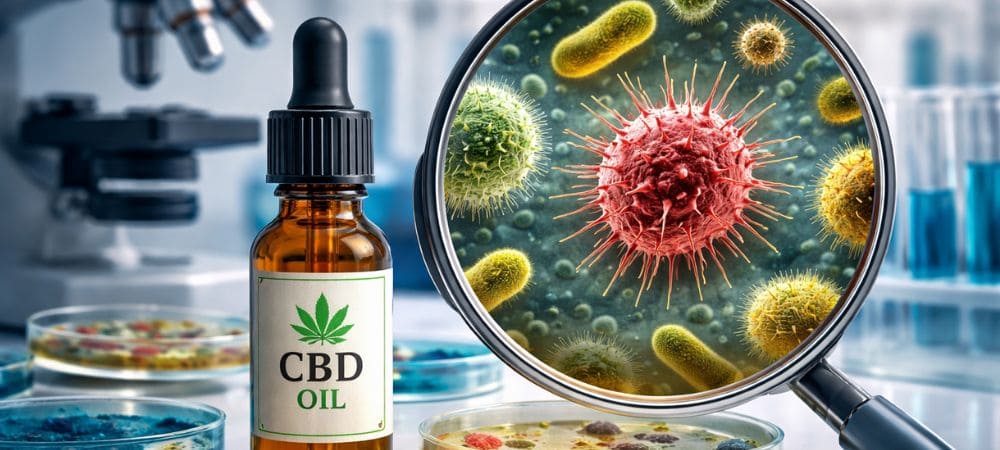
This has led to CBD beginning to be seen as a molecule with possibilities in the search for new antimicrobial strategies. Not because there is already a cannabidiol-based medicine for this purpose, but because the initial results have been striking enough to warrant further investigation.
Simply put: science is not saying that CBD is already the solution, but that there may be a promising path here between CBD and antibiotics against resistant bacteria.
What research has shown about CBD and antibiotics
Most interestingly, CBD has shown activity against some particularly concerning bacteria. Its possible effect on biofilms, which are structures that help protect bacteria and can make them more difficult to combat, has also attracted attention.
This detail is important because one of the big problems with many resistant infections is not just the bacteria itself, but also its ability to protect itself and remain active even when attempts are made to stop it with treatment.
Therefore, the fact that CBD has shown this behavior in the laboratory makes many researchers consider it a molecule to watch closely. CBD and antibiotics could join forces in the future against these bacteria.
The big problem: what are superbugs
When we talk about superbugs, we are referring to bacteria that have developed resistance to several antibiotics. This greatly complicates treatments and makes infections that were previously easier to control a much more serious problem.
Therefore, finding new molecules with possible antibacterial activity has become a priority. In this context, CBD has begun to gain prominence because it could provide something different in a battle where more and more alternatives are needed.
Can CBD become real support against superbugs?
Right now, that’s the big question.
What is known so far invites interest, but also caution. CBD has shown promising results in research, and that is enough to talk about CBD and antibiotics as possible allies of the future. The important thing is to understand that this potential for union between CBD and antibiotics is still under study.
Even so, the news is relevant because it confirms something important: cannabidiol not only arouses interest in already known fields, but also in much more serious and complex areas, such as the fight against bacterial resistance.
Why this news has attracted so much attention
The idea that a molecule like CBD could play a role in the future against resistant bacteria is powerful for two reasons.
The first is that it connects with one of the great current health challenges. The second is that it opens the door to further research into compounds that, until recently, were not so present in this type of scientific conversation.
This explains why more and more headlines are appearing linking CBD and antibiotics, or CBD and superbugs. It is not about selling smoke, but about a line of research that has begun to arouse real interest.
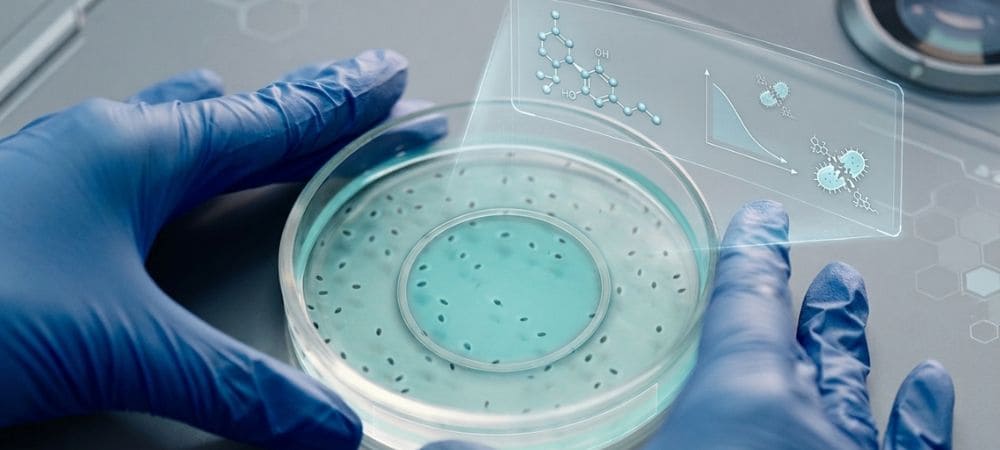
The news about CBD and superbugs has generated anticipation because it points to a very interesting possibility: that cannabidiol could help, in the future, to open new avenues against resistant bacteria.

GB 10% CBD Oil

GB 20% CBD Oil

GB 5% CBD Oil
We are not yet talking about an approved treatment or a substitute for antibiotics, but rather a molecule that has shown promising enough results to continue to be studied very closely.
And that alone makes it an important topic: because when science finds compounds with potential against one of the biggest current medical problems, it’s worth paying attention.



 Add as preferred source in Google