Personalized Attention +44 151 947 0713
 SHIPPING TO ALL

 9/10 Rating
 SALE TO MINORS PROHIBITED


If you are an athlete, you’ll know that you have to be very aware of the substances you consume and the physical consequences they have. Moreover, if you are a professional athlete, you may explicitly be prohibited from taking any type of psychoactive substance. There are several substances that can give an advantage in certain sports, but what about cannabis and sports? What about marijuana in the 2024 Olympic Games?
Over the last few years, cannabis consumption worldwide has increased, and with it, the people who consume cannabis. Gradually, the benefits of marijuana are being recognized and proven. So much so that there are athletes who advocate and support its use in sports.
Marijuana in sports
Due to the fact that marijuana has multiple medicinal benefits for our bodies, it’s not surprising to know that many professional athletes use it. It’s important to note that this is not legal in all sports.
Various athlete organizations in recent years have announced their stance on marijuana use in their sport. The NBA eliminated marijuana tests at the end of 2020 during the 2020/2021 season, marking the second time the NBA has done so; the first time was during the Orlando bubble in Disneyland. Other organizations like MMA allow and promote the use of CBD to aid their athletes’ recovery post-fight.
CBD and cannabis at the Olympic Games
The World Anti-Doping Agency removed CBD Sport from its list of prohibited substances in 2018, demonstrating once again that cannabis properties extend beyond mere psychoactive effects.
CBD, or cannabidiol, has gained increasing interest and acceptance in the world of sports, including the Olympic Games, following the World Anti-Doping Agency’s decision. This measure has allowed Olympic athletes to use CBD products for recovery, pain relief, and stress reduction.
Cannabis up to Rio 2016
Since 1971, all cannabinoids derived from the Cannabis Sativa L. plant were banned by the WADA (World Anti-Doping Agency). This meant that any athlete testing positive for these compounds would be automatically disqualified from any sports competition.
In addition, this prohibition was not questioned by society or athletes themselves. Nevertheless. as the research into its medicinal properties increased, questions arose about whether it should really be a banned substance.
2018: the year of change
During the 2008 Beijing Olympics, Michael Phelps and Usain Bolt, two of the most prominent athletes in recent Olympic history, admitted to using cannabis, causing a major social uproar. This, along with growing scientific evidence of cannabinoids like CBD benefiting athletes, pressured WADA to reconsider its stance. Cannabidiol (CBD) is non-psychoactive, has medicinal properties, and aids athletes in recovery, presenting multiple advantages.
Moreover, the WHO (World Health Organization) also contributed to the change by stating that “CBD, a non-psychoactive molecule from the Cannabis Sativa L. plant, is not a dangerous substance. On the contrary, it has high therapeutic potential.”
Further, faced with this evidence, WADA, traditionally hesitant to remove substances from its doping lists, had no choice but to update its regulations. Then, a few months after the WHO statement, WADA officially announced that “any type of cannabinoid, specifically THC, is prohibited, except cannabidiol (CBD).”
CBD at Tokyo 2020
At the Tokyo 2020 Olympics, athletes could use CBD in their training and competition routines. However, WADA emphasized the importance of athletes ensuring that the substances they use do not contain traces of THC or other prohibited cannabinoids. This is because exceeding the allowed limit in any test would lead to disqualification.
Therefore, athletes had to be cautious with broad and full spectrum products combining CBD with other cannabinoids to enhance effects. Nevertheless, the decision was well-received as a significant step towards full legalization of the plant.
Cannabis at the 2024 Olympic Games
Thanks to the legalization of CBD, the next goal for cannabis advocates is to demonstrate that THC does not enhance athletic performance and therefore should not be considered a doping substance. This issue gained prominence after the case of Sha’Carri Richardson, disqualified from the Tokyo Olympics for testing positive for THC, which dashed her chances of winning gold in the 100 meters.
The scandal led WADA to convene an expert committee to study, in 2022, the effects of THC on athletic performance. Following this study, the World Anti-Doping Agency (WADA) updated regulations on THC for the 2024 Paris Olympics. While THC remains a prohibited substance, WADA increased the THC detection threshold from 15 ng/mL to 150 ng/mL in urine. This means that only test results exceeding this level will be considered positive for THC, allowing more leeway for athletes who may have been exposed to small amounts of THC.
How can athletes benefit from marijuana?
One of the main reasons marijuana is used in sports is its anti-inflammatory ability. Particularly effective in contact sports, many athletes use cannabis after matches to alleviate pain and facilitate quick recovery. Conor McGregor, the former Irish MMA fighter, publicly disclosed his marijuana use after CBD was legalized in the UFC. He has also been observed in Coffee Shops in Amsterdam.
Other athletes, such as marathon runners, use marijuana to maintain focus. Running long distances releases substances in the brain remarkably similar to cannabinoids from cannabis. Some runners confirm experiencing a kind of “runner’s high” after a marathon, and thus consume cannabis before running to enhance concentration and enjoyment, thereby improving performance.
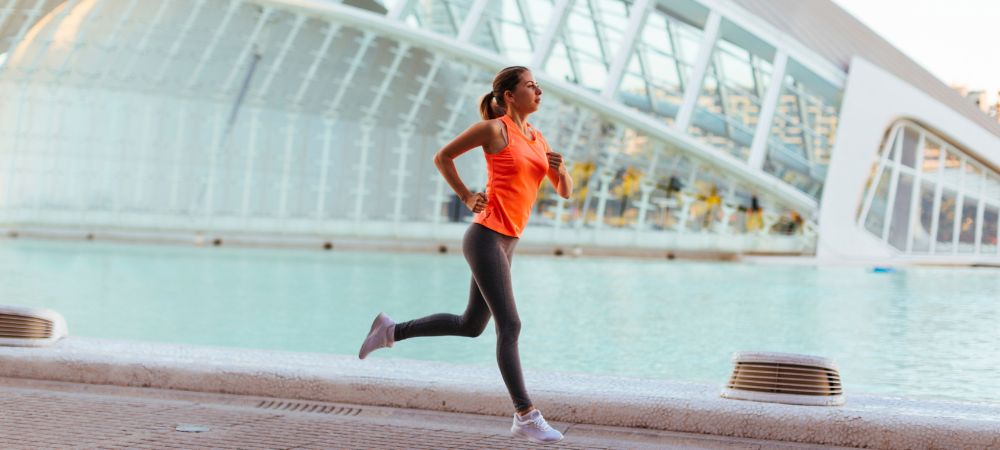
Relaxes muscles and increases focus
Moreover, marijuana acts as a muscle relaxant. Many people worldwide use cannabis after sports or exercise to relax their muscles and accelerate recovery.
Furthermore, several studies have shown that marijuana can significantly enhance concentration and performance in certain sports, such as running. Its ability to relieve muscle pains, typical among athletes in contact sports or intense activities like rugby, has also been scientifically validated.
However, it’s essential to note that marijuana may impair hand-eye coordination. Therefore, it is not recommended before activities requiring focus and coordination. Despite this, several retired NBA players attest to playing most of their games after consuming marijuana.
The 420 marijuana games
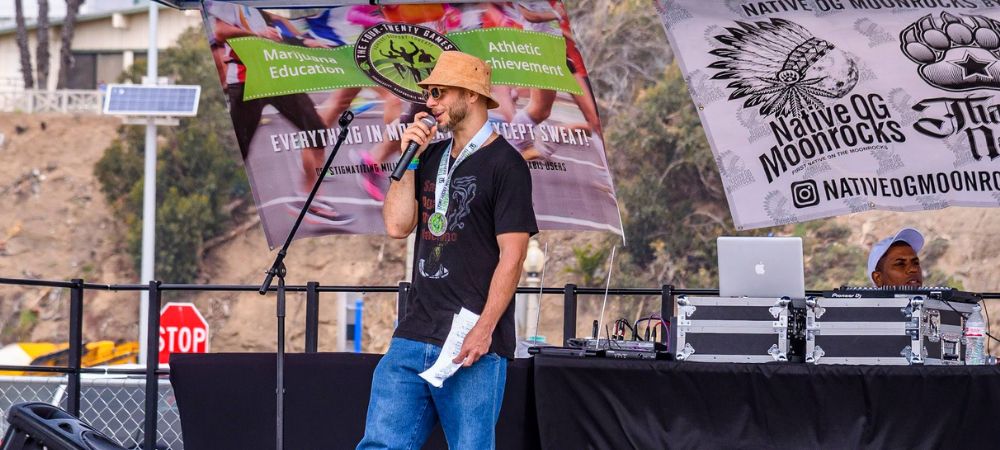
There’s a special event held annually since 2016 across various states in the United States. It’s an occasion featuring cannabis-infused sports, educational talks, live music, and, of course, paraphernalia booths. Among the most visited events are the 4.20-mile running track, their “beer garden,” and prominently, various stalls for cannabis-related products.
Jim McAlpine created this event with the aim of raising awareness about responsible cannabis use and breaking the stereotype that cannabis users cannot lead an active and enjoyable life.