Personalized Attention +44 151 947 0713
 SHIPPING TO ALL

 9/10 Rating
 SALE TO MINORS PROHIBITED

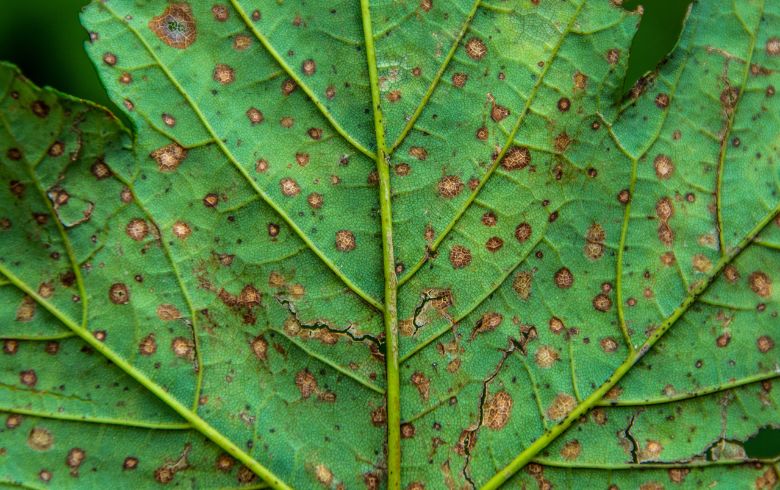
Marijuana cultivation is a long process that requires dedication and time to achieve good results. However, there are cases where an external pathogen could compromise the harvest despite the grower’s careful attention. One such case is botrytis in marijuana, which is very common in cannabis plants and equally harmful. In this article, you can find all the necessary information to recognize, prevent, or treat this fungus before it compromises future harvests.
What is botrytis?
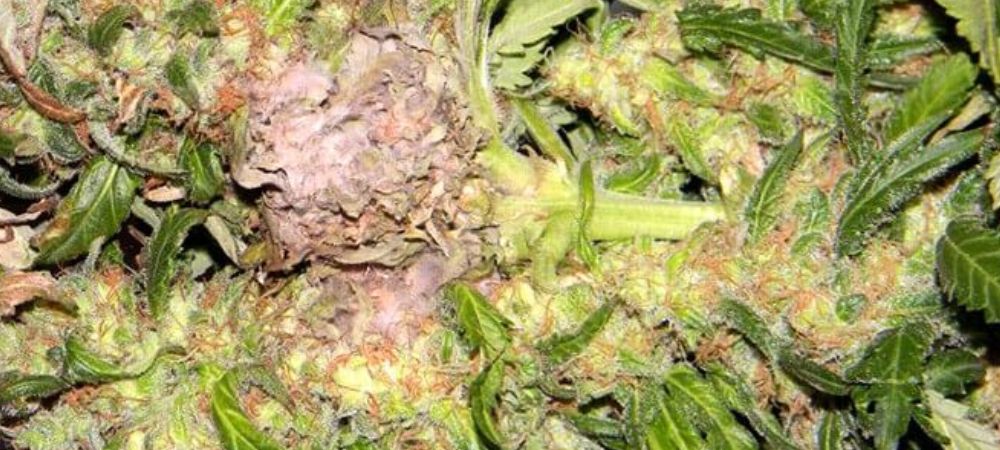
“Botrytis cinerea” is one of the most harmful fungi that can attack marijuana. It is also called gray mold because it manifests as a whitish cotton-like substance, turning grayish and brownish over time. Furthermore, it is very difficult to detect, becoming visible weeks after its arrival in the crop and being capable of ruining the entire harvest.
Although it can attack at any stage of cultivation, it most often does so during the flowering stage, when the buds are already formed. This is because botrytis is a fungus that appears in areas with high humidity, entering the marijuana flowers and spreading rapidly.
How to recognize botrytis?
Since botrytis is usually detected late, the best option is to prevent it. To do this, you must be clear about the situations in which botrytis is most frequent. In addition, periodic checks of the marijuana plants will also help us detect the problem in time before it spreads throughout the entire harvest. To identify this fungus, look for brown spots, irregularities on the stem, small leaves on formed buds that suddenly dry out and die, dehydrated leaves, or flowers that have grayish cottony layers.
The main attraction for the arrival of this fungus is high humidity. Outdoors, botrytis appears in rainy areas, humid climates, or where there are no air currents. Therefore, you must take into account where you are growing to act accordingly. Seed selection is also very important for growing plants that better withstand the conditions of the area or that have high defenses against these pathogens.
Therefore, if you grow outdoors and storms or several days of humidity are expected, it is also important to know how to protect plants from rain before the buds accumulate too much water.
In any case, there are quite clear signs, both for indoor and outdoor cultivation, to identify botrytis. Some examples are shown below.
Botrytis in outdoor cultivation
In outdoor crops, the phase most susceptible to contagion by the botrytis fungus is the last 15–20 days before harvest, when plants usually have well-formed and dense buds. Since the flowers are almost mature, they usually have little air circulation inside; therefore, if they get wet from rain, we will have to monitor their condition very closely.
It is usually considered normal to lose 5–10% of an outdoor harvest due to this fungus, as it is very present in nature. It should be remembered that it is best to detect and remove any affected part before the drying and curing phase, as the affected parts can spread very quickly in the following days.
Botrytis in indoor cultivation
Regarding indoor cultivation, it is advisable to leave space between plants, avoid leaves sticking to each other, and have proper control of humidity and temperature. In addition, the presence of fans or air conditioners will help prevent this fungus.
Finally, botrytis can also appear during drying, so it is essential not to place the buds too close to each other to promote airflow. It is also common during curing if we do not ensure that the flowers are dry when putting them into the chosen containers.
How to prevent botrytis?
Once the presence of botrytis in the marijuana crop is recognized, it is advisable to take measures as soon as possible to prevent it from spreading throughout the entire crop. While it is said that it is better to prevent than to cure, in this case, the saying could not be more accurate.
Pruning
One of the recommended tricks to avoid the arrival of any fungus as much as possible is to perform apical pruning. With this, the central bud (which is the most sought after by botrytis in marijuana) is divided into several smaller ones, so they contain less humidity and are better aerated.
On the other hand, it is also favorable to apply lollipop pruning. The lower branches of the cannabis plant are usually the ones that absorb the most humidity, as they do not receive as much sun and air as the upper ones. Therefore, if pruned, humidity in the plants is reduced and, in addition, production is maximized in the upper part.
Using fungicides as preventatives
Expert growers have been saying for years that, as the popular saying goes, it is better to prevent than to cure. Therefore, the application of preventative fungicides from the plant’s growth phase will be of great help so we do not have to worry about the arrival of pathogens that destroy our harvest.
A great option is Fungi Boom, a completely natural product made from horsetail, silicon, and equisetonin, compounds that are highly toxic to fungi and prevent their appearance. In addition, it can be used as a preventative and as a curative treatment.
On the other hand, you can also use more economical homemade treatments to avoid it, such as Neem oil, milk (skimmed + water), or a garlic fungicide (mixed with boiling water).

Fungi Boom
Treatment against botrytis
The truth is that, in most situations, once botrytis is discovered in marijuana, it is already too late to act. In case of having detected it in time, and taking into account that it usually appears in the flowering stage, the only solution is to cut the branch 5 or 10 centimeters below the affected bud. This process must be carried out carefully, as a sudden movement in the calyxes can transport the spores to the rest of the crop. In fact, it is advisable to cover the infected area with a trash bag to prevent the traffic of these cells.
From that moment on, you must have exhaustive control of humidity in the drying and curing processes, as it is possible that there are inactive spores in the healthy buds and, as conditions become favorable again, botrytis can develop again.
Should infected buds be consumed?
It is very common that, after months of dedication, botrytis infects the crop in its final phase. This leads many people, driven by the desperation of having worked in vain, to wonder if these buds can and should be consumed. The answer is clear: no. The introduction of fungal spores into our lungs can cause serious health problems such as pneumonia or aspergillosis.
In many Internet forums, it is said that if you dry the buds in the sun, the botrytis will go away. Other people say that these flowers can be used for extractions. Nothing could be further from the truth. If botrytis has infected the buds, they must be disposed of immediately. This experience will help you be more careful and preventative in future harvests, but you should never gamble with your own health.