Personalized Attention +44 151 947 0713
 SHIPPING TO ALL

 9/10 Rating
 SALE TO MINORS PROHIBITED
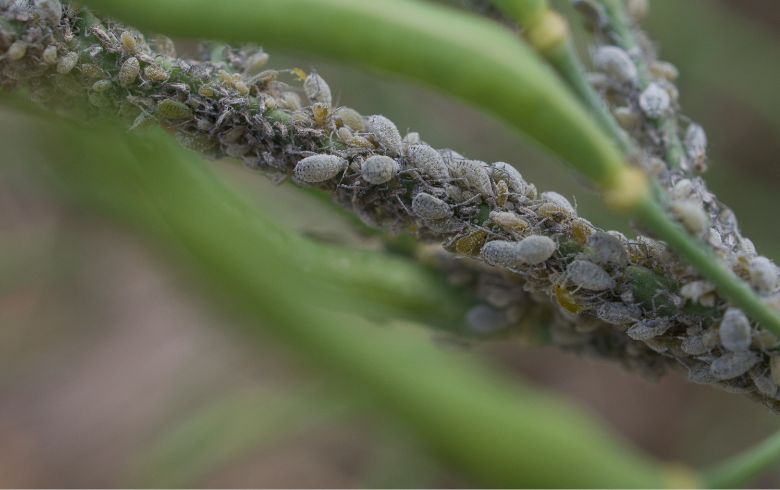
Many pests can affect cannabis crops. Among them, aphids are prominent and typically appear during the spring and summer, as this is when these insects reproduce rapidly. To combat them, there are multiple quality products to choose from without issue. Here you’ll find the best insecticide for aphids currently available.
What are Aphids?
An aphid is a very small insect from the Aphididae family that feeds on plant sap. Although it measures barely a millimeter, it can form enormous infestations if not controlled in time. They appear in colors such as green, yellow, black, or brown, and tend to cluster on stems, young shoots, and flowers, precisely where most nutrients circulate.
Some species have wings and can travel long distances. Others simply drop at the slightest movement and climb back up to continue feeding. Their life cycle is short, but each individual can produce dozens of offspring in just a few weeks. Furthermore, they often congregate in large quantities on the stems, leaves, and shoots of plants.
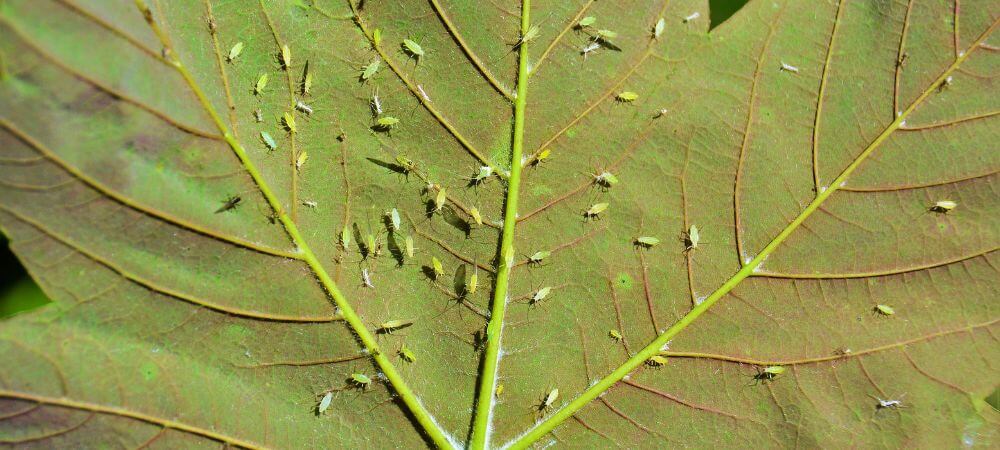
Symptoms of Aphids on Marijuana Plants
Aphids are a very common pest in marijuana plants, and they can cause several visible problems in a short amount of time. Some of the most common symptoms of an aphid infestation include:
- Deformed or curled leaves: Aphids suck the sap from leaves, which can cause them to deform, wrinkle, or curl inwards.
- Yellow spots or discoloration: Sap suction weakens the leaves, leading to yellow spots or pale areas on the foliage.
- Sticky honeydew: Aphids excrete a sugary substance called honeydew, which accumulates on leaves and stems, leaving a sticky feeling to the touch.
- Presence of black mold (sooty mold): Honeydew can attract black mold fungi, which can eventually block photosynthesis.
- Weak budding or slow growth: By draining sap, aphids weaken the plant, which affects its ability to grow healthily.
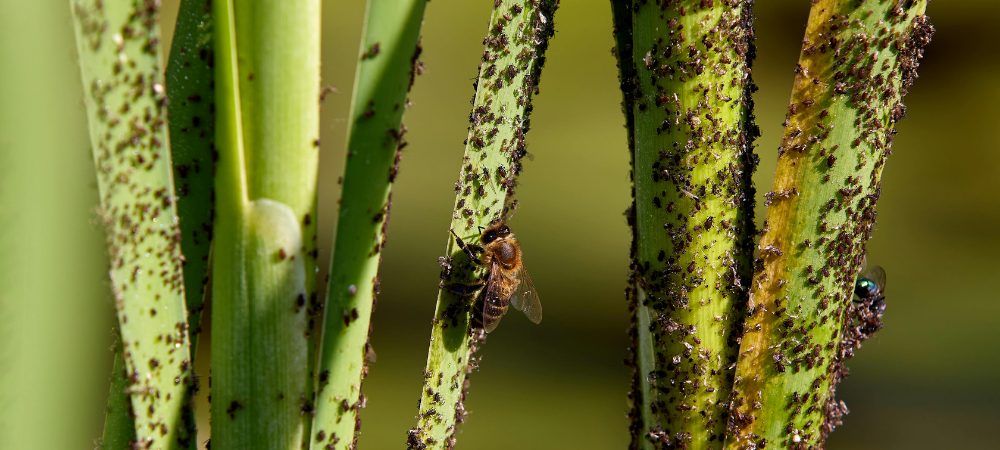
- Ant attraction: Ants are attracted to honeydew and often protect aphids from their natural predators, creating a problematic ecosystem.
Why Aphids Appear in Cannabis Crops
Aphids are often attracted to certain environmental conditions or factors related to crop management. Here are some of the main causes:
- Environmental conditions: Aphids thrive in warm, dry climates with low humidity, which can be common indoors during the hottest months of the year.
- Lack of preventive pest control: If no preventive measures are taken, aphids can quickly establish themselves in the crop.
- Weak or stressed plants: Marijuana plants weakened by stress, such as overwatering or nutritional deficiencies, are more vulnerable to pest attacks.
- Attraction to new leaves: Aphids are drawn to new, tender leaves and shoots of plants, which are very rich in nutrients.
- Infected neighboring plants: If there are other infected plants in the immediate vicinity of the marijuana crop, aphids can easily move from one to another.
- Lack of natural predators: In indoor crops, there are usually no natural predators of aphids, so the insects can proliferate rapidly and without biological control.
If no action is taken quickly, aphids can cause significant damage to your plants.
Types of insecticides for aphids
To control aphids in marijuana, different methods can be used, such as applying specific insecticides, using natural enemies, or manually cleaning the affected plants. It is important to act quickly in case of an aphid infestation to prevent them from spreading and causing further damage to the plants.
There are several effective insecticides on the market to control aphids. Some of the most popular options include:
| Insecticide Type | Description | Advantages |
|---|---|---|
| Chemical Insecticide | Products like permethrin, malathion, or neem oil. They usually come in liquid or powder form and are applied directly to the plant. | High efficacy and fast action. |
| Biological Insecticide | Use of natural predators like ladybugs or beneficial microorganisms such as certain fungi to control pests ecologically. | Environmentally friendly and leaves no toxic residues. |
| Insecticidal Soap | Diluted solution of potassium soap and water sprayed onto plants. Causes dehydration of aphids. | Natural, economical, and easy to apply method. |
It is important to read and follow the instructions for each product, as well as consider the precautions and usage restrictions to ensure safe and effective application.
Best insecticides for aphids
Currently, there is a wide variety of plant insecticides available to prevent and combat aphid infestations. If you are looking for the best insecticide for aphids, here are some products perfect for all types of crops:
Soap Boom
Soap Boom by Boom Nutrients is a product known for its high phosphorus content. This phosphoric soap ensures optimal plant cleaning, being very useful against honeydew. It also enhances the action of other repellents and insecticides.
This product is composed of ureic and ammoniacal nitrogen, along with phosphorus pentoxide, which are responsible for cleaning the honeydew and sooty mold caused by various insects.
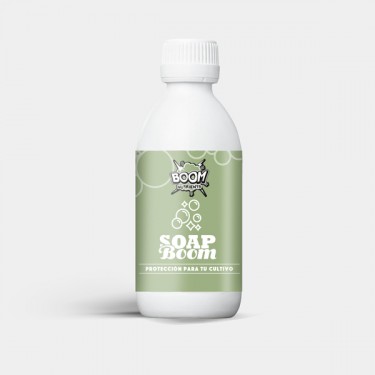
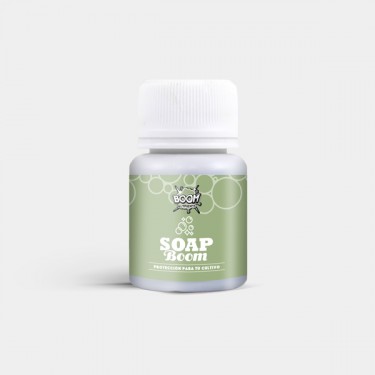
How to use Soap Boom by Boom Nutrients:
- Can be used via foliar spray, diluting with other products like repellents.
- Use in doses of 2-7 ml/L.
- For outdoor crops, use in 3 applications with an interval of about 20 days. Then use at a dose of 7 ml/L during the next 3 months, with a 1-month interval between applications.
Repellent Boom
To protect your crop from various insects and small mammals, both indoors and outdoors, you can use Repellent Boom by Boom Nutrients. This product contains capsaicin in liquid form, perfect for irritating and repelling various insect pests.
In this way, plants are protected, their resistance is increased, and the final yield of the harvest is much higher.
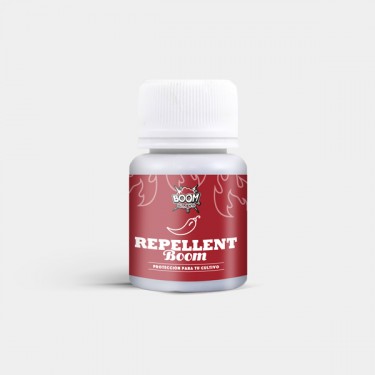
How to use Repellent Boom:
- Shake before use.
- For foliar application, use a dose of 1-2 ml/L on the plant, the pot, and the surroundings.
- For substrate application, use a dose of 2 ml/L.
Multiprotection Boom
Protecting crops from the most common pests and fungi is easy with Multiprotection Boom by Boom Nutrients. This product enhances the natural defenses of the plants it is used on, Therefore, thanks to its composition of nitrogen and free amino acids.
This product is perfect for combating biotic stress caused by other living organisms, such as insects or microorganisms.
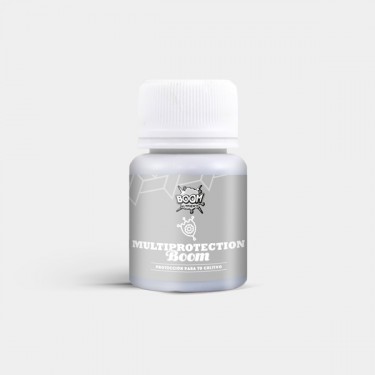
How to use Multiprotection Boom:
- As a preventive measure, dilute 2 ml/L and spray every 10 days.
- As a curative measure, dilute 3 ml/L.
- For indoor use, apply with the lights off and for outdoor use, apply at dusk.
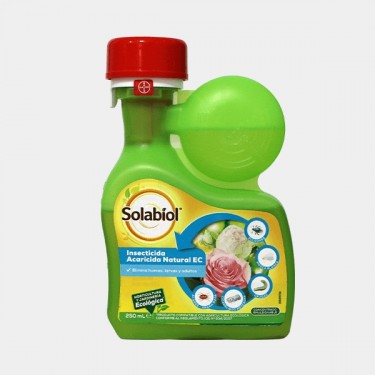
Solabiol Natural insecticide and acaricide
Solabiol by Bayer is a natural insecticide and acaricide, perfect for use against pests at the end of the harvest. This product is formulated with natural pyrethrins and rapeseed oil. It allows for easy pest eradication by simply acting through contact with the insect.
Recommended dose and how to use
- Use a dose of 10 ml/L, spraying on the plants.
- Use once a week until one week before harvest.
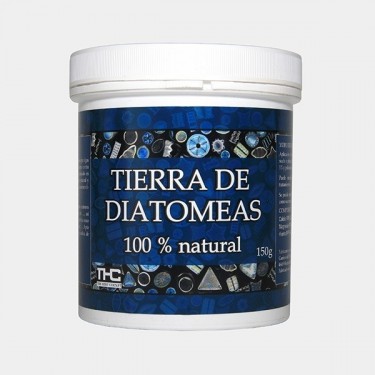
Diatomaceous Earth
Diatomaceous Earth is a completely organic and natural product, composed of fossilized microalgae, and it’s one of the best insecticides for aphids. These sedimentary remains have abrasive properties; when they come into contact with certain types of insects, they pierce the keratin layer of their exoskeleton, causing them to gradually dehydrate until they die.
One of the great advantages of diatomaceous earth is that it is 100% organic, ecological, and safe. It leaves no harmful residues on plants nor does it affect the quality of the final harvest.
How to Use
It can be applied as a powder, by sprinkling a certain amount of the product on the substrate around the plant. It can also be applied to the leaves. To do this, dilute 1 gram of diatomaceous earth in one liter of water. Once mixed, simply spray it onto the plants.
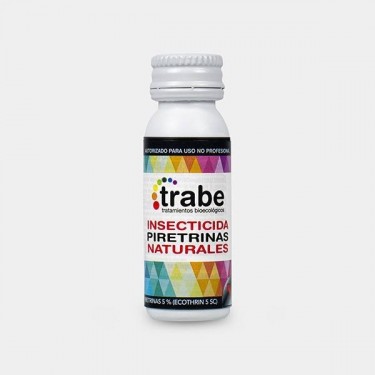
Natural Pyrethrin Insecticide
Trabe’s Natural Pyrethrin Insecticide is a highly effective product that will become your indispensable ally in growing cannabis and other plants. Its formula is based on natural pyrethrins that act naturally against the most common marijuana pests such as aphids, mealybugs, thrips, whiteflies, and spider mites. They work as a contact insecticide, meaning insects must come into direct contact with them to be affected.
It’s considered the best insecticide for aphids if you’re looking for a completely natural product.
How to Use
It can be used both preventively to avoid pest outbreaks, and curatively to eradicate existing infestations in your grow.
Mix the recommended dose of the product in water according to the manufacturer’s instructions and spray the solution onto the plants, ensuring you cover all surfaces, especially the underside of the leaves, where pests often hide.
By using the best insecticide for aphids, you can effectively prevent this pest or quickly eradicate it if… (The sentence was cut off in the original text, but this is the translation up to that point).
Frequently Asked Questions (FAQ) about the best aphid insecticide
What active ingredients should a good aphid insecticide have?
How do insecticides work against aphids?
Is every insecticide compatible with all garden plants?
How often should an aphid insecticide be applied?
Is it necessary to combine several insecticides?
Can I apply these products indoors and outdoors?
Products in this article



 Add as preferred source in Google