Personalized Attention +44 151 947 0713
 SHIPPING TO ALL

 9/10 Rating
 SALE TO MINORS PROHIBITED


Using a reliable indoor automatic watering system for growing marijuana is something hard to believe for growers who have spent years watering their plants by hand. We enjoy tending to each plant individually and providing just the right amount of water to ensure everything goes well. How can this be done automatically?
If you set up an indoor automatic watering system, it won’t be the same as caring for each plant individually. However, with a large number of plants, an automatic watering system becomes a practical solution. If you don’t have the time to tend to them or prefer a more hands-off approach, especially in a small space like a cabinet, this could be a good option.
How to use an indoor marijuana automatic watering system?
When growing in soil, you should activate the automatic watering system once you ensure the plants require a significant amount of water daily. For soil cultivation, it’s advisable that the indoor automatic watering system is used when the plants begin to flower.
You need to program the watering so that it only uses the necessary amount of water for each day. For example, watering a 10 cm plant with 2 liters of water is impractical as it would saturate the soil, cause root rot, and likely kill the plant.
If you want to reduce manual intervention further, consider growing in pots with coco, which dries faster than soil, or use Slabs, either in coco or rock wool. These types of growing mediums drain excess water very well, so even if you overwater, the medium dries quickly and roots won’t suffer.
In soil cultivation, it’s challenging to get the watering minutes and days right because overwatering can severely damage the roots and stress the plant. Hence, we recommend using a different growing medium if using an automatic watering system.
How to set up an indoor marijuana automatic watering system
- An indoor automatic watering system is straightforward to set up. Start with a reservoir that can hold at least 2 liters per plant. You can prepare it up to a week in advance, with a maximum usage of 1.5L per plant per 7 days, which is the duration that the water with mineral nutrients lasts in the reservoir.
- If you’re using organic fertilizers, in addition to clogging the micro-tubes more, you’ll need to mix the solution daily, as organic fertilizers don’t last more than 24 hours once dissolved in water.
- In the reservoir, you should install a submersible pump capable of maintaining high pressure in the tubing, ensuring that the same amount of water flows through each micro-tube. Install 16 mm tubing branches along your rows of plants.
- A grow table is also necessary to channel the water that drains from the pots to a reservoir for later disposal or directly to a drain if available. Never reuse water in these systems. Water draining from the pots will contain lost fertilizers, so it’s crucial to carefully manage watering minutes to avoid wasting money.
- The final step is to install an air pump with a diffuser stone, which will keep the nutrient-water mixture well oxygenated and constantly moving. This prevents the fertilizers from settling at the bottom and ensures they are always mixed and available when the pump is on.
Materials for indoor automatic watering in marijuana cultivation
Grow table
This gray grow table is a tray with slots to direct water to a specific point, where we can channel it using a tube to where needed or simply fill a reservoir placed directly under the table’s hole. It facilitates indoor automatic watering for cannabis.

Gray Flood table
It’s easy to clean after the cultivation is complete and works well for draining excess water since the excess water does not come into contact with the bottom of the pots, which minimizes waterlogging. Additionally, excess water from some plants can be absorbed by others, preventing salt buildup and related issues. There are different sizes available to fit your cultivation space or needs.
Water reservoirs for irrigation
There is a wide range of water reservoirs for automatic watering systems. It’s best to use a reservoir with a lid when using chemical or mineral fertilizers, as these can keep nutrients stable for a longer period.
Using a lidded reservoir helps preserve the water better and reduces the likelihood of pest infestations, and prevents mold growth caused by exposing water to light. Square reservoirs without lids can be placed directly under the table and inside a cabinet, saving space.
To choose the right model, calculate the required levels based on 2 liters per day for a week, ensuring you have enough prepared water.
Water pump
An automatic watering system for cannabis requires a submersible water pump capable of providing 1000L/H per square meter of cultivation, or approximately every 16 plants. This pump ensures that you don’t use more water than absorbed in a minute, preventing waste of nutrients and money. Excessive watering can also lead to plant death.
This pump should be cleaned after each cultivation to ensure proper function, as neglecting to do so may cause damage or clogging due to the salts used in the cultivation. It’s advisable to purchase a high-quality pump to ensure the success of your cultivation.
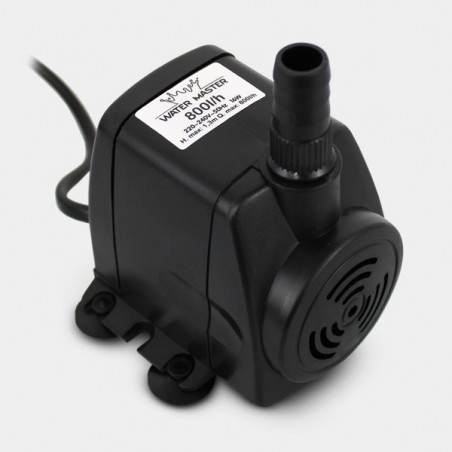
Submersible Water Master Pump
Watering tubing
A 25 mm flexible watering tube makes the installation straightforward. The main setup consists of a row of tubing between two rows of pots, with micro-tubes leading to each plant, placed on both sides of the tube. It’s best to use one row of tubes for every two plants.
Then, attach one micro-tube to each plant or one for every 6 plants, depending on the type of tube. You need to keep an eye on them, replacing or cleaning any that become clogged.
Drippers for irrigation
Micro-tubes are used to draw water from the main tube and direct it to the pot. Since they are so thin, the water doesn’t gush out, preventing holes in the soil and ensuring slow, even watering. Products like the Medusa 6-output dripper can be useful.
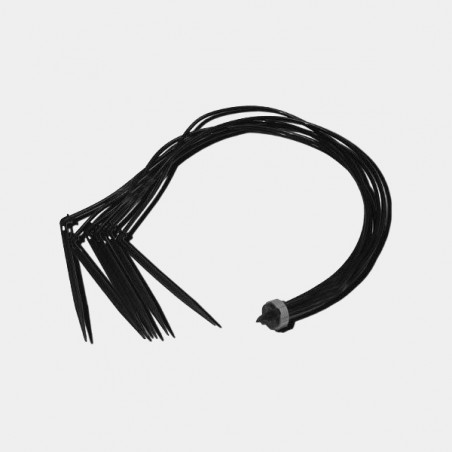
6-Outlet adjustable drip manifold
Create a hole with a dripper puncher and insert the nozzle into the hole made in the tube, directing it to the plant you want to water. You can secure it with wire to the soil to prevent it from moving once under pressure.
Rock wool or coco slabs
A slab is a cultivation system similar to hydroponics, where the growing medium is frequently moistened and dried, requiring continuous watering. This medium holds few nutrients, so they need to be added in almost every watering.
To set up your indoor automatic watering, place 5 slabs, like the Canna Coco Slab, on a grow table, make a cross with an X cut, and place the cutting in the center. You can fit between 3 and 5 plants, depending on whether you start from seeds or cuttings.

Canna Coco Slabs
Install a dripper for each plant, and only need to monitor how long it takes for a watering to dry to determine how many times to program the watering per day. Water just enough to moisten the slabs without losing nutrients.
Air pump
An air pump, like the Neptune Hydroponics Air Pump will provide the necessary oxygen to your water for an indoor automatic watering system. It keeps the water in constant motion, preventing nutrients from settling at the bottom and ensuring they are always well mixed and dissolved, available when the watering pump is turned on. Use a diffuser stone to create smaller oxygen particles that mix better with the water.

Neptune Hydroponics Air Pump
With all these materials, you can easily set up an indoor automatic watering system for your plants, adding convenience to your marijuana cultivation. Always remember to keep everything clean to prevent micro-tubes from clogging or algae from forming in the reservoir.