 Personalized Attention +44 151 947 0713
 SHIPPING TO ALL

 9/10 Rating
 SALE TO MINORS PROHIBITED
 Iniciar sesión
 0
0

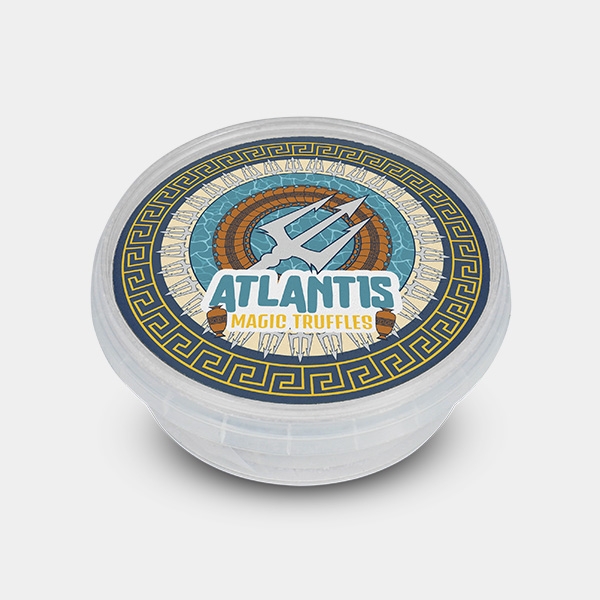
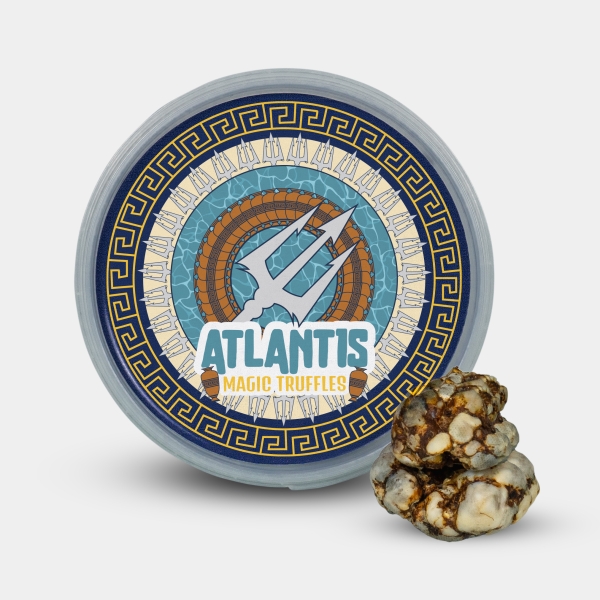
Atlantis truffles, also known as Psilocybe Atlantis, offer a medium-high potency with unique visual and introspective effects. A resistant, fresh variety, perfect for those looking to deepen their mycological studies and the observation of magic sclerotia.
Subscribe and we'll let you know when we have stock.
 1
loyalty point.
Your cart will total 1
loyalty point
that can be converted into a voucher of
0.20€
1
loyalty point.
Your cart will total 1
loyalty point
that can be converted into a voucher of
0.20€

Description
Atlantis truffles are a variety of sclerotia of medium-high intensity that stands out for offering a highly appreciated balance within the catalog of mycological truffles. Their positioning usually places them between milder varieties and references of higher intensity, which makes them a well-known option within their category.
Externally, the Atlantis truffle has a compact appearance, brown tones, and a firm texture, features that reflect the density of its underground structure. This visual and physical consistency is part of its identity and its value within the ornamental and collection field.
It should be remembered that Atlantis truffles do not correspond to a mushroom in its usual commercial form, but to a sclerotium, that is, an underground structure that the fungus develops as a nutrient reserve. This compact and resistant formation is one of the keys that define this variety.
The Atlantis variety is usually located at a medium-high intensity level, which places it in an intermediate position among the different sclerotia references available on the market.
Compared to other varieties, it is usually considered above Mexicana, known for a milder profile, and below options such as Hollandia or Ragnarok, which are usually associated with higher intensity. This balance has contributed to consolidating the presence of Atlantis mushrooms and Atlantis truffles as a stable reference within their segment.
Among its most recognizable characteristics are:
These qualities make Atlantis mushrooms or Atlantis truffles easily identifiable within the comparative study of mycological varieties.
Atlantis truffles naturally contain compounds such as psilocybin and psilocin, also present in other varieties related to the development of sclerotia.
In general, psilocybin is a compound that, after certain metabolic processes, is transformed into psilocin. For informational purposes, both compounds are subject to study due to their interaction with certain receptors in the body, especially those linked to serotonin.
From a biological and mycological perspective, this composition is one of the aspects that arouses the most interest in the analysis of the Atlantis truffle. In any case, this product is marketed exclusively for ornamental, collection, and mycological study purposes.
Each package of Atlantis truffles includes:
Thanks to this type of presentation, the Atlantis truffle better preserves its physical characteristics during the recommended storage period.
To maintain the freshness of Atlantis truffles, it is important to follow proper preservation guidelines:
Proper preservation helps to better preserve the texture, firmness, and appearance of the Atlantis variety.
Atlantis truffles, also known as Atlantis truffles, are associated with mycological development linked to the United States. Their discovery has been linked to the state of Georgia, which is why in some contexts this variety has also been linked to denominations close to Tampanensis Georgia.
For a time, this variety was confusingly related to other mycological references, but its development and classification have subsequently been linked to Psilocybe tampanensis, a species known for its ability to form underground sclerotia.
Over time, the Atlantis variety has established itself as a recognizable reference within the fresh truffle market due to its balanced profile and mycological interest.
From a biological point of view, the Atlantis truffle is a sclerotium, not the classic fruiting body of a mushroom. The sclerotium is a compact and hardened structure that the fungus forms underground as a reserve and survival system.
Its origin is linked to the development of the mycelium, the vegetative network of the fungus, which under certain environmental conditions generates these dense and resistant underground formations.
Among its most outstanding mycological features are:
These characteristics help to better understand what differentiates Atlantis truffles from other better-known fungal structures
Atlantis truffles are sclerotia, that is, compact underground structures that the fungus forms as a nutrient reserve. They are not a mushroom in their usual commercial form.
The Atlantis variety is usually considered of medium-high intensity, placing it at an intermediate point between milder options like Mexicana and more intense ones like Hollandia or Ragnarok.
The package includes 15 grams of fresh product, vacuum-packed and presented in an airtight container to promote its preservation.
They should be kept refrigerated between 2 and 4 °C. Unopened, they usually keep for approximately one week; once opened, their storage should be limited to a few days. For longer preservation, drying can be used.
No. Atlantis mushrooms or Atlantis truffles are marketed solely for ornamental use, collection, and mycological study. They are not suitable for human consumption.
You might also like