Personalized attention +34 96 206 62 98
 Free shipping to Iberian Peninsula from 30€
 9/10 Rating
 Discreet shipping


 Why you should pot up your cannabis plants – by pot up we mean transplant them to bigger pots rather than planting them straight into a large one. Transplanting to bigger pots has a lot of advantages for your plants. Hopefully this little article will help you understand why potting up is so necessary for a successful grow.
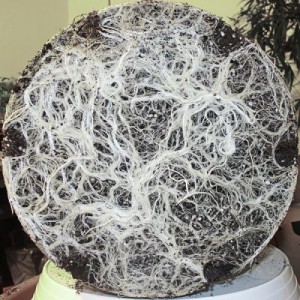
Cannabis plants are tropical plants that are used to growing out deep roots to get as much water and nutrients as possible. When planted in flowerpots, they obviously have a limit as to how deep they can go with the roots, as well as a limit as to how wide the roots can grow – we all know that roots are reflected in the size and shape of the plant, so if there’s a limit to how deep and wide the roots can grow, there will be a limit to how tall and wide the plant can grow.
The roots try and expand as much as they possibly can, so they go as deep as they possibly can and once they reach the bottom of the flowerpot, they get as wide as they can and begin going back up the walls of the flowerpot. Once they fill up all of these areas they want to keep growing, as the oldest roots stop being able to absorb anything and they turn into simple channels through which water can flow.
Cannabis plants are generally transplanted only during the growth period, as they don’t need any more room to grow their roots during the flowering period – the last transplant you should do is around the time your plant is about to begin flowering so that it can give the roots that last shoot of 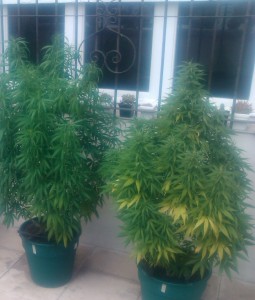 energy. If you’re growing indoors, this is just before you flip the light period and if you’re growing outdoors in the Northern hemisphere then you should do it just as summer starts, around the 24th of July.
If you’re planting straight into the ground then you obviously won’t need to transplant as the roots will have free reign to grow as much as they can. If you’re planting in flowerpots and you put your little saplings straight into a giant flowerpot then the roots will grow down to the bottom and the edges of the flowerpot, but the middle of the substrate will end up empty of any roots and will most likely go bad after a couple of weeks – this is because when you water, the water itself will stay in the substrate for much longer due to the lack of roots to absorb it. This humidity ruins the roots at the sides and your plants will get stressed and begin dropping leaves.
If you’re growing in a 3L pot, transplant it to a 7L pot, then a 11L pot, then 30L and lastly to a 50L pot (depending on how big you want to grow the plant, of course). This will cause your plant to form a dense root system that will occupy practically all of the substrate, making for an enormous and extremely healthy plant. If you want to know when to transplant you can check out our article on the subject.
If you start off with a 50L flowerpot, everything will work out fine during the beginning, but once the plant grows the roots down to the bottom it will begin losing leaves and when it comes time to flower it will hardly be able to flower properly due to having lost so many leaves.
 In indoor grows a similar thing happens – a grow in which you plant the seed straight into a 7L flowerpot isn’t the same as one in which you start off with 3L and pot up for flowering into a 7L pot. If you’re growing in a 3L flowerpot and transplant to 7L for the flowering period they will be much healthier if you had just stuck with the 7L from the start – they’ll absorb more nutrients and you’ll most likely get much more yield of much better quality weed.
If you’re growing autoflowering strains, however, then it’s a different story; both indoors and outdoors, autoflowering plants need to go straight into their designated 7L or 11L pot depending on if they’re 2 month or 3 month strains.
If you have any questions or suggestions, go ahead and leave a comment down below and our team of experts will get back to you as soon as possible.
Author: Javier Chinesta
Translation: Ciara Murphy