Personalized Attention +44 151 947 0713
 SHIPPING TO ALL

 9/10 Rating
 SALE TO MINORS PROHIBITED

Mushrooms are part of a fascinating world that combines biology, home cultivation, gastronomy, mycology, and, in some cases, traditional uses linked to psychoactive species. While we often focus on their shape, color, or flavor, the true heart of their reproduction lies in something tiny: mushroom spores. Understanding what they are, how they work, and how to use them is essential for anyone interested in cultivation, harvesting, or studying fungi.
What are mushroom spores
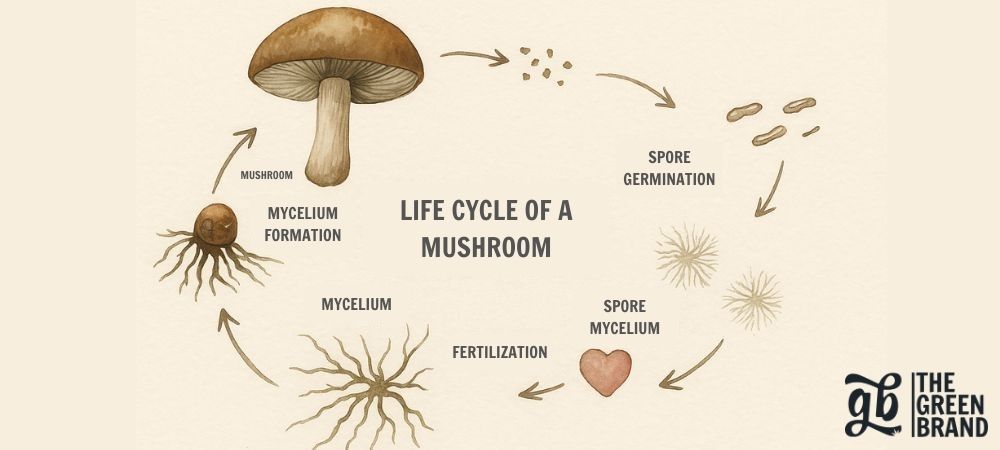
Spores are the “seeds” of the fungal kingdom, although they function differently from plant seeds. A mushroom spore is a microscopic reproductive cell created by the fungus to disperse and colonize new areas. When humidity, temperature, and nutrient conditions are favorable, the spore germinates and forms mycelium, the fundamental structure of any fungus.
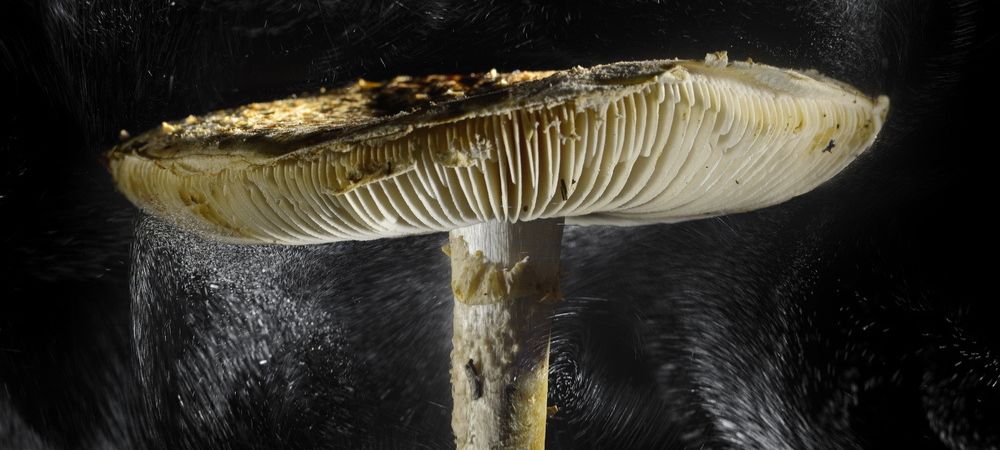
Each mushroom can contain millions of spores, which are released into the air in highly varied patterns depending on the species. Some release them through internal pressure, others simply let them fall like a fine powder, and some species rely on wind, rain, or animals to disperse them.
Most strikingly, spores are extremely resilient. They can survive long periods without water or nutrients, withstand hostile temperatures, and even resist prolonged exposure to harsh environmental conditions.
Why spores are important in mushroom cultivation
Anyone looking to learn how to cultivate mushrooms from spores must understand that this is the most delicate part of the process, as working with spores requires clean, sterile conditions and patience. However, it is also one of the most exciting and versatile methods because it allows starting a culture from scratch, preserving genetics, or studying specific traits of a species.
Spores offer three major advantages:
- Genetic preservation: Spores last for a very long time, making them ideal for storing strains or maintaining spore banks.
- Diversity and selection: Unlike kits or colonized grains, spores do not produce clones. This allows for variability and selective breeding possibilities.
- Compatibility with many species: Some mushrooms can only be effectively cultivated from spores, especially exotic or wild species.
Besides these advantages, spores are essential for the scientific study of mushrooms, as they allow researchers to identify the genus or species and all associated characteristics.
Step-by-step guide to collecting mushroom spores
Learning how to collect mushroom spores is perhaps the most enjoyable part of the process because it allows you to obtain your own reproductive “powder” for future cultivation.
The standard procedure is called a spore print:
- Choose a mature mushroom: The mushroom should be fully developed with an open cap. This is when it releases the most spores.
- Separate the cap from the stem: Use a clean knife and cut carefully to avoid contamination.
- Place the cap on paper: Depending on the spore color, use white or black paper. Place the cap with the gills facing down.
- Cover the cap: Place a cup or bowl over the cap. This prevents airflow and maintains a controlled environment.
- Wait 12 to 24 hours: During this time, spores will fall onto the paper, creating a visible print.
- Collect and store the spores: Lift the cap to see a perfect pattern reflecting the gills of the mushroom. Spores can be stored in sterile envelopes, culture tubes, or special syringes.
This method is used for culinary species such as button or oyster mushrooms, as well as for those studying spores of magic mushrooms from a purely mycological or academic perspective.
How to grow mushrooms from spores: Basic guide
Growing mushrooms from spores is more complex than using pre-colonized mycelium, but it is also far more precise and can produce better long-term results.
Below is a simplified overview of how to grow mushrooms from spores:
1. Spore Hydration
Spores should be suspended in sterile water. This is done by filling a sterile syringe with boiled and cooled water and adding the spores from the spore print.
2. Inoculation
With the spore syringe ready, the liquid is introduced into a prepared substrate. The substrate can be:
- Sterilized grains (rye, wheat, millet).
- Coconut fiber substrate with vermiculite.
- Commercially prepared mycelium blocks.
3. Incubation
The inoculated substrate is kept in a warm, dark environment (22–26 °C depending on species). Within days or weeks, the spores germinate and form mycelium, gradually colonizing the entire nutrient material.
4. Fruiting
Once fully colonized, the substrate is moved to a high-humidity environment with fresh air and gentle light. Here, the mycelium produces visible mushrooms.
This process works for many edible, medicinal, and gourmet species. It is also used to study spores of magic mushrooms in laboratories, universities, or legal mycology projects, where their genetics, germination, and behavior are analyzed.
In Spain and other European countries, growing psychoactive mushrooms is illegal, but mycology as a science allows for studying spores for educational or scientific purposes. Always check local laws before attempting cultivation.
How mushroom spores behave in nature
In natural environments, spore release is a continuous and remarkably efficient process. A single fruiting body can release billions of spores in just a few hours. These spores travel by wind, settle on logs, meadows, tree roots, or moist surfaces, and germinate if conditions are suitable.
Spores germinate into hyphae, microscopic filaments that seek to join with compatible hyphae to form mycelium. This mycelium absorbs nutrients, creates underground networks, and can even communicate chemically with nearby plants.
Differences between spores, mycelium, and grow kits
Many beginners get confused by these terms, so it’s important to clarify:
- Spores: Microscopic reproductive cells, equivalent to “seeds.”
- Mycelium: The living structure that develops from spore germination. It is the true fungus.
- Grow kits: Containers already colonized by mycelium and ready to fruit.
Spores are the purest and most versatile way to start a culture but require careful handling and sterile techniques.
Spore colors and shapes
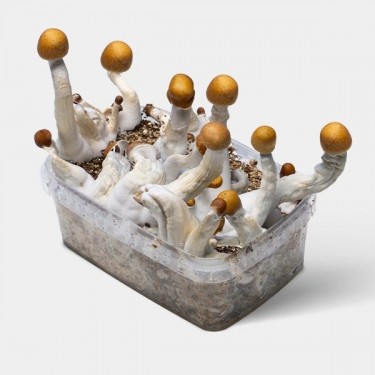
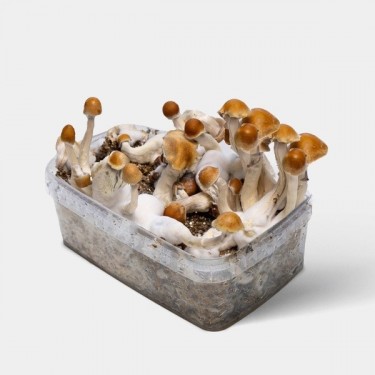
The color of these microscopic reproductive cells is a key tool for identifying fungi. Some of the most common ranges include:
- Chocolate brown (Agaricus).
- White (Pleurotus, Lentinula).
- Cream or pale yellow.
- Black (Coprinus and others).
- Lavender or purple (Psilocybe and other psychoactive species).
This explains why spore prints are made on white, black, or even glass surfaces.
Magic mushroom spores: What you need to know
Interest in magic mushroom spores has increased in recent years due to international studies on psilocybin-assisted psychotherapy. Psilocybe spp. spores do not contain psilocybin, so possession is legal in some countries, although germination may not be.
Informationally, these spores behave like those of any other mushroom: they are released from the cap, form spore prints, and germinate under suitable conditions. Their color is usually dark purple or lilac-brown.
Anyone studying these spores from a mycological perspective should always check local laws and operate within a legal framework.
Understanding what mushroom spores are opens a vast door to the world of mycology. From identifying them in natural environments to learning how to collect mushroom spores and how to grow mushrooms from spores, this microscopic powder forms the foundation of the entire fungal life cycle.
Whether for culinary, scientific, or species conservation purposes, these microscopic reproductive cells are a powerful and fascinating tool that connects the cultivator to the very origin of the fungus. With patience, hygiene, and proper techniques, anyone can learn to work with them and enjoy one of nature’s most intriguing biological processes.




 Add as preferred source in Google