 Personalized Attention +44 151 947 0713
 SHIPPING TO ALL


 9/10 Rating
 SALE TO MINORS PROHIBITED


Marijuana bonsai, similar to traditional ones, are a great way to optimize harvests. To learn more about this type of cultivation and strategy, we have created this dedicated article. These plants provide growers with a wonderful source of cuttings, without taking up too much space or requiring many resources.
What is marijuana bonsai?
Bonsai is an ancient Japanese and Chinese technique that involves growing miniature trees, maintaining their natural form but reducing their size. Applying this concept to marijuana results in small and manageable plants, ideal for those with limited space or simply for those who enjoy the aesthetics of bonsai.
Benefits of marijuana bonsai cultivation
Cultivating marijuana bonsais has several advantages that make it attractive for growers. Some of them are:
- Space-saving: perfect for those who need to cultivate in smaller spaces such as small apartments or tight spaces.
- Require less care and maintenance. Due to their smaller size, they need less water and nutrients. Also, with fewer leaves, they do not require frequent pruning.
These features not only save time, but also money. Furthermore, being easier to care for, it is simpler to identify and solve problems before they seriously affect the plant.
Choose the right varieties for your marijuana bonsai
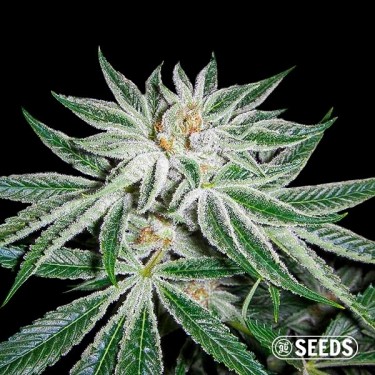

Recommended varieties
To create a successful marijuana bonsai, it’s crucial to carefully select varieties that exhibit desirable characteristics. Moreover, Critical Kush and White Widow are two excellent options for this purpose. These varieties are renowned not only for their robustness and resistance but also for their ability to stay compact and manageable, which is essential in bonsai cultivation.
Selection of the mother plant
The selection of a healthy and vigorous mother plant is critical to the success of the bonsai. A strong mother plant will provide cuttings that have a greater chance of developing into healthy bonsai trees. So, make sure that the mother plant is free from pests and diseases and is well-nourished.

Choose and prepare the pot to use
Choosing the right pot is another vital aspect in the cultivation of a marijuana bonsai. Some points to consider are:
- Size: the pot should be large enough to allow root growth but also to maintain the compact size of the bonsai.
- Drainage: good drainage is essential to prevent waterlogging and root rot. Look for pots with holes in the base or consider adding a layer of gravel at the bottom.
- Material: ceramic or clay pots are usually preferred for their ability to regulate moisture, although plastic pots can also be used if they include enough drainage holes.
Once you have the pot, some growers prefer to make holes around the perimeter of the pot either with a thread or string, so the holes must be the right size.
Prepare the cutting and plant it
- Choose a healthy cutting: look for vigorous branches free from diseases.
- Make the proper cut: using sterilized scissors, cut a cutting about 10 cm long.
- Prepare the cutting: remove the lower leaves and dip the cut in rooting hormone before planting it.
- Branch training.
- Wire guidance: use soft wires to shape the bonsai.
- Bending techniques: carefully bend the branches to avoid breaking them, adjusting gradually.
- Growth control: regularly prune branches that do not align with the desired shape.
Pruning
As it grows, the branches will need to be pruned to achieve the typical bonsai shape. Initially, pruning will be carried out to remove unnecessary branches and define the basic structure. Subsequently, the branches and leaves are trimmed periodically to maintain size and shape.
General care
- Lighting: place the bonsai in a location with abundant indirect light, preferably near a window.
- Maintain controlled watering with moist but not soaked substrate.
- Monitor watering: keep the substrate moist but not soaked. Allow the top layer to dry before watering again.
- Use specific fertilizers for marijuana, applying them every two weeks during the active growth phase.
- Keep track of pests and diseases.
Special considerations for successful transplantation of marijuana bonsai
Some points to consider for a good transplant are as follows:

Optimal time for transplantation
Choosing the right time to perform the transplant is essential. Further, it is recommended to do it during spring when the plant is entering its active growth phase. This facilitates better adaptation of the plant to its new substrate and pot.
Choice of suitable substrate and pot size
A good substrate should be lightweight, well aerated, and have excellent drainage. Mixtures that include perlite, vermiculite, and bonsai soil are ideal. Besides, the new pot should be slightly larger than the previous one to provide room for root growth without leaving too much empty space.
Recovery period
After transplantation, it is vital to provide an adequate recovery period. Techniques such as ‘Kan’na’ (basic post-transplant care) and ‘Misho’ (creation of an optimal environment) are essential.
- Moderate watering: avoiding excessive initial watering is necessary to prevent root stress.
- Gentle lighting: keeping the plant in a place with indirect light for a few days can help reduce transplant shock.
- Light fertilization: wait at least two weeks before resuming any regular fertilization routine.
By allowing this recovery time, you ensure that your marijuana bonsai remains healthy and continues to thrive. Implementing these practices not only enhances the visual appeal of your bonsai but also ensures its genetic purity and robustness.




 Add as preferred source in Google


