Personalized Attention +44 151 947 0713
 SHIPPING TO ALL

 9/10 Rating
 SALE TO MINORS PROHIBITED


Rooting cuttings in hydrogen peroxide is an old home trick to promote root growth and create new clones of our favorite plant. Below, we explain everything about this technique.
Advantages of propagation by cuttings
Propagation through cuttings is an efficient way to quickly multiply large quantities of a plant species. Compared to seeds, cuttings begin developing at the size of a seedling, which means that the harvest will be faster. Additionally, you can ensure that the plant will be female, which is crucial for cannabis cultivation.
Plants grown from seeds are often stronger and more resilient, producing abundant harvests more easily. This is because the primary root anchors itself deep in the soil, providing stability. However, with proper care, a cutting can develop into a healthy, mature plant.

How to make a cutting
When making cuttings, you are creating an exact clone of a specific strain, meaning you will reproduce all its characteristics. Therefore, it’s important to choose a healthy mother plant that has grown quickly, looks robust, and produces good yields.
All plants can be propagated through cuttings, but the cutting must first develop roots, which is not always easy. Each plant species requires specific cutting techniques to ensure success. For cannabis, you need to cut the branch (using sterilized scissors or a knife) at a 45-degree angle below the lowest node. The branch should have at least two nodes and be between 10 and 15 cm in length.
How to root cuttings
The next step is to wait for the cutting to develop roots. To assist this process, there are two common methods: rooting in water or in soil.

Rooting cuttings in water
Rooting cuttings in water is an ancient and popular technique known for its effectiveness. The process involves placing the cutting in a container of water so that at least one node is submerged.
It’s best to use a clear glass container to observe root development. Use purified water and change it every 48 hours to prevent bacterial growth. It’s recommended to cover the container with a transparent plastic lid to maintain humidity.
Root cuttings in hydrogen peroxide
Hydrogen peroxide (H2O2) is a product that can greatly benefit plants. It is non-toxic and actually enhances nutrient absorption, keeps roots healthy, acts as a pesticide, and promotes seed germination. In this case, we use it to root cuttings. Follow the same steps as the previous method but add two drops of 3% hydrogen peroxide (the kind commonly found in pharmacies) to the water.
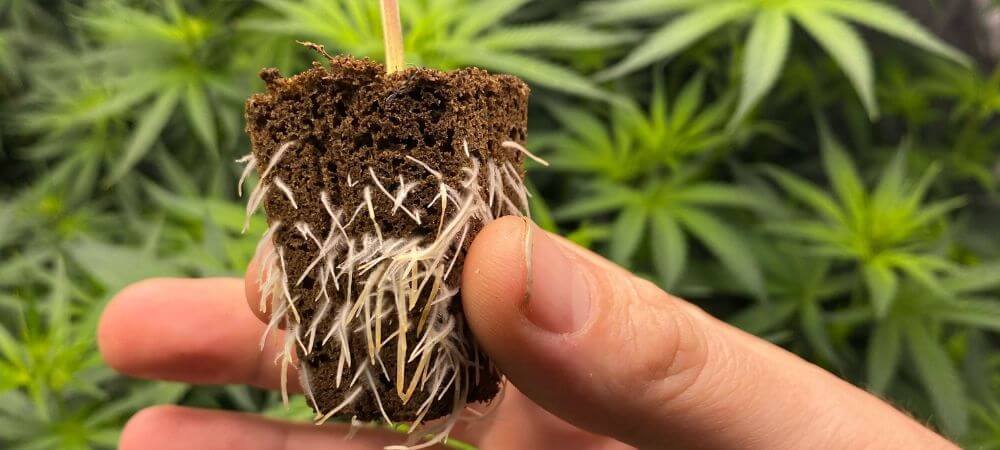
The time required for cuttings to develop roots varies depending on the plant variety and environmental conditions, but roots should begin appearing within 15 days. If no roots have developed after that time, something may have gone wrong. If you’re wondering “Why aren’t my cuttings rooting?” check out our post on common mistakes.
Root cuttings in soil
You can also root cuttings in soil. If you choose this method, start by preparing soil in pots. It’s recommended to use transparent containers to observe the process.
The substrate should be a light mix with plenty of perlite, between 25-50% of the total volume. Water the soil thoroughly and let it drain. Dip the cutting in a rooting hormone and plant it in the soil, pressing gently to secure the stem. Place the cutting in a propagator or cover it with plastic to create a humid environment. Occasionally spray the cutting with water to maintain humidity. Once the roots are large enough, transplant the cutting to its final pot.
How to make homemade rooting hormone
There are many commercial rooting hormone products available, known as cloning gels or rooting stimulators, such as Clonex or Cloner Boom. These are highly effective at stimulating root development in cuttings.
To promote root growth, you need hormones called auxins. These are abundant in germinated grains and legumes, making it easy to create a homemade rooting solution from lentils, soybeans, chickpeas, quinoa, etc.
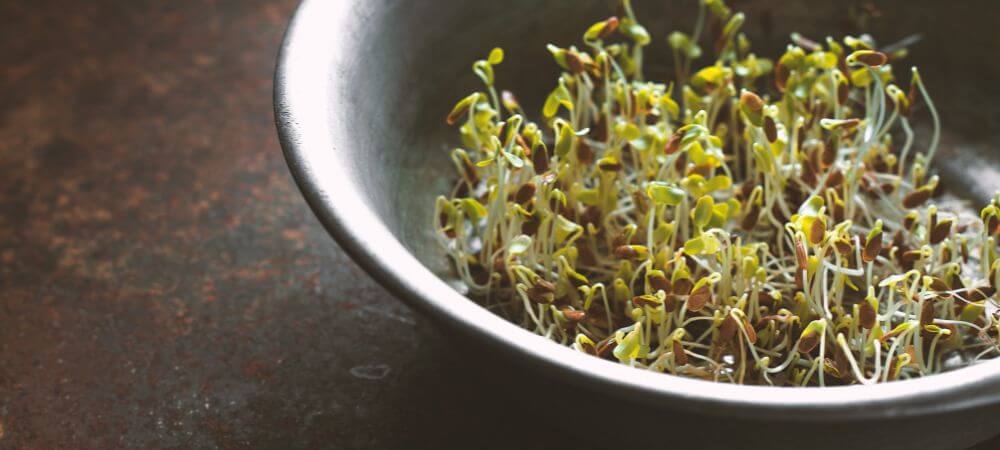
To germinate legumes, place them in a flat container where they can spread without piling up. Add some water and cover with a lid or cloth. Keep the container moist and away from light. In 3 to 4 days, the legumes should sprout. Blend the sprouts with the water they germinated in and strain to separate the liquid from the pulp.
To use this homemade hormone, you can soak the cutting for an hour to fully absorb the solution. Alternatively, dilute the mixture with more water and use it to water your plants.
In conclusion, rooting cuttings in hydrogen peroxide is one of several tricks you can use to stimulate root development and successfully clone your favorite plants.