 Personalized Attention +44 151 947 0713
 SHIPPING TO ALL

 9/10 Rating
 SALE TO MINORS PROHIBITED


Today, we’re sharing a quick and simple recipe: cannabis butter or cannabutter. This kitchen essential is perfect for infusing cannabis into any dish. Whether for medicinal or recreational use, it offers a great alternative to smoking or vaping, adding a special touch to your meals and enhancing your culinary experience.
What is cannabis butter?

Indoor GB CBD 'The Lemon Tree' Flowers

Atlantis Truffles
CBD GB Charas Hash
Cannabutter is a product obtained by infusing butter with cannabis, utilizing its psychoactive compound, tetrahydrocannabinol (THC), and other cannabinoids such as cannabidiol (CBD). It is mainly used in the preparation of cannabis-infused edibles, such as cannabis cookies, brownies, or any other recipe that requires butter as an ingredient.
What is cannabutter used for?
Cannabis butter has several uses:
- In recreational use, it is used to create edibles with psychoactive effects, allowing users to enjoy the benefits of cannabis without the need to smoke it.
- Additionally, in medicinal use, it is used for therapeutic purposes to treat conditions such as chronic pain, anxiety, insomnia problems, or lack of appetite, taking advantage of the properties of CBD or THC. The effects vary depending on the amount of cannabis used and the ratio of its compounds and can last longer than smoking cannabis.
What is decarboxylation?
Decarboxylation of cannabis is a key process to activate the psychoactive compounds of cannabis, such as tetrahydrocannabinol (THC) and cannabidiol (CBD), which in their natural state exist as acids (THCA and CBDA) and do not produce the desired effects.
To perform decarboxylation, cannabis must be heated to a specific temperature for a certain amount of time. The most common process involves grinding the cannabis into small pieces and spreading it on a baking tray.
Then, it is baked at a temperature between 105°C and 120°C (220°F to 250°F) for approximately 30 to 40 minutes, stirring halfway through to ensure even heat distribution. This process removes a carboxyl group (CO2) from the cannabinoids, activating their psychoactive and therapeutic effects. Indeed, decarboxylation is essential if you plan to use cannabis in edibles or to make products like cannabis butter.
Safety considerations when using cannabis butter
Consuming cannabis-infused edibles requires caution, as their effects can be much more intense and long-lasting than other consumption methods, such as smoking or vaporizing. One of the main safety considerations is dosage.
Edibles can take between 30 minutes to 2 hours to take effect, which may lead some people to consume more than necessary, thinking it is not working. This can lead to adverse effects such as dizziness, paranoia, anxiety, and, in some cases, severe intoxication.
Effects of cannabis butter
It is essential to start with small doses, especially if you are a beginner, and wait at least two hours before considering consuming more. Additionally, edibles can affect each person differently, depending on factors such as metabolism, tolerance, and body weight. Regarding the effects, consuming edibles can cause:
- Relaxation sensations.
- Euphoria.
- Increased appetite.
- Sedative effects.
However, since edibles go through the digestive system, THC is metabolized in the liver and converted into 11-hydroxy-THC, a more potent compound, which can make the effects last for several hours (up to 8 hours or more). Therefore, it is crucial to consider the prolonged duration of the effects and plan for a safe environment, free from activities requiring concentration or coordination, such as driving.
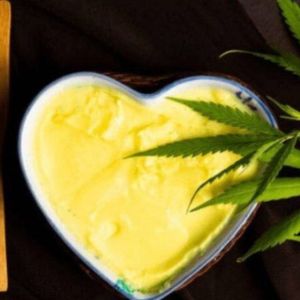
Cannabutter recipe
Utensils
- 1 Blender
- 2 Saucepans
- 1 Wooden spoon
- 2 Strainers
- 3 Plastic containers
Ingredients
- 250 g Butter
- 50 ml Water
- 15 g Resin-coated leaves or 5g Buds
Instructions
- Instructions
- First, grind the cannabis to improve its reaction when mixed with the butter. A blender can be used for this step. Then, boil the plant material in water over very low heat for 20 minutes. This process helps remove the chlorophyll taste and most impurities, making it ready for mixing with butter.
- After removing impurities from the plant material, the next step is to melt the butter using a double boiler on the lowest heat, making sure it never comes to a boil. (We suggest using butter, as our tests comparing butter and margarine showed a significant difference in results.)
- When the butter is completely melted, add the plant material. Keep it over very low heat, stirring constantly. Gradually, the butter will take on a greener color.
- Continue stirring for about 30 minutes until the mixture becomes uniform and homogeneous.
- Once you are sure that the cannabis has released all its essence and the mixture is smooth and green, it’s time to strain the butter into a container to remove any leftover plant matter.
- Let the butter cool at room temperature for a couple of hours before refrigerating it for 24 hours. This allows a solid layer of butter to form on top of the water, similar in texture to store-bought butter but with a greener color. The next day, carefully remove the cannabis butter layer from the container.
- Once finished, it can be stored in the refrigerator for about two weeks before it spoils. For longer storage, freeze it and use it as needed. Besides, it’s advisable to cut it into portions before freezing to make it easier to use small amounts without thawing the entire batch.







3 replies on “Cannabutter Recipe”
The backbone of so many delicious edibles, this cannabutter is spot on
A must-have recipe for anyone looking to bake with cannabis!
Easy to make and incredibly versatile for all your cooking needs