Personalized Attention +44 151 947 0713
 SHIPPING TO ALL

 9/10 Rating
 SALE TO MINORS PROHIBITED


Calcium is an essential nutrient for the optimal growth of marijuana plants. It not only strengthens cell walls, but also plays a crucial role in cell division and the regulation of various metabolic processes. In fact, without sufficient calcium or an excess of it, plants can exhibit poor development and become more susceptible to diseases. Consequently, to learn how to properly provide for plants, we have created this article.
Calcium deficiencies in plants
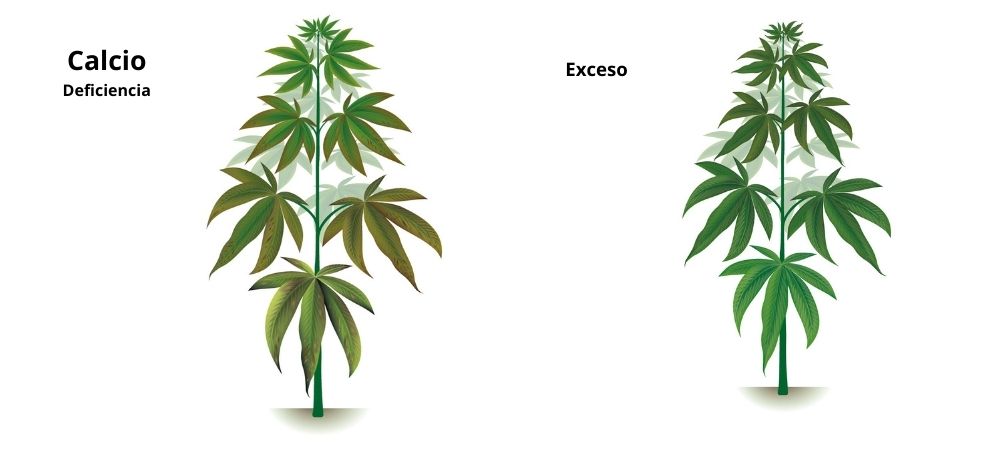
Calcium deficiency can be a serious problem for plants, manifesting through various symptoms and negative effects:
- Leaf diseases: new leaves may show burnt tips or brown edges, and they may even wrinkle or deform.
- Underdeveloped root system: as the roots can become weak and less efficient in water and nutrient absorption.
- Structural fragility: cell walls weaken, making plants more vulnerable to diseases and pests.
- Lower fruit production, which can be scarce or of poor quality.
Notably, maintaining proper levels of calcium is crucial to avoid these problems and ensure healthy growth. Indeed, an excess of calcium can also cause issues by hindering the proper assimilation of other compounds.
How to supply calcium to the soil
In order to effectively supply calcium to the soil and keep the plants healthy, there are several methods:
Natural methods to supply calcium to the soil
Some of the ways to supply it to the cultivation soil is by using eggshells, as they are mostly composed of calcium carbonate, which is a crucial element for proper plant development. To use them correctly, follow these steps:
- Save the eggshells in a container until you have a considerable amount.
- Make sure to wash the shells thoroughly to remove any residue of egg white or yolk. Then, let them dry completely.
- Crush the shells, using a mortar and pestle, a blender, or any tool available to crush them into a fine powder.
- Sprinkle the powder around the base of the plants or mix it directly into the soil.
Another effective method is incorporating the shells into composting:
- Prepare the compost: add the crushed eggshells to a compost pile along with other organic waste such as fruit and vegetable scraps.
- Mix well: make sure the shells are evenly distributed in the compost.
- Let it decompose over time, the shells will break down and release calcium into the compost, which will then be absorbed by the plants when mature compost is used.
Further, using eco-friendly fertilizers like eggshells not only provides calcium, but also promotes sustainable practices during cultivation.

Calcium-rich chemical fertilizers
Chemical fertilizers are an effective option for providing calcium quickly and in a controlled manner to plants. One of the most common ones is calcium nitrate, because it not only provides calcium but also nitrogen, essential for growth.
Advantages:
- Quick action: Chemical fertilizers act faster than organic sources.
- Precise control: The exact amount of nutrients can be measured and adjusted.
- Availability: They are easy to find in specialized stores.
Balancing other nutrients for optimal absorption
Calcium does not work alone in the plant world; its relationship with other nutrients such as magnesium and potassium is crucial for the health of plants. These three elements play complementary roles in the process of nutrient absorption and transport. These elements are:
- Magnesium: Essential for photosynthesis, as it is a central component in chlorophyll.
- Potassium: Helps regulate water within cells and improves resistance to diseases.
To maintain the proper balance, you should:
- Regularly perform soil analysis: Knowing the current levels of each nutrient is essential for adjusting the proportions.
- Use balanced fertilizers: Consider options that include calcium, magnesium, and potassium in their formulations.
- Avoid excessive nutrients: Too much of one nutrient can inhibit the absorption of another. Proper balance ensures that your plants make the most of each nutrient, promoting robust and healthy growth.
Soil pH and calcium availability
The soil pH is key for the roots to effectively absorb calcium. If the pH is not within the appropriate range, plants may have difficulty obtaining this important nutrient. Calcium is most available to plants when the soil pH is between 6.0 and 7.5.
Besides, if the pH is above or below this range, it is possible for calcium to become trapped in the soil and not be properly absorbed. To prevent this from happening, the following steps should be taken:
- Monitor the pH to determine if adjustment is necessary.
- Use organic matter to stabilize and adjust the pH and achieve optimal growth.
- Conduct regular tests to ensure that the pH is within the optimal range, adjusting nutrients to avoid problems such as excess or deficiency.
Further, maintaining a balanced pH is essential for a healthy and productive soil cultivation, ensuring that plants receive all the necessary calcium for their optimal development.
Best fertilizers to provide this nutrient to crops
Among the available marijuana fertilizers, the following are worth mentioning:
Calmag by Boom Nutrients

Calmag Boom by Boom Nutrients is a liquid nutritional supplement based on nitrogen, calcium, and magnesium, ideal for correcting deficiencies of these elements in indoor and outdoor crops. Also, it is compatible with any growing medium and irrigation system, its use prevents calcium and magnesium deficiencies, crucial for the development of cellular tissues and chlorophyll production. A dosage of 1-2 ml/L of water is recommended. Available in formats of 250 ml, 1 L, 5 L, 10 L, and 20 L.
Cal Mag by Top Crop
Top Crop CalMag is a concentrated liquid fertilizer designed for use in osmosis water and soft water, enhancing the growth and development of plants. This nitrogen-rich fertilizer with calcium and magnesium helps prevent nutrient deficiencies, improving plant structure and light absorption for photosynthesis. A dosage of 0.2ml/L is recommended in soft water and 0.1ml/L in hard water, adjusting according to EC levels. Hence, it is suitable for foliar application, hydroponics, substrate, and soil, and can be used throughout the plant’s cycle.
CalMag Elite 91
Elite 91 CalMag is a nutritional supplement designed to promote maximum growth and development of crops during critical stages of vegetative growth. With its ultra-concentrated liquid formula of nitrogen, calcium, and magnesium, it corrects deficiencies of these elements and significantly improves production. Suitable for soil, coco, and hydroponic crops, it can be used with all types of high-quality fertilizers. A dosage of 1-2 ml per 3.7 L is recommended for standard applications, and 3-4 ml per 3.7 L for aggressive applications, two to three times per week.
The role of calcium in hydroponic cultivation
Maintaining adequate levels of calcium in hydroponic cultivation systems presents unique advantages and challenges. Calcium is essential for the permeability of the cell membrane, which directly influences the absorption of nutrients and water by plants. In like manner, this type of hydroponic cultivation facilitates healthy root growth and improves disease resistance.
Whereas, the lack of soil can result in inconsistent availability of calcium, requiring constant monitoring.
In these cases, it is advisable to use coconut fiber in the substrate for its ability to retain and release calcium as needed. This substrate not only provides excellent aeration but also helps to maintain a constant supply of essential nutrients.
Specific calcium requirements when growing cannabis
Cultivating cannabis requires special attention at every stage of the plant’s life cycle. Similarly, during the vegetative phase, calcium is crucial for the rapid and healthy growth of roots and stems. In the flowering phase, calcium helps to prevent deficiencies that can negatively affect flower production.
Additionally, calcium strengthens the immune defenses of cannabis, making the plants less susceptible to common pests such as mites and thrips, as well as fungal diseases. Plants with adequate levels of calcium have stronger cell walls that act as a natural barrier against these invaders.
Furthermore, it plays a fundamental role in regulating water transport within the plant, allowing it to mitigate the negative effects of thermal stress. A well-nourished plant with calcium will be more resistant to damage caused by high temperatures, optimizing the quality and quantity of the final yield.
In short, keeping your plants healthy starts with nutrient-rich soil, so it is necessary to know how to provide calcium to the soil is essential for their success.