 Personalized Attention +44 151 947 0713
 SHIPPING TO ALL


 9/10 Rating
 SALE TO MINORS PROHIBITED


The relationship between marijuana and asthma has sparked interest for decades because some cannabinoids present in the plant, especially THC, have shown bronchodilator effects.
Furthermore, the method of consumption also matters: compared to combustion, cannabis vaporization allows for the release of cannabinoids without directly burning the plant matter, which reduces exposure to many of the compounds inherent in smoke.
What happens in the bronchi when asthma appears?
Asthma causes inflammation and narrowing of the airways, which can make it difficult for air to pass through and lead to coughing, a feeling of tightness, or wheezing.
Precisely for this reason, any line of research related to bronchodilation—that is, the opening of the bronchi—is interesting.
And this is where cannabis has aroused curiosity for decades.
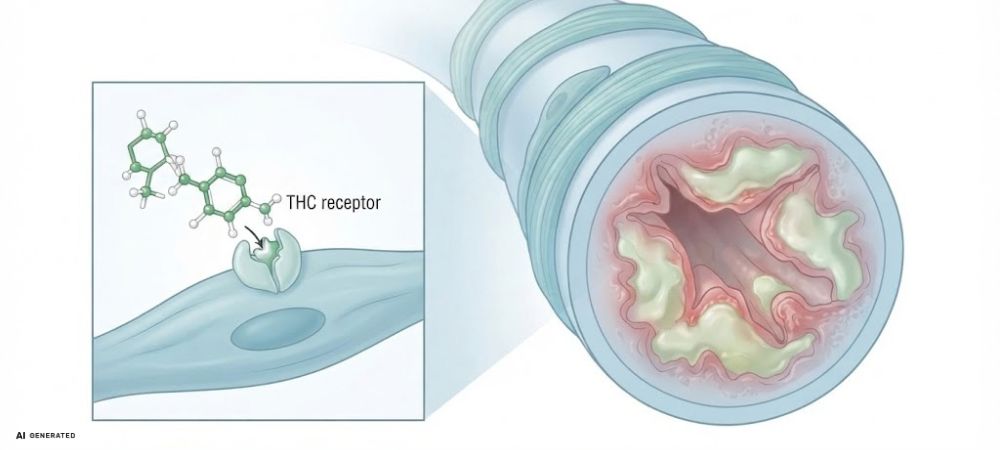
Cannabis and asthma: the interest lies in the cannabinoids
Cannabis contains cannabinoids capable of interacting with the body’s endocannabinoid system, which is also present in the lungs.
Among them, THC is the one that has been most studied for its relationship with bronchodilation. A recent review on medicinal cannabis and asthma points out that cannabis can produce a bronchodilator effect and that some cannabinoids also present potentially interesting mechanisms related to inflammation.
Therefore, when we talk about marijuana and asthma, the interest is not only in the plant, but in how its cannabinoids act on the airways.
THC and bronchodilation: one of the most interesting points
THC has been studied for decades for its ability to temporarily promote the opening of the bronchi.
In a study conducted with asthmatic individuals, both aerosol-administered THC and salbutamol produced a significant improvement in respiratory function. Salbutamol acted more quickly, but after one hour, both had produced similar bronchodilation.
Bronchodilator effects have also been observed in other studies with inhaled THC.
This explains why cannabinoids continue to generate interest as a possible avenue of research in asthma.
What is special about THC?
THC interacts with cannabinoid receptors present in different tissues of the body.
Some research has even suggested that CB1 receptors could become a new target for developing bronchodilator strategies different from those currently used.
In other words, the interest in THC does not appear by chance: there is a physiological basis that justifies continuing to study it.
Why can vaporizing marijuana be interesting?
If we want to talk about the potential of cannabinoids on the bronchi, it makes sense to look for ways to consume them without needing to burn the cannabis.
The vaporization process works by heating the plant matter until cannabinoids and terpenes are released, while avoiding combustion.
That represents a significant difference compared to smoked cannabis. A review on cannabis vaporization concludes that this method reduces the respiratory risks associated with combustion, and places dry product vaporizers among the forms of vaporization with the lowest exposure to toxins.
Therefore, when we talk specifically about cannabis and the respiratory system, vaporizing can be a much more interesting option than smoking.
Vaporized cannabis and breathing
There are also quite striking preliminary data. In a small study conducted with regular cannabis users who switched to a vaporizer, improvements were observed in certain respiratory symptoms and in some lung function parameters.
The researchers themselves considered that these results justified further study of vaporization as a harm reduction technique and as a route of administration for medicinal cannabis.
Furthermore, a general review on different methods of consumption points out that vaporizing natural cannabis can reduce some respiratory problems compared to smoking it.
The key is to separate this:
Cannabinoids
Bronchodilator potential
Combustion
Smoke and products derived from burning the plant
The interest in vaporizing cannabis is not limited to asthma. There are already medical inhalers capable of delivering very precise doses of cannabinoids without combustion, such as SyqeAir, and vaporization is also being studied for other applications.
In 2026, for example, a clinical trial with 92 people found that cannabis vaporized with THC and CBD achieved better results than a placebo for acute migraine attacks.
This type of research shows where medicinal cannabis can advance: less combustion, more controlled doses, and more precise inhaled administration of its cannabinoids.
THC, CBD, and the respiratory system
Although THC is the cannabinoid most related to bronchodilation, it is not the only compound that sparks interest.
CBD is also being studied for its interaction with processes related to inflammation and immune response.
A recent review on cannabinoids and asthma points out that, in experimental models, THC seems to act on bronchoconstriction while CBD can influence inflammatory mechanisms.
This paints a quite interesting picture:
| Cannabinoids and their interest in relation to asthma | |
|---|---|
| Cannabinoid | Main interest in relation to asthma |
| THC | Bronchodilation |
| CBD | Inflammatory processes |
| Endocannabinoid system | Regulation of different pulmonary responses |
It does not mean that they all act the same, but rather that each cannabinoid can contribute something different to the study of the airways.
Why does vaporization fit so well in this context?
Because it allows us to focus on the cannabinoids. When cannabis is smoked, the effect of the plant is mixed with everything generated by combustion.
With vaporization, on the other hand, we can talk about a method that avoids directly burning the plant material and that allows for the release of THC, CBD, and terpenes in a more controlled way.
That is probably one of the reasons why vaporization makes so much sense within medicinal cannabis and respiratory research.
It is not simply about “smoking in a different way.” It is about separating the potential of the cannabinoids from the drawbacks of smoke.
Vaporized cannabis and asthma: a line with a lot of potential
The relationship between cannabis and asthma is more interesting than it might seem at first glance.
THC has shown bronchodilator effects in different studies, and the endocannabinoid system continues to be investigated as a possible avenue to better understand the regulation of the bronchi.
Added to this is the interest in CBD in inflammatory processes and the possibility of using cannabis through vaporization instead of combustion.

All of this makes vaporized cannabis especially attractive as a field of study: it allows for the use of cannabinoids present in the plant without relying on smoke and opens the door to more controlled forms of consumption.
Research is still ongoing, but the combination of THC, CBD, the endocannabinoid system, and vaporization makes cannabis a field with significant potential within the study of respiratory diseases like asthma.






 Add as preferred source in Google


