Personalized Attention +44 151 947 0713
 SHIPPING TO ALL


 9/10 Rating
 SALE TO MINORS PROHIBITED



Although the origin of marijuana in human life is not known with certainty, the earliest findings of cannabis remains in civilization date back to the 7th millennium BC, during the Neolithic period.
Since then, it has been used for thousands of years as a medicinal remedy, as part of religious rituals, and recreationally at social events. Later, prohibitions arrived as a result of hate campaigns against the plant, followed by its current and slow decriminalization.
What is marijuana?
Marijuana is the popular name for the fruit of the cannabis plant, which has psychoactive effects due to its high THC content. Because of this condition, it has been completely prohibited in practically the entire world for decades, a trend that has been reversing very slowly in recent years.
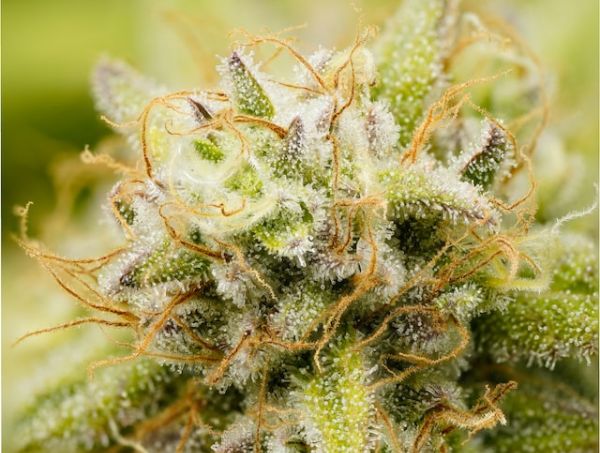
In total, it contains more than 100 cannabinoids, the chemical substances responsible for providing marijuana with its benefits and side effects.
One theory regarding the origin of the name “marijuana” is that it was a term invented by the U.S. government’s Commissioner of Narcotics, Harry Anslinger, one of the biggest proponents of the plant’s prohibition. It is said to come from the fusion of the name “María Juana”, a term used pejoratively to refer to undocumented Mexican immigrants who defended the use of cannabis.
What is the origin of marijuana?
There are two origins of cannabis that can be explained. On one hand, the genetic origin of the plant and, on the other, the historical origin linked to human beings and the place they have given to marijuana.
Genetic origin of marijuana
It was the physicist and botanist Carl Linnaeus who created the current classification and naming model for cannabis in 1753, although there are still conflicting opinions on the matter today.
The first theory states that cannabis is classified into three different species: Cannabis sativa, Cannabis indica, and Cannabis ruderalis. The second claims that there are three subspecies of cannabis that derive from the same species, Cannabis Sativa. In any case, sativa, indica, and ruderalis genetics possess well-differentiated characteristics that allow each plant to be identified even if they are found together in the same cultivation area.
- Sativa marijuana. Marijuana originating from tropical climate zones where they develop with high vertical growth, being a tall and elongated plant. This cannabis usually has earthy and fuel-like flavors, with stimulating effects.
- Indica marijuana. The history of this cannabis begins in the cold mountains of Nepal and India. Due to the climatic conditions, this marijuana has shortened its flowering period and creates bushy, broad-leafed trees. It usually does not grow more than 1.5 meters in height and its flavors are sweet, while its effects are sedative.
- Ruderalis marijuana. These are very short plants with a shorter flowering phase. Furthermore, they are not photoperiod-dependent due to their origin: Siberia and central Russia, where the sun is scarce and they cannot depend on it to survive. It is not used for cultivation due to its low THC level, but it is responsible for the existence of current autoflowering seeds.
Historical origin of cannabis
The marijuana plant is native to the desert region located southeast of the Caspian Sea, in Central Asia. Its link with human beings begins in the Neolithic period, when it began to be cultivated and domesticated, serving as food, medicine, and as part of certain religious rites, among other purposes.
During this era, it spread; first towards China and later towards the west, where it would reach the current European zone. Subsequently, it expanded throughout the territory of Europe. At that time, one of the most common practices consisted of burning cannabis seeds in a brazier to inhale the smoke and reach mystical states.
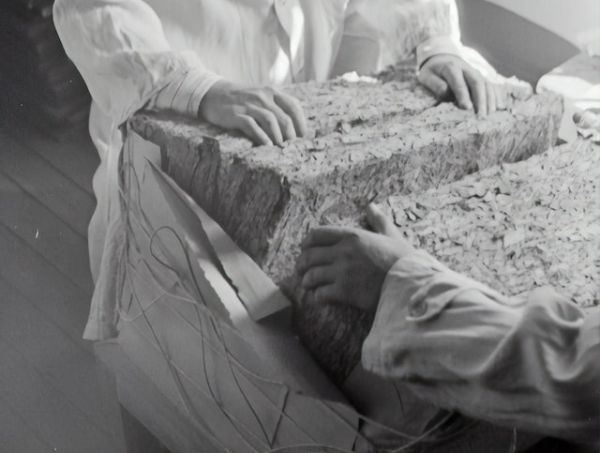
In Spain, the presence of cannabis has been proven since the Chalcolithic period (3000 BC – 1700 BC). Specifically in Totana (Murcia), where a woman was found buried covered in a hemp mat that acted as a shroud.
The Indo-European tribes also played a fundamental role in the expansion of the use of the cannabis plant throughout Asia and Europe. In fact, it is known that it was very well known in China and India, as it is mentioned in the Vedas as Indra’s favorite drink and in medical treatises from the 1st century in China.
The first illustration of the cannabis plant dates back to the 6th century and appeared in a botany book called Constantinopolitanus; while the first scientific information has been found in the 16-volume medical encyclopedia written by Aetius of Amida.
Although it was banned in Christian territories in the 5th century for being linked to followers of Satan, and in the 14th century by Islamic authorities; it did not disappear because it played an important role in the production of fibers for clothing, ropes, paper, and some medicines in certain areas.
Resurgence of cannabis
In the 16th century, cannabis was planted in the U.S. and Portugal to take advantage of its fibers, but the large number of slaves arriving from Brazil were more interested in its psychoactive effects, used for religious and festive purposes. Two centuries later, rural Portuguese indigenous people and mestizos adapted the medicinal consumption of marijuana, which spread to the country’s upper class, as well as to Brazil and the Caribbean at the end of the 19th century.
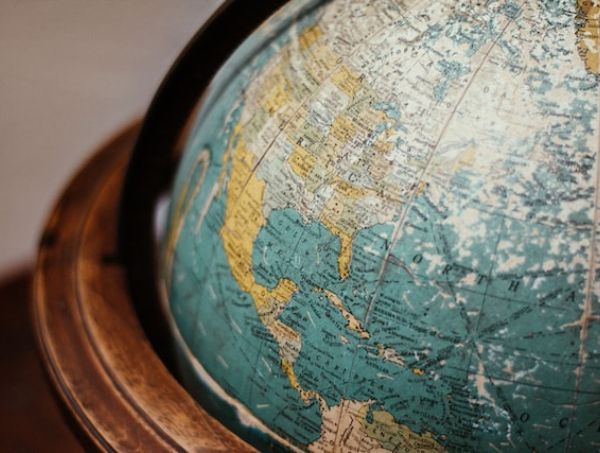
Thus, the trend of cannabis consumption returned to Europe, also encouraged by Napoleonic troops who had traveled to Egypt and adopted its customs. In 1835, the Club des Hashischins was founded to conduct medical research on cannabis.
Recent history of cannabis: 20th-century restrictions
Despite its rise worldwide, Americans were convinced that marijuana had caused the depravity of people of color and Mexicans. Therefore, to put an end to it, the American media mogul William Randolph Hearst used all his resources to discredit cannabis in a campaign in which he referred to it as “marijuana”.
Then a new chapter began for the history of cannabis, with prohibitions that spread throughout the world: in 1937 in the U.S., and globally in 1961 with the United Nations Single Convention on Narcotic Drugs. The situation did not update until 2013, when Uruguay legalized its cultivation, sale, and distribution. Colorado (USA) followed, allowing the recreational use of the plant, as did Canada in 2018 and other North American states.
Currently, many countries around the world have approved the use of the marijuana plant, whether for medicinal or recreational use, and in those that have not, the debate has been opened.
Origins of medicinal marijuana

For its part, the history of medicinal marijuana is closely linked to that of medicinal cannabis. In China, its benefits were written about more than two thousand years before Christ, with the emperor himself, Shen Nong, using it to treat several of his ailments.
The Greeks gave it to their horses to heal the aftermath of battles, and the Egyptians used it to treat cancer. These are just a few examples, but the history of medicinal cannabis is almost as old as the plant itself.